
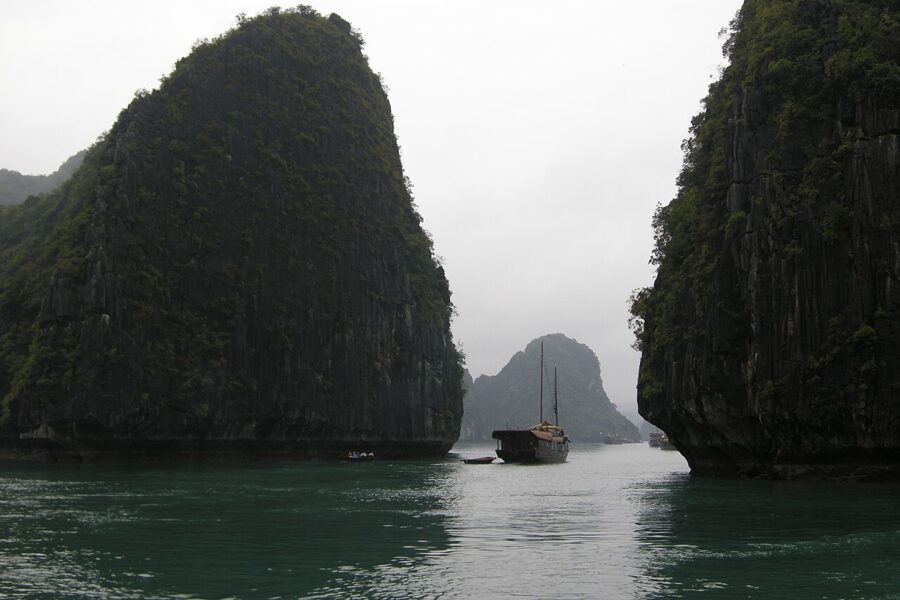
Ha Long Bay has 1,969 islands by the official count, and a four-hour boat out of Tuan Chau will show you perhaps a dozen of them. Which dozen depends on a route number printed on your ticket, not on the name of the boat or the photos in its brochure. Get the route right and the rest of the choice (day or overnight, which bay, how much to pay) falls into place.
The bay sits about 170 kilometres east of Hanoi, close enough that most people treat it as a day out and far enough that a day out means five to seven hours in a van. It is also busy. Quang Ninh greeted its five-millionth international visitor of 2026 at Ha Long International Passenger Port in mid-November, and on a clear weekend the anchorage below Ti Top Island looks like a car park with water in it.
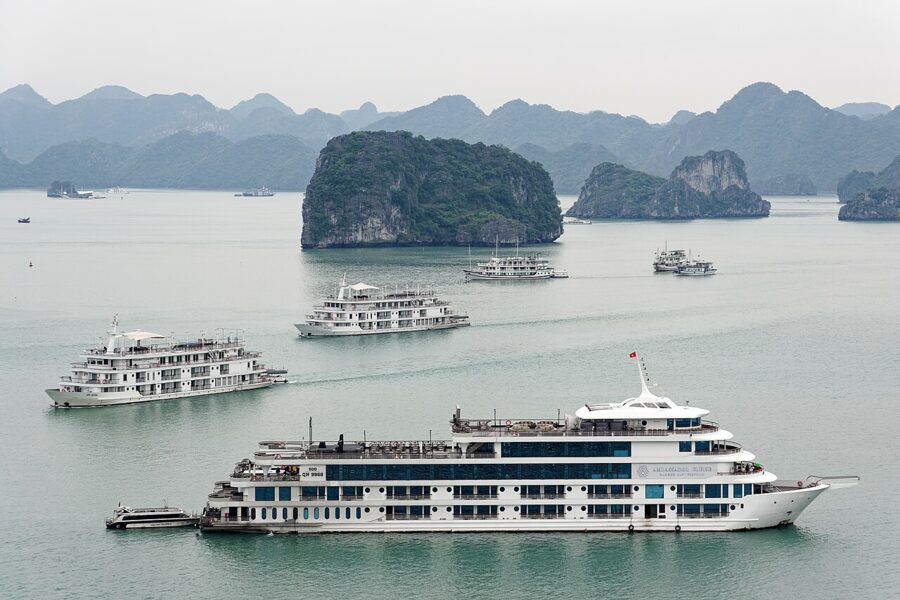

None of that makes it a bad trip. It makes it a trip you should plan by route, by hour and by which of the three bays you sail, because Ha Long has two neighbours, Lan Ha to the south-west and Bai Tu Long to the north-east, with the same limestone and far fewer boats.
Contents
What the bay is, and the part that is protected
Ha Long Bay (Vịnh Hạ Long) is the north-western corner of the Gulf of Tonkin, off the coast of Quang Ninh. The bay covers about 1,553 square kilometres, and 989 of its islands have names. Most are limestone; a few in the north-east are older schist.
UNESCO listed the core of the bay in 1994 for its scenery and again in 2000 for its geology. In 2023 the listing was extended to take in the Cat Ba archipelago, so the World Heritage site is now called Ha Long Bay–Cat Ba Archipelago: 65,650 hectares and 1,133 islands and islets, split between Quang Ninh and the city of Hai Phong. That boundary still matters on the water, because each side sells its own tickets.
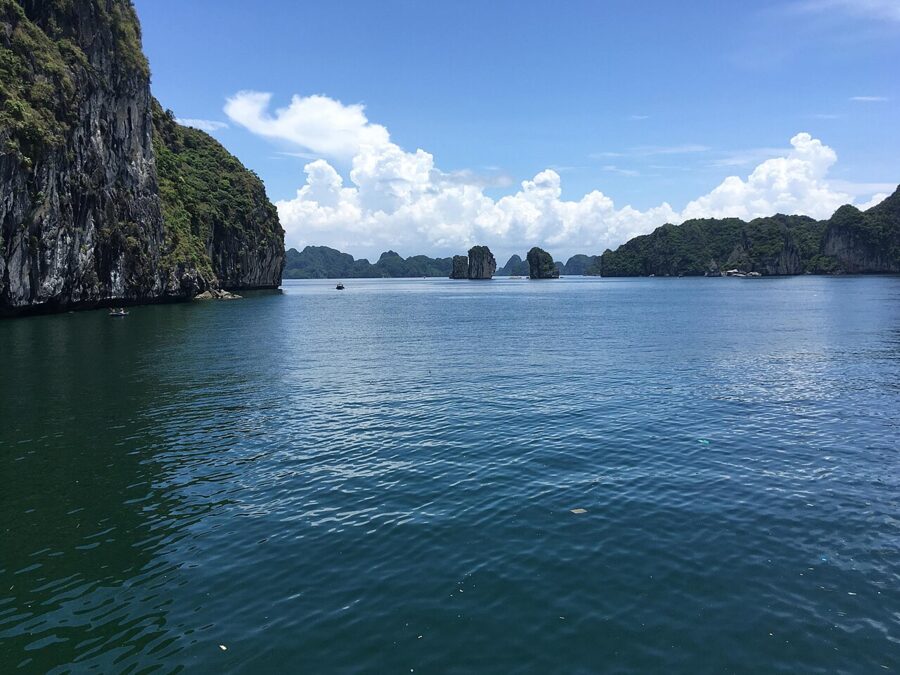

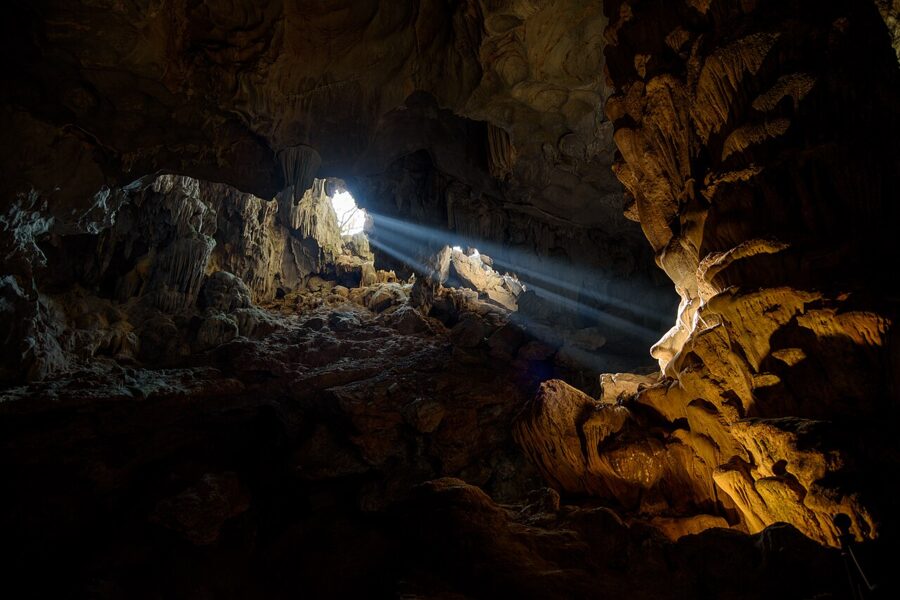
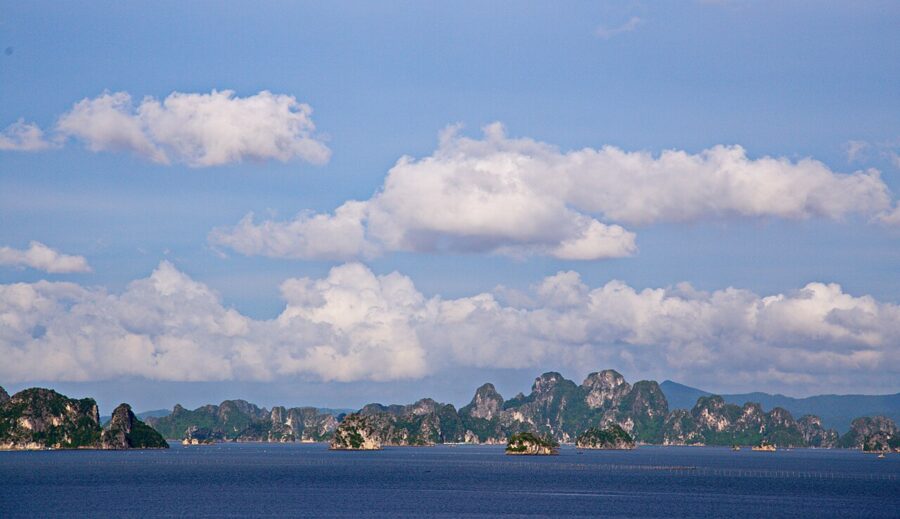
The geology is the reason anyone comes. This is drowned tower karst: a limestone plain that dissolved into cones and pillars, then sank as the sea rose, leaving the tops standing in shallow water with caves cut into their bases at old sea levels. UNESCO’s description puts it as the most extensive example of marine-invaded tower karst on earth. Many of the caves you walk through were cut when the sea stood at a different level and are now left high and dry.
On land the bay is run by the Ha Long Bay–Yen Tu World Heritage Management Board, formed on 10 November 2025 by merging the old Ha Long Bay board with the managers of Bai Tu Long National Park and the province’s historic sites. The board sets the routes, the cave hours and the fees, and its staff check tickets at the gates.
The film question
People ask which films were shot here. The two that used it properly are Indochine (1992), which put Catherine Deneuve on the bay, and Kong: Skull Island (2017), whose director chose the cliffs around Tien Ong cave on route 3 as a backdrop. Both make the bay look emptier than it is.
The eight official routes
Boats cannot wander. Every boat leaving Tuan Chau International Passenger Port or Ha Long International Passenger Port at Bai Chay is cleared for one of eight sightseeing routes, labelled VHL1 to VHL8, and the fee you pay depends on which. These are the board’s figures as of November 2026, unchanged since the last revision in May 2025.
| Route | What it passes | Fee per person |
|---|---|---|
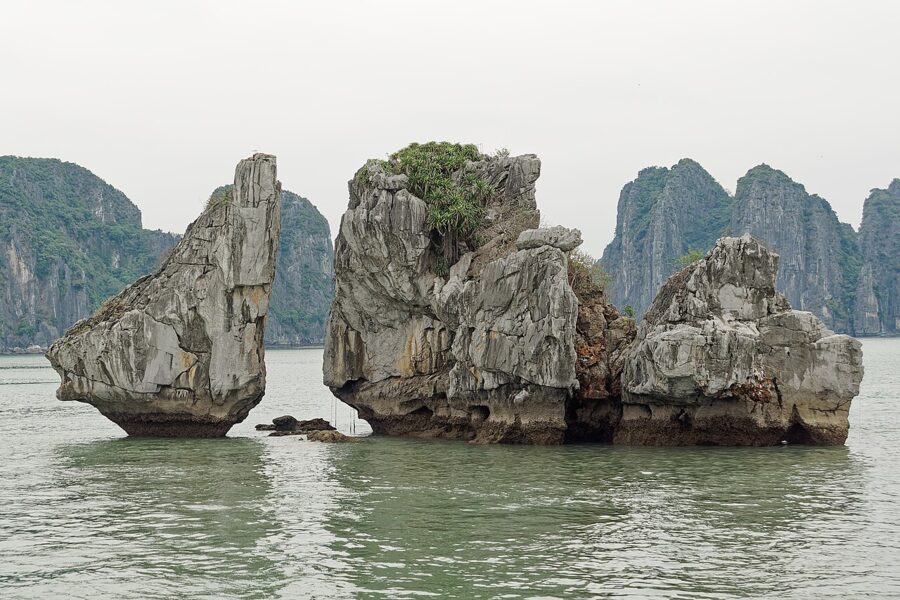
| VHL1 | Thien Cung and Dau Go caves, Dog Rock, Ba Hang, Dinh Huong islet, Trong Mai (Fighting Cocks) | 250,000 dong (about $10) |
| VHL2 | Soi Sim beach, Ti Top Island, Sung Sot cave, Tung Sau cove, Me Cung cave, Bo Nau, Luon, Trong and Trinh Nu caves, Ho Dong Tien | 250,000 dong |
| VHL3 | Cua Van floating culture centre, Tien Ong cave, Ba Ham lakes, Ba Men temple, Ang Du | 200,000 dong (about $8) |
| VHL4 | Hang Co (Thien Canh Son), Hang Thay, Cap La, Vung Vieng, Cong Do, Hon Xep | 200,000 dong |
| VHL5 | Route 1, then on to Gia Luan pier on Cat Ba | 250,000 dong |
| VHL6 | Chan Voi, Ba Cua cove, Tung Lam Island to Cap Bai, on the Lan Ha border | 150,000 dong (about $6) |
| VHL7 | Routes 1 to 4 combined, for exploration day cruisers only | 600,000 dong (about $23) |
| VHL8 | Coastal run, Tuan Chau to Ha Long port and Nam Cau Trang, mostly evening dinner boats | 70,000 dong (about $3) |
Children under 1.2 metres or under seven go free, children from seven to 15 pay 20 percent less, and Vietnamese citizens over 60 pay half. Foreign seniors get no discount. On top of the route fee you pay a port passenger charge at the terminal, quoted at 60,000 dong (about $2) in mid-2026, and any kayak or rowing-boat ride at the caves.

The cave landings keep fixed hours. Thien Cung, Dau Go, Ba Hang, Sung Sot, Ti Top and Luon open 7.30am to 5.30pm from mid-April to October and close half an hour earlier in winter; Me Cung, Tien Ong and Cua Van open at 8am. Boats may leave port from 5am in summer (April to October) and must be back by 8pm, or 5.30am to 7pm in winter.
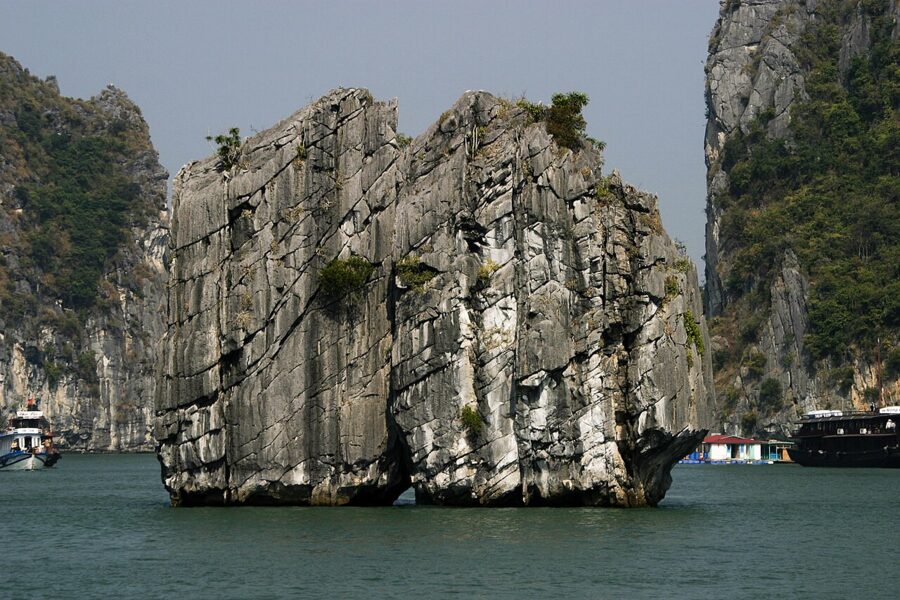

Routes 1 and 2 carry most of the traffic. Route 2 is the one to pick if you only get one, because it gives you the biggest cave, the viewpoint and the kayak lagoon in a single loop. Routes 3 and 4 go further out and see far fewer boats, and both have official overnight anchorages, at Tien Ong and at Cong Do.
The caves and islands, stop by stop
Sung Sot cave (Hang Sửng Sốt)
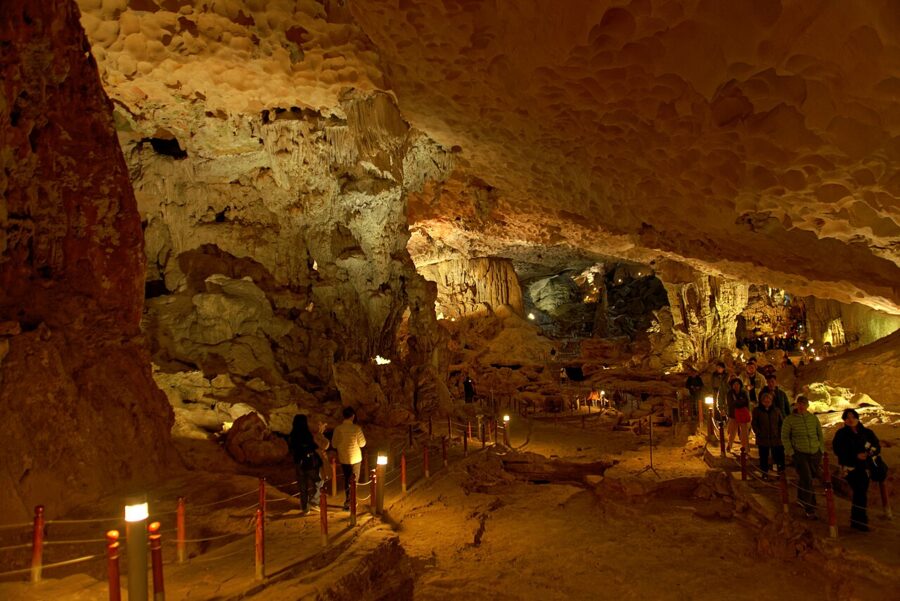
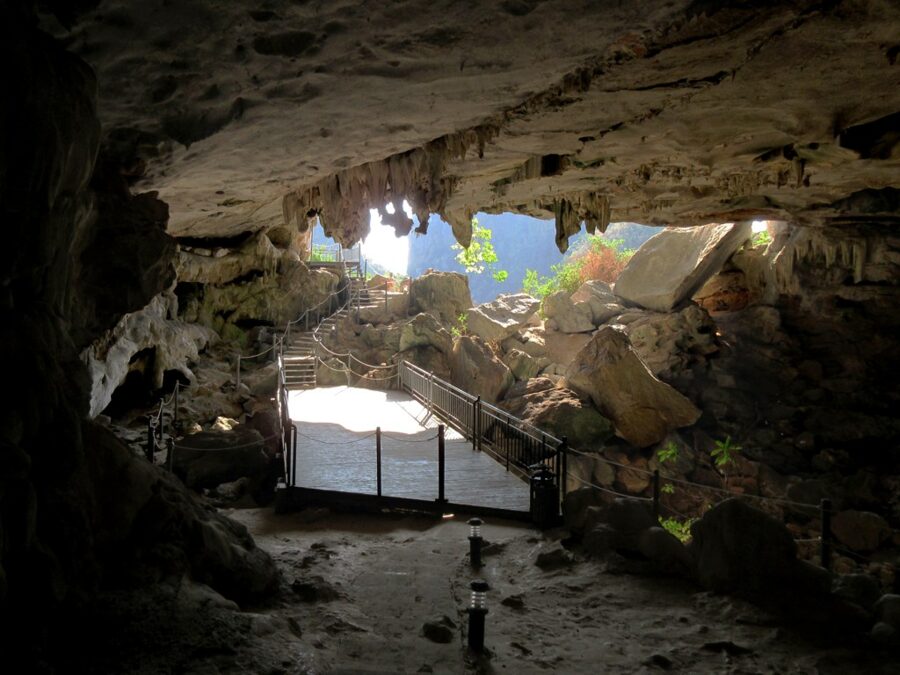
“Surprise cave” is the largest the board has found in the bay, set 20 metres up the side of Bo Hon Island. You climb a steep, shaded stairway to the mouth, then follow a one-way path through its chambers. The first has a freshwater pool; the last has a stalagmite people read as the Buddhist figure Quan Âm, half lost in the gloom.
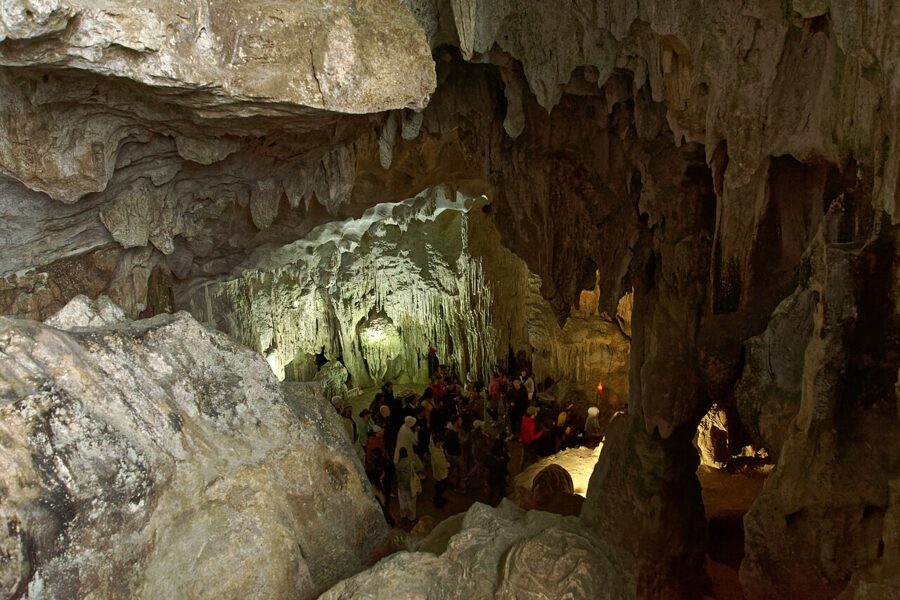

It is impressive and it is crowded. In the middle of the day the walkway can move at shuffle pace, and the coloured lights make photos harder rather than easier. I would still not skip it, but I would pick the boat that lands here first thing or last thing.

Ti Top Island
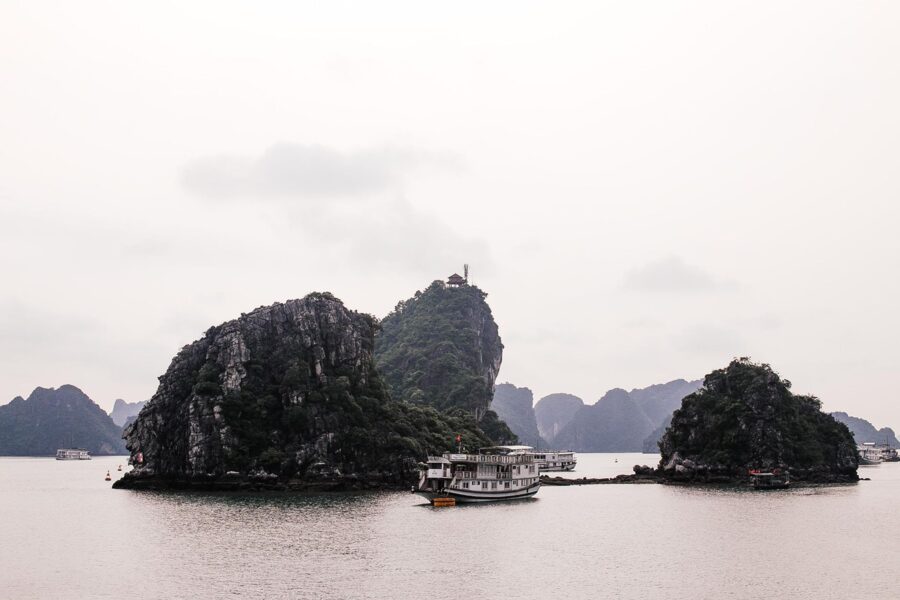
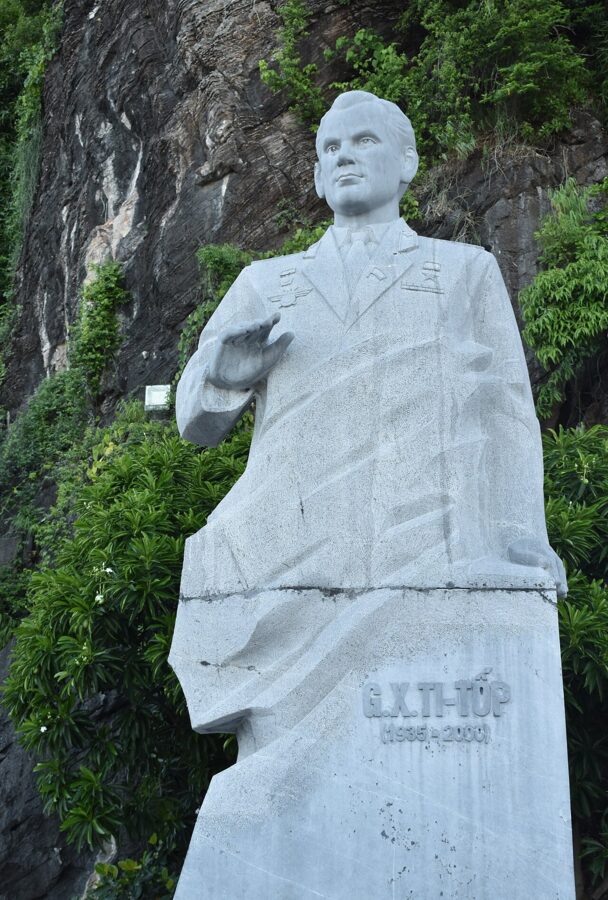
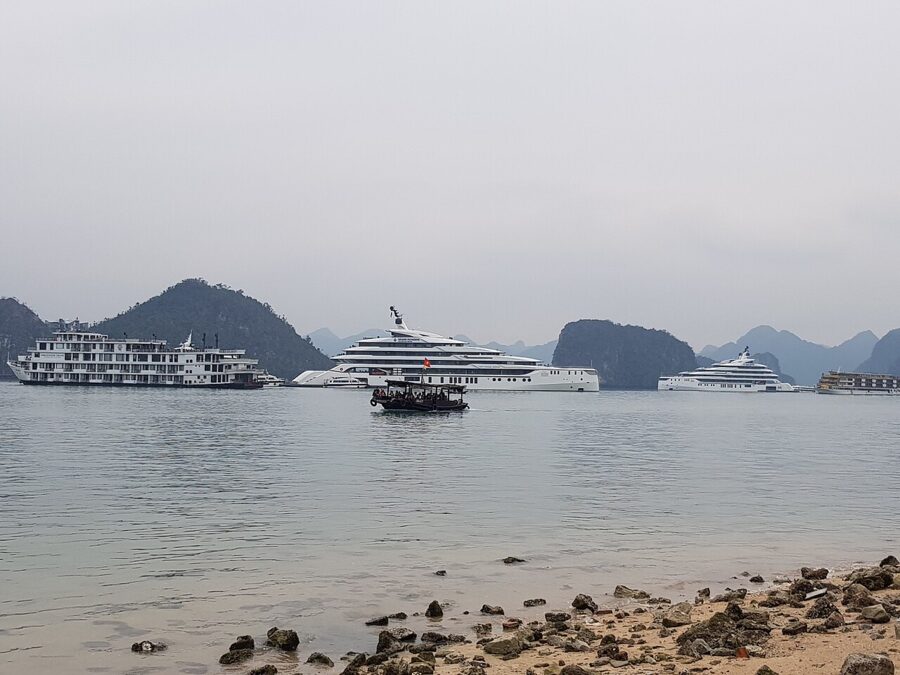
Ti Top is the only island in the bay named by Ho Chi Minh, after the Soviet cosmonaut Gherman Titov, who came here with him in 1962. It has a crescent of sand on one side and a long stairway to a pavilion on the summit. The view from the top is the bay’s best easy one, looking down on the anchored fleet and out across the route 2 islands.
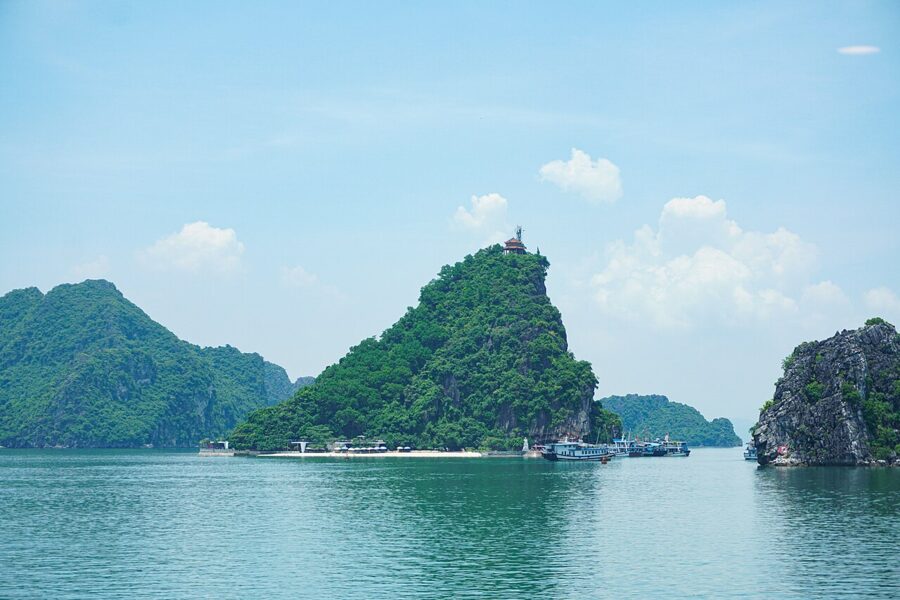

The beach is small. In July and August it fills quickly once the day boats arrive. Climb first, swim second, and do both before the lunch boats arrive or after four.

Luon cave and the kayaks
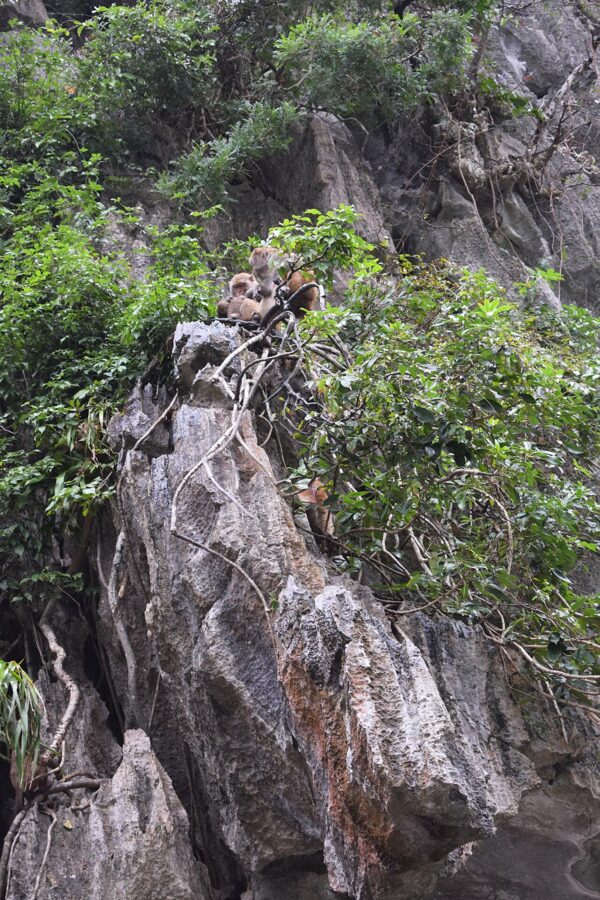
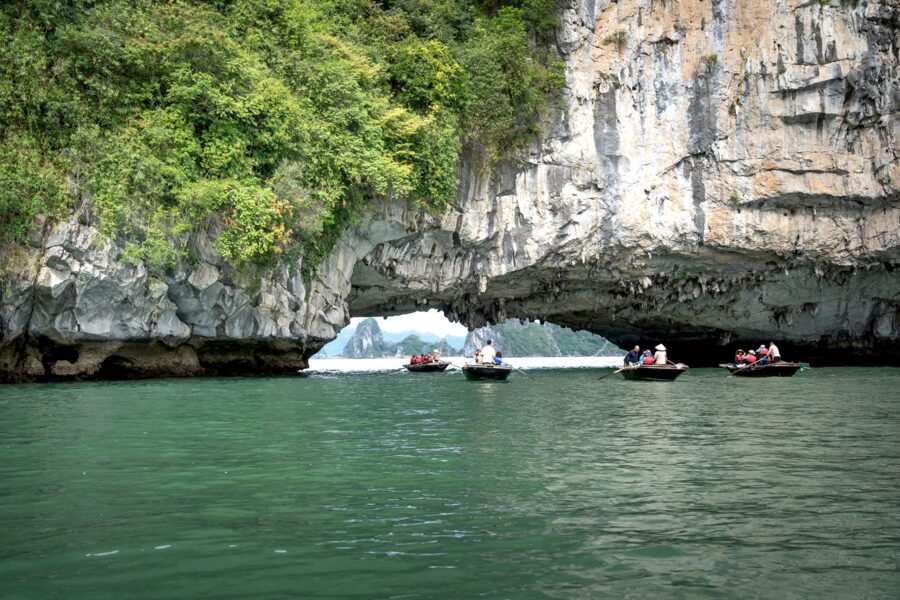
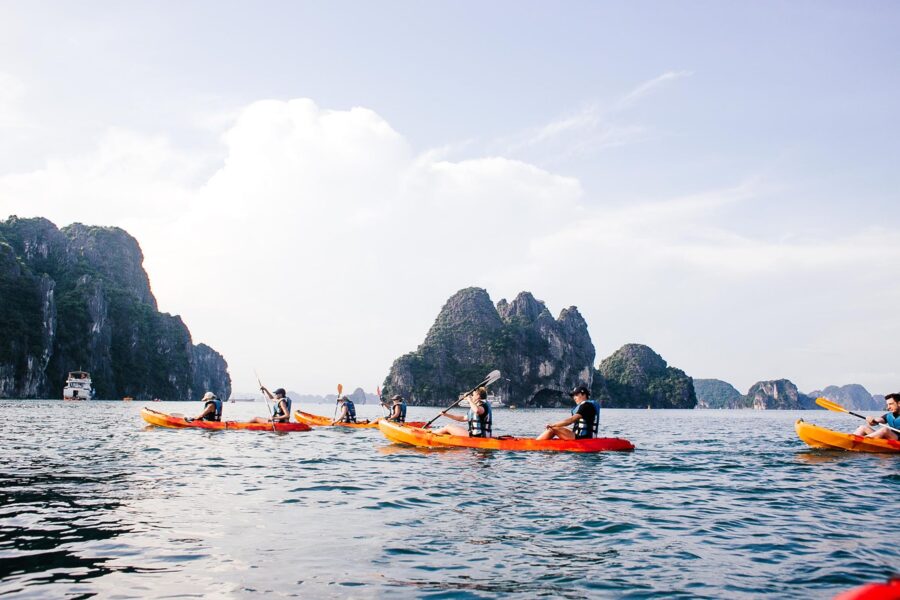
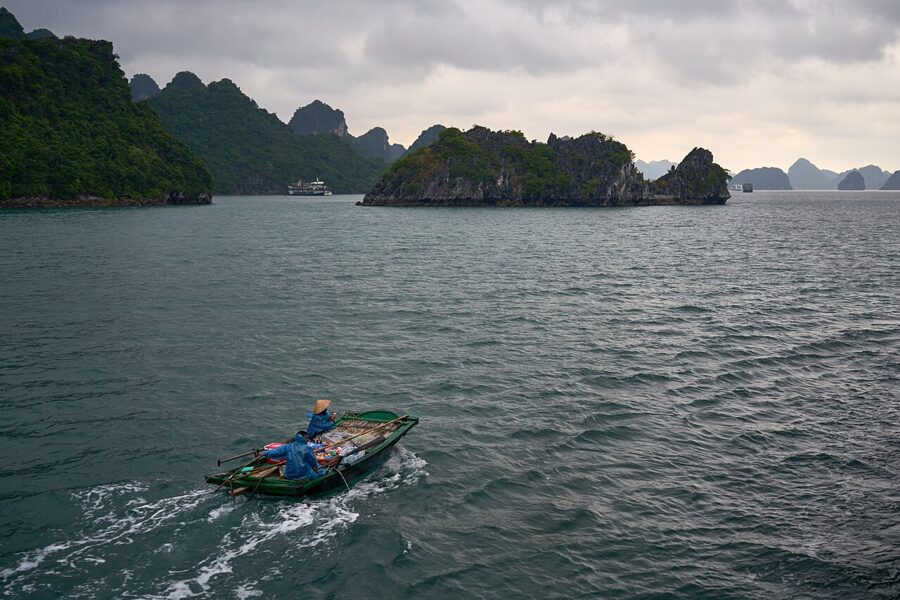
Luon is not a walk-in cave but a low sea arch through the base of an island, opening into an enclosed lagoon ringed by cliffs. You go through by kayak or in a rowing boat paddled by a local boatwoman. Inside, the water goes still and green, and macaques often come down the rock to watch.
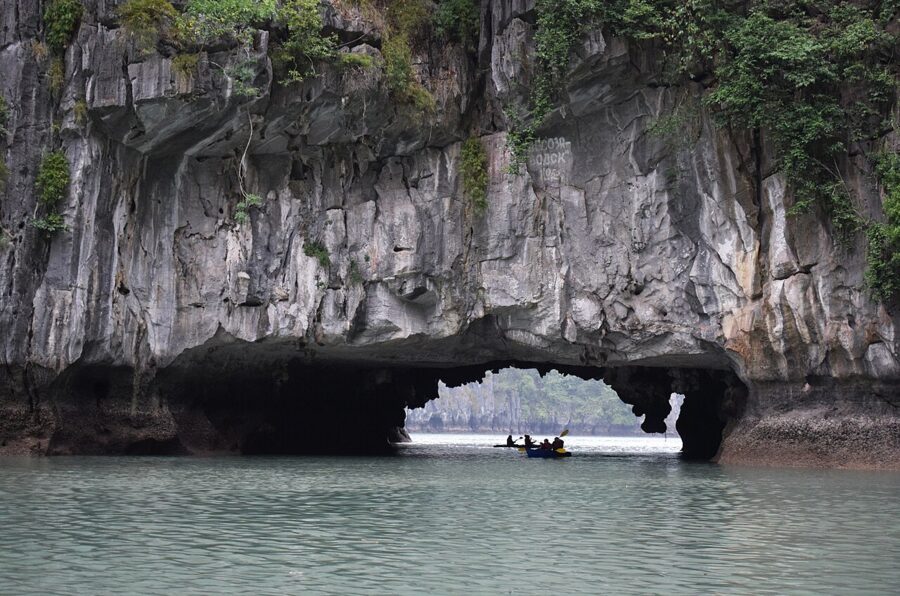

Kayaks are a paid extra on most cheap boats, quoted from about 80,000 dong (about $3) a person in 2026, and included on most better ones. The rowing boat is the better choice for anyone who has never paddled. Don’t feed the monkeys; they are wild and they bite.

Thien Cung and Dau Go
Route 1’s two caves sit side by side on Dau Go Island at the western edge of the heritage zone. Thien Cung (“heavenly palace”) has a floor of about 3,000 square metres, 20 metres above the sea, and some of the densest stalactites on the standard routes. Dau Go was found much earlier, is rougher inside, and tied by tradition to General Trần Hưng Đạo, who is said to have stored the wooden stakes for the 1288 battle of Bach Dang here.
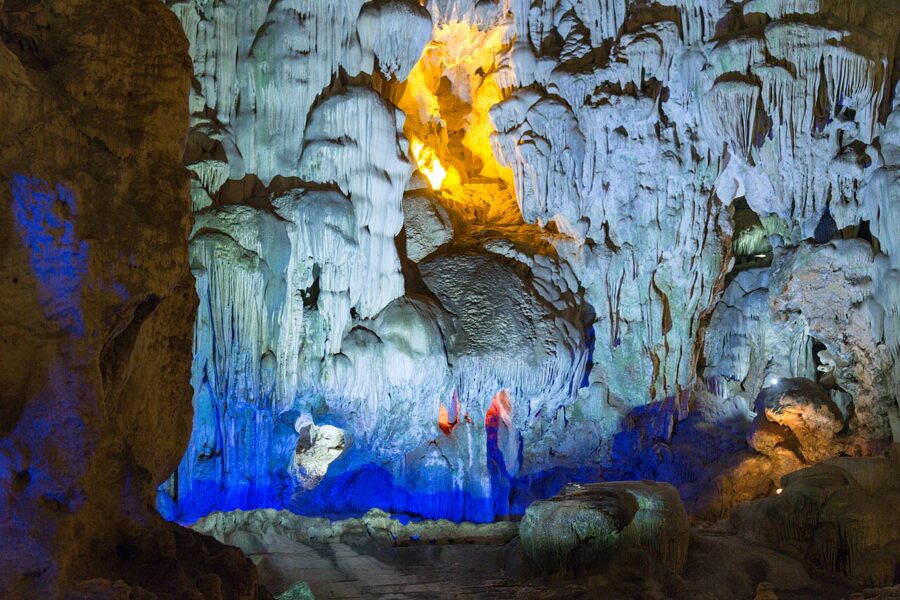

Ho Chi Minh visited Dau Go, and the board makes much of it. As caves they are good but not better than Sung Sot. Their real advantage is distance: from Ha Long International Passenger Port they are close enough for a four-hour round trip with lunch.
Cua Van and Ba Hang: the fishing villages now
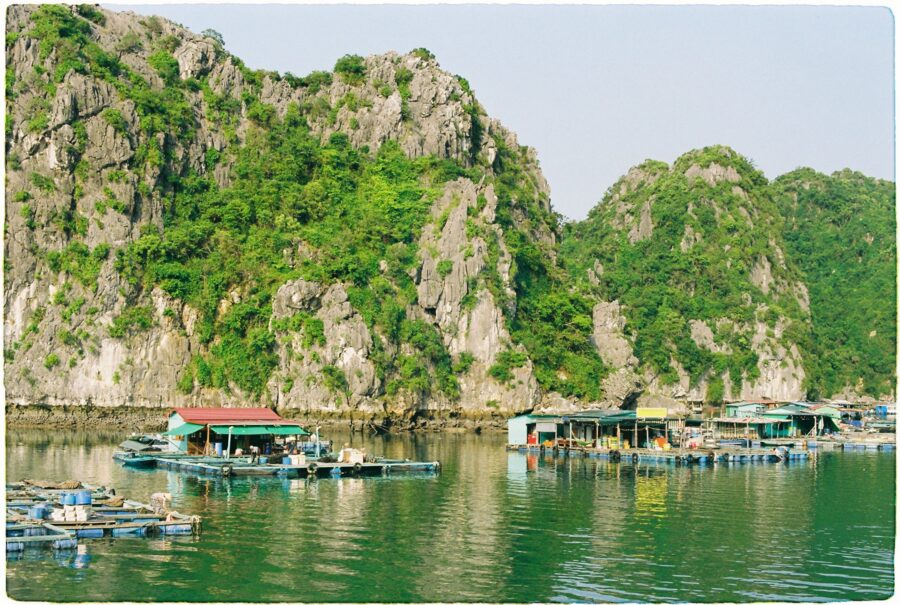
Not long ago the bay had several floating villages where families lived on the water year-round. Most have since been resettled ashore, and what remains at Cua Van, in Tung Sau cove on Hang Trai Island, is the Cua Van Floating Cultural Centre: a few houses, a small museum of fishing life, the Cậu Vàng shrine and boatwomen who row you round the old village. Ba Hang, on route 1, is three small sea caves linked to two saltwater lakes, seen from a rowing boat.
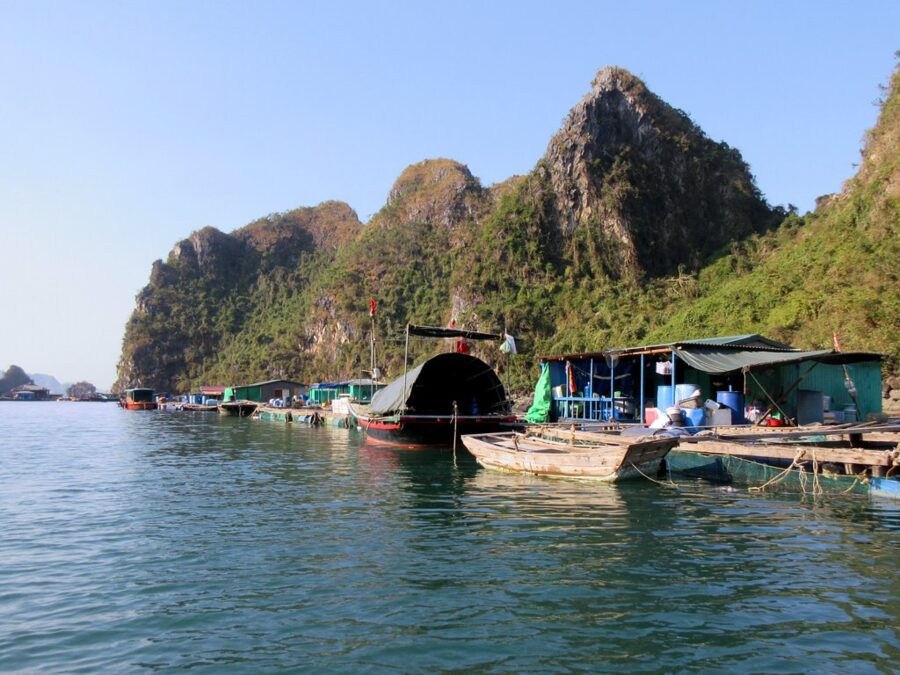

Cua Van is the reason I would choose route 3 for an overnight. It sits in sheltered water, the sea songs and net-making are the closest the bay comes to showing its own people, and fewer boats go there.
The quieter stops: Me Cung, Trong and Trinh Nu
Me Cung (“labyrinth”) cave closes the route 2 loop: four chambers, 20 to 30 metres up the side of Lom Bo Island, and another Soi Nhu site. It is smaller and quieter than Sung Sot, and the climb is shorter.
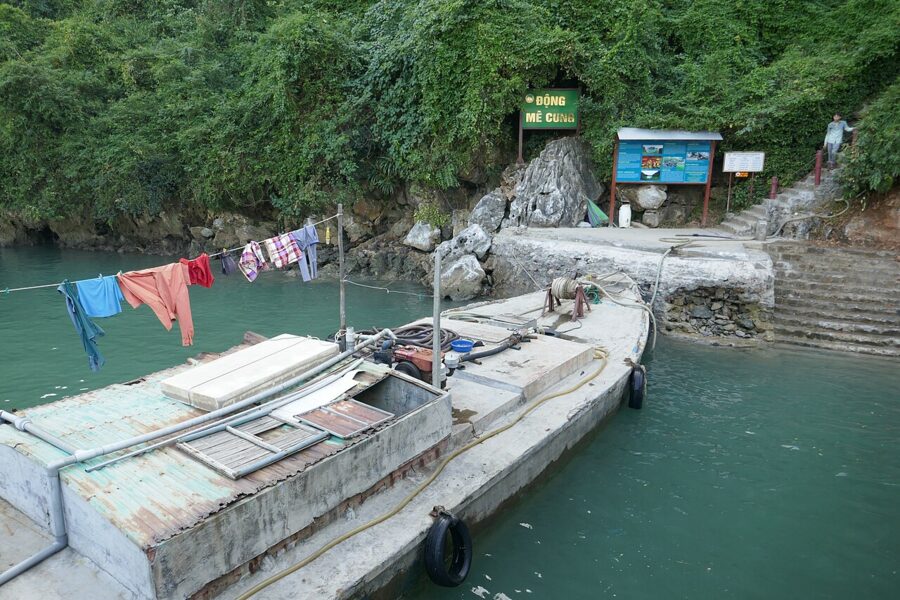

Trong and Trinh Nu caves on Bo Hon Island are tied to a fishing couple’s love story; Trinh Nu (“virgin”) has a stalagmite near its mouth shaped like a girl lying on her side, facing the sea. The cove between the two is one of the board’s official overnight anchorages, along with Ho Dong Tien and the moorings off Hon Lat and Ti Top. If your one-night boat says it sleeps “near Sung Sot”, this is where it means.


Day cruise, one night or two
A day cruise means route 1 (about four hours) or route 2 (about six), plus the drive. From Hanoi that drive is 2.5 to 3.5 hours each way, so a day trip is really a ten- to twelve-hour day with four to six hours on the water. It works if you leave Hanoi by 8am and pick route 2. It is a poor deal on route 1, where you spend longer in the van than on the boat.
One night is the standard, and for most people the right length. The overnight ticket on route 2 costs 550,000 dong (about $21) per person and is valid for 24 hours from departure; overnight tickets for routes 3 and 4 cost 500,000 dong (about $19). You board around midday, see a cave and Ti Top or Cua Van in the afternoon, anchor, and get the bay at dusk and dawn without the day boats.
Two nights costs 750,000 dong (about $29) in fees on route 2 or 650,000 dong (about $25) on routes 3 and 4, valid for 48 hours. The second full day is where the trip gets good, because the boat has time to go out to Cong Do, Vung Vieng or across into Lan Ha. On a ten-day Vietnam itinerary I would give the bay one night; with two weeks or more, two nights is the better use of the drive.
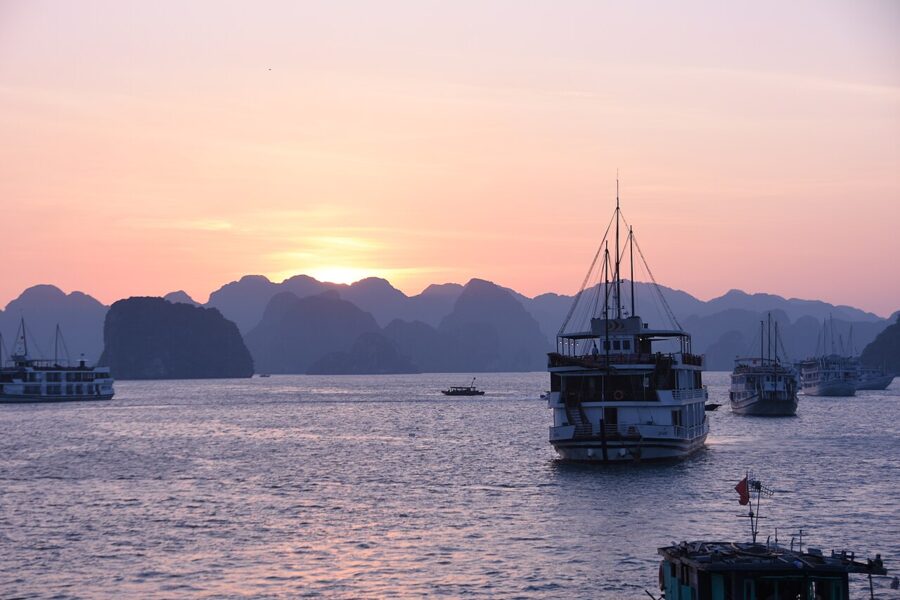

A typical one-night schedule runs pick-up in Hanoi around 8am, boarding at 12 to 12.30, lunch while the boat sails, a cave or village in the afternoon, kayaking, sunset on deck, dinner, a cooking demonstration or squid fishing off the stern, then tai chi on deck at dawn, brunch and back at port by about 10.30 to 11am. The second morning is short. Don’t expect to see much after breakfast.
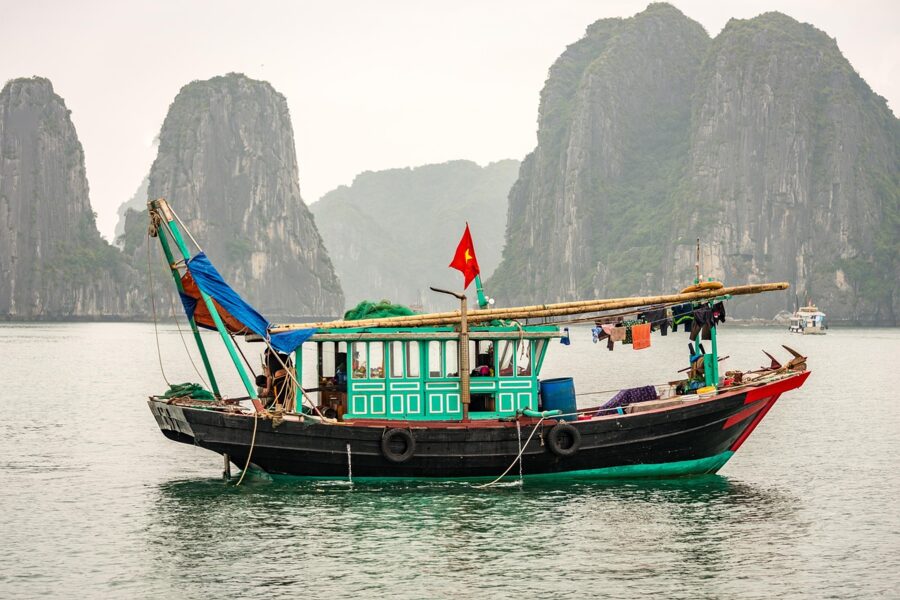
Lan Ha Bay and Bai Tu Long Bay
Ha Long’s two neighbours are the same rock and the same sea. What differs is who sells the tickets, how many boats are allowed in and how far you have to drive. Many mid-range and better overnight cruises now sail one or the other, and for anyone staying a night both are worth choosing over Ha Long proper.
| Ha Long Bay core | Lan Ha Bay | Bai Tu Long side | |
|---|---|---|---|
| Run by | Quang Ninh (Ha Long Bay–Yen Tu board) | Hai Phong (Cat Ba bays board) | Quang Ninh (same board) |
| Day fee | 200,000 to 250,000 dong | 120,000 dong (about $5) | 200,000 dong on route 4 |
| One-night fee | 500,000 to 550,000 dong | 400,000 dong (about $15) | 500,000 dong |
| Usual boarding | Tuan Chau, Bai Chay | Got pier (Cat Hai), Cai Beo (Cat Ba) | Bai Chay, Hon Gai side |
| Main sights | Sung Sot, Ti Top, Luon, Thien Cung | Floating farms, sea tunnels, small beaches, Cat Ba | Thien Canh Son cave, Vung Vieng, Cong Do |
| Crowds | Heavy at the big caves | Moderate, growing | Light |
Lan Ha Bay
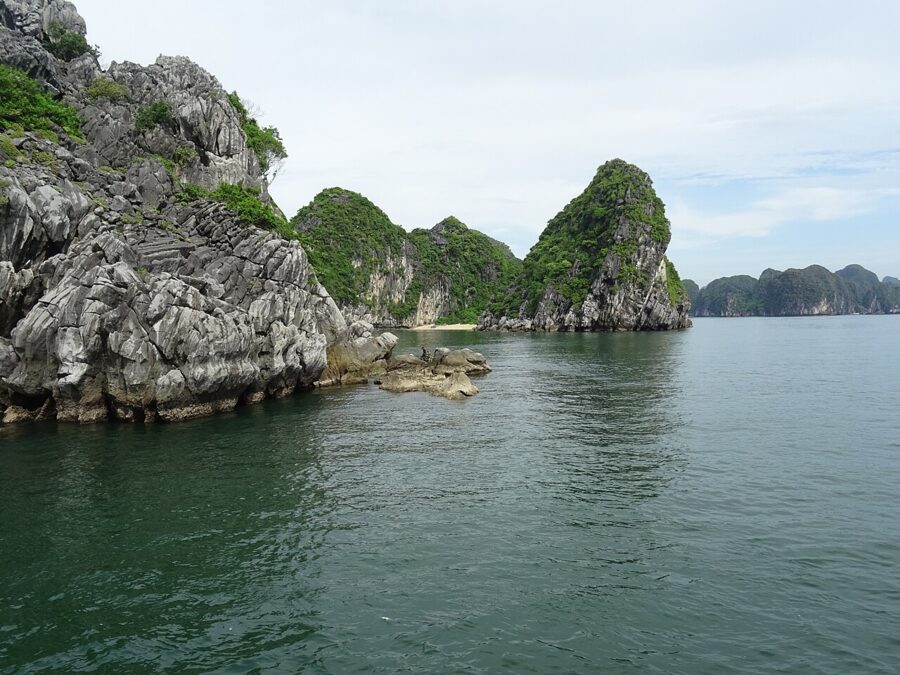
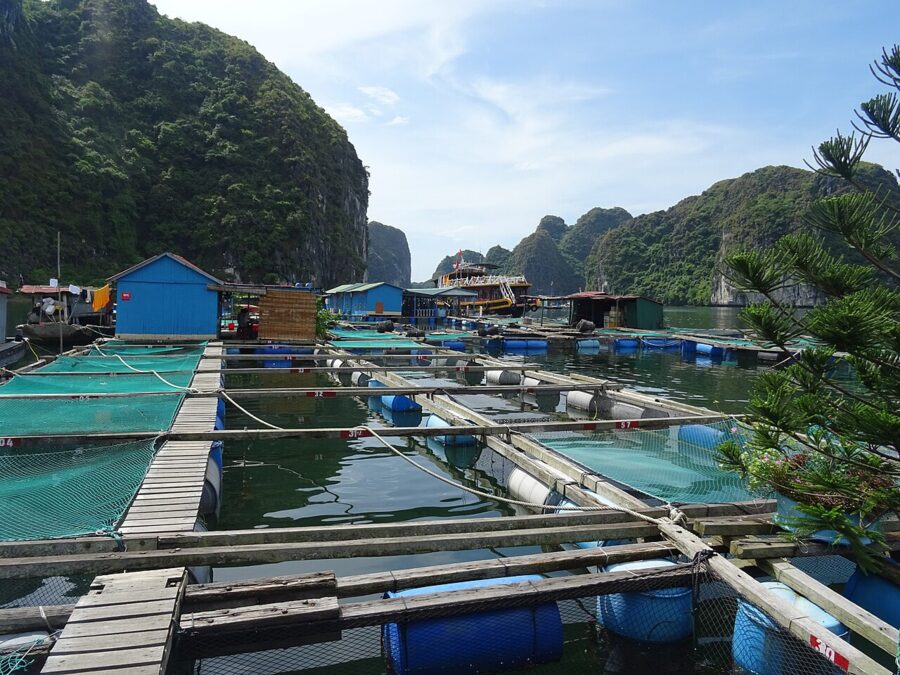
Lan Ha (Vịnh Lan Hạ) lies off the east coast of Cat Ba Island, south of Ha Long, inside Hai Phong. Its water is often clearer, and it has small sandy coves that Ha Long mostly lacks. There are floating fish farms everywhere, which some find lively and others find spoils the view; I like them, because people actually work there.

Hai Phong’s fees are lower: 120,000 dong a day for an adult and 60,000 dong (about $2) for a child, and 400,000 dong for one night, 600,000 dong (about $23) for two and 650,000 dong for three, under the city’s fee resolution in force since August 2024. Cat Ba National Park, if you go ashore, is 160,000 dong (about $6).

The two bays are joined on the water now. Since 1 April 2026 a joint regulation signed by Quang Ninh and Hai Phong lets licensed boats with berths in both cross between Ha Long and Lan Ha, provided they carry GPS and AIS tracking and buy tickets from both boards; tickets are sold and checked from 5.30am to 5.30pm. Officials expected more than 50 overnight boats from Lan Ha to start running into Ha Long. Routes VHL5 and VHL6 already reach the border at Gia Luan and Cap Bai.
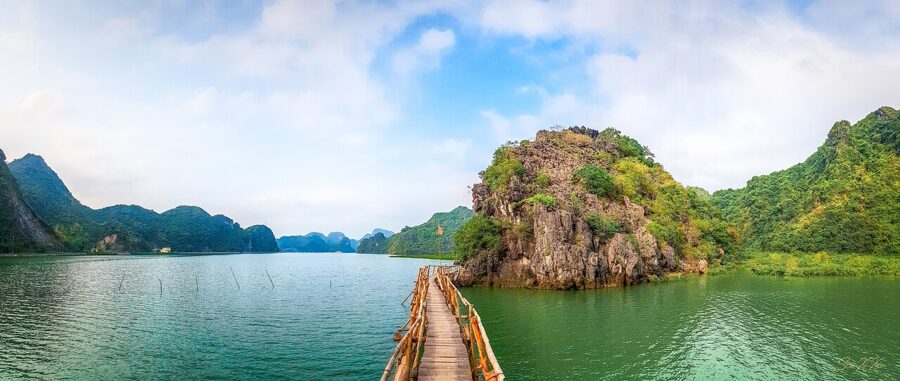
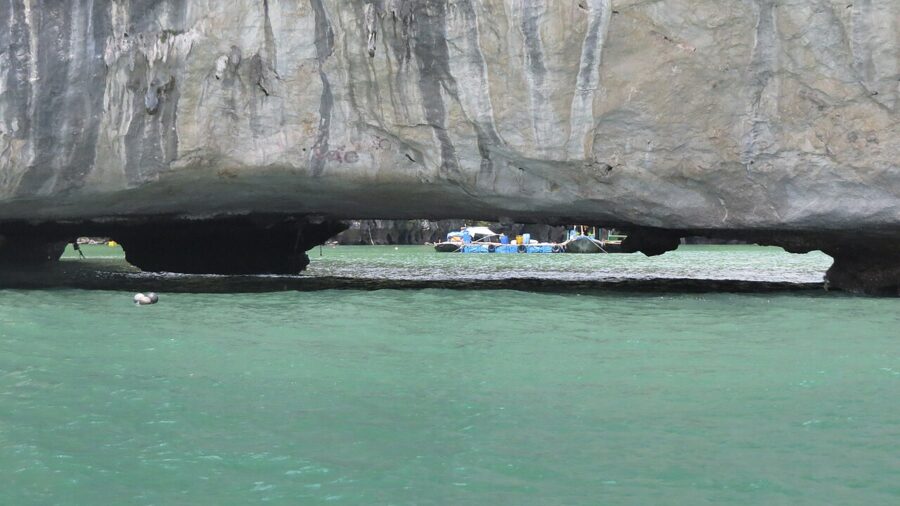

Getting to Lan Ha without a cruise is easy: road to Hai Phong and over the bridge onto Cat Hai island, then the short ferry from Got pier to Cat Ba.
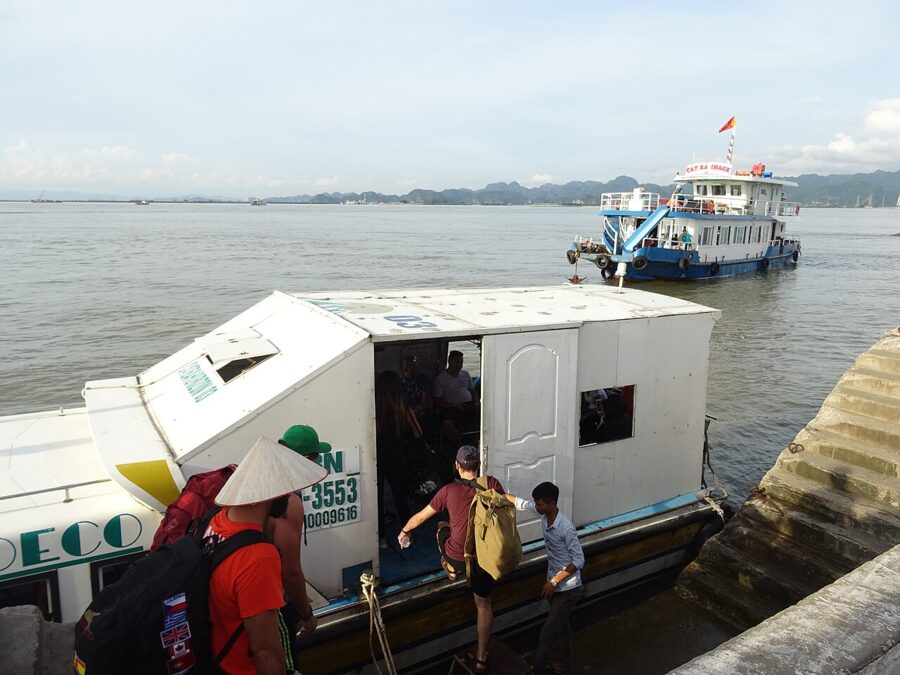

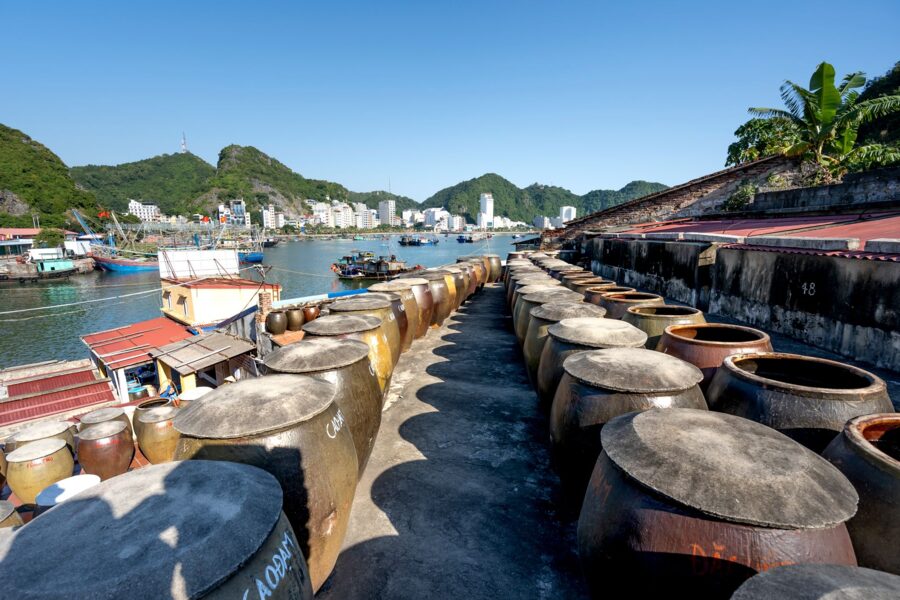
Cat Ba town has guesthouses, a harbour full of day boats and the national park on its doorstep. If you want to do the bay yourself rather than buy a package, Cat Ba is the better base.
Bai Tu Long Bay
Bai Tu Long (Vịnh Bái Tử Long) is the north-eastern continuation of Ha Long, running up toward Cam Pha and Van Don. Legend makes Ha Long the place where the mother dragon came down and Bai Tu Long the place of her children. Most cruises sold as “Bai Tu Long” sail route VHL4 inside the heritage zone, to Hang Co (Thien Canh Son), Cong Do, Hon Xep and the old fishing village of Vung Vieng.
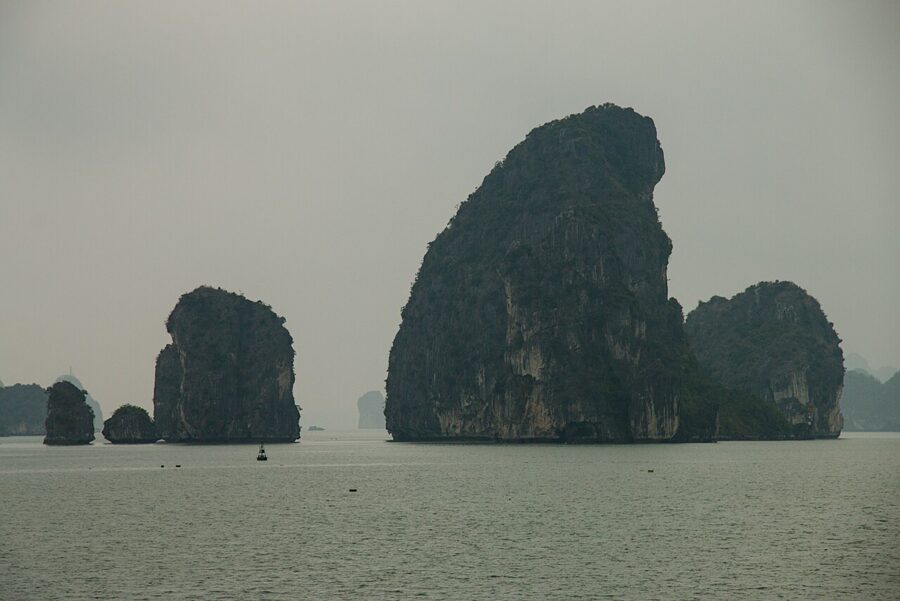

Hang Co sits about 70 stone steps up an island 19 kilometres from Tuan Chau, with stalactites inside and a view out over the bay from the far end. Vung Vieng has a natural rock arch the board calls the village gate, rowing-boat trips and pearl-farm visits. Cong Do is an official overnight anchorage. Bai Tu Long National Park itself, further east off Van Don, is a different trip that few cruises reach.
Getting there from Hanoi, and which port
The bay is a road trip. The expressway runs from Hanoi through Hai Phong to Ha Long, about 170 kilometres, and takes 2.5 to 3.5 hours depending on stops and Hanoi traffic. Motorbikes are not allowed on it.
- Limousine van. Nine- to 28-seat vans pick up in the Old Quarter and drop at Bai Chay or the ports, from about 260,000 dong (about $10) one way as of October 2026.
- Bus. Ordinary coaches leave My Dinh and Gia Lam bus stations for Bai Chay from about 230,000 dong (about $9), slower and dropping you in town rather than at the pier.
- Cruise shuttle. Almost every overnight cruise sells a return transfer from Hanoi; check whether it is included or extra.
- Private car. From about 1.19 million dong (about $46) per vehicle, worth it for three or four people.
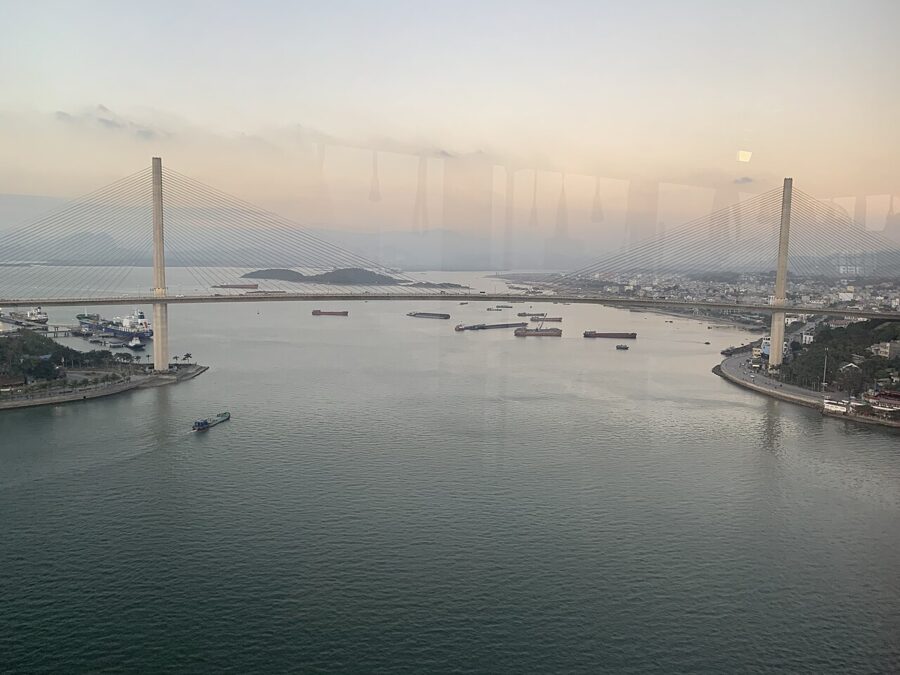

Two ports serve all eight routes. Tuan Chau International Passenger Port, on Tuan Chau island west of Bai Chay, handles many of the overnight cruises. Ha Long International Passenger Port at Bai Chay handles many day boats and the dinner cruises. Both have board ticket desks, so you can turn up, buy a route ticket and a seat on a shared boat at the counter.
Lan Ha cruises board at Got pier on Cat Hai or at Cai Beo on Cat Ba. Check which port your ticket names: Tuan Chau and Bai Chay are separate terminals, and the Cat Ba piers are in a different city altogether.
Two old shortcuts are gone. The seaplane flights from Hanoi and over the bay ended on 1 April 2026, and helicopter sightseeing has been suspended since 2023. The fast new option runs the other way: Sun PhuQuoc Airways began direct flights from Ho Chi Minh City to Van Don International Airport on 15 June 2026, four a week at launch, and Van Don is linked to Ha Long by expressway.


Weather, storms and safety
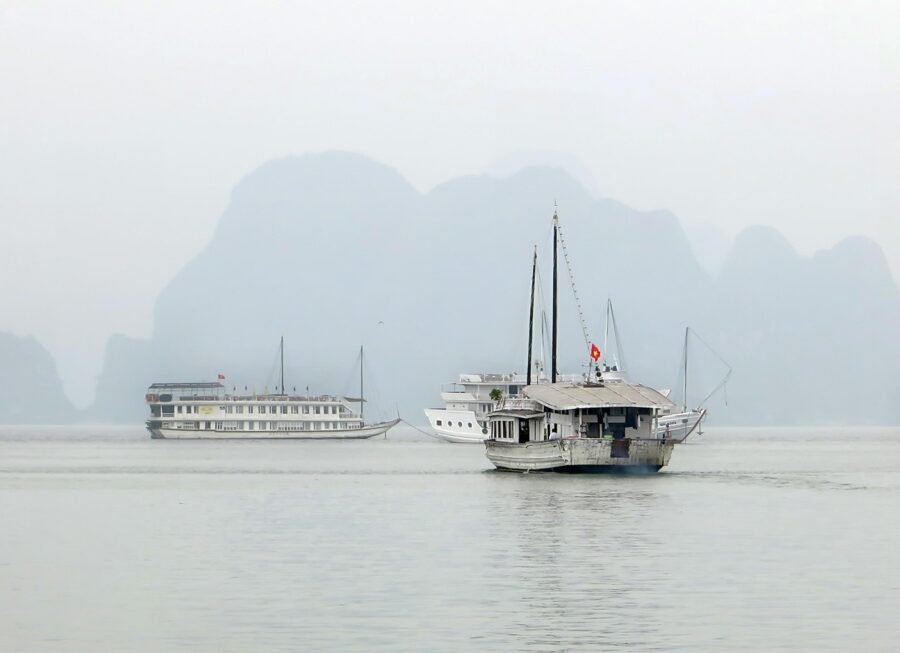
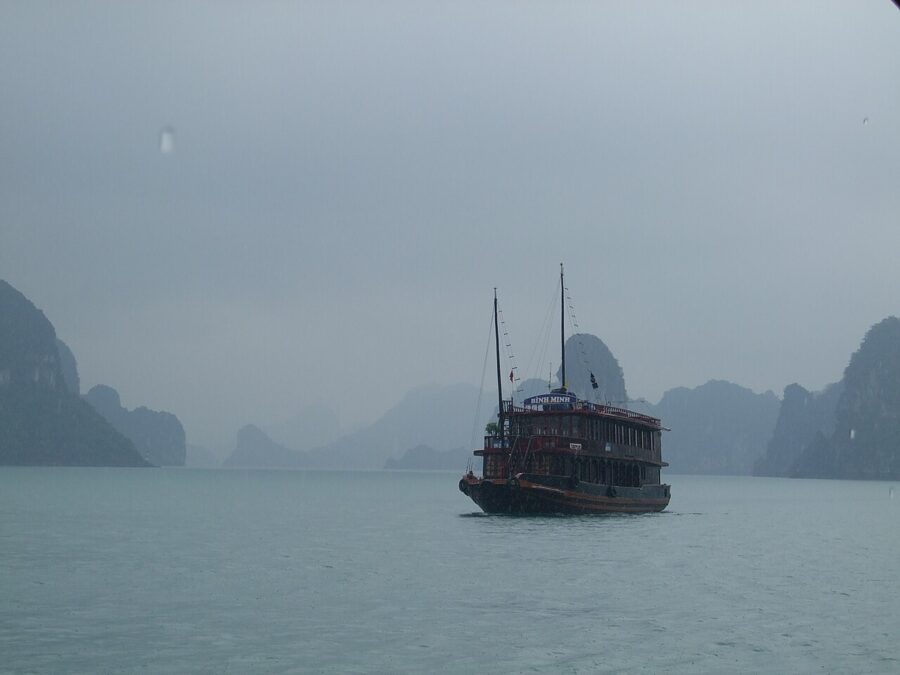
Ha Long has a northern climate, not a tropical one. Long-term records from the Bai Chay station give a January mean of 16.2°C and a July mean of 28.6°C. August is the wettest month with about 430 millimetres of rain, December the driest at 18. The surprise is how grey spring can be: February and March bring fog and drizzle that can flatten the view for days.
My pick is October and November: drier, clearer, around 155 to 180 hours of sun a month, and water still warm enough to swim in October. May and June are fine but hot and wetter. Storms in the Gulf of Tonkin cluster between June and September, and June to August is also the Vietnamese school holiday, so the bay is at its busiest just as the weather is least reliable. Storms in the centre, around Hoi An, peak later, in October and November, which is worth knowing if you are planning the whole length of the country.
When the boats stop
When a storm is forecast, Quang Ninh’s inland waterway port authority stops issuing departure permits and boats stay in port. In early July 2026, ahead of the year’s first named storm, overnight and evening boats were stopped from noon on 3 July. Day boats are often held too when a storm is close. Resumption waits for the final storm bulletin, so a cancellation can last more than a day.
Read your cruise’s weather clause before paying. Ask whether the operator refunds, rebooks or substitutes something else (a shorter coastal run, a hotel night) when the port authority cancels, and get the answer in writing.
The safety record
On 19 July 2025 the day boat Vịnh Xanh 58 left Bai Chay around 1pm with 49 people on board and capsized in a sudden squall near Dau Go that afternoon. Ten were rescued and 39 died. The morning forecasts had been fair and the squall warning came after the boat had sailed; its GPS signal dropped at 2.05pm, and the first accident report reached the authorities at 3.30pm.
Officials said afterwards that passengers on tourist boats were only required to put life jackets on when danger arose, not for the whole trip. Since then the rules have tightened. From 30 June 2026 every tourist boat and speedboat must declare its plan when entering or leaving a port, anchorage or overnight point, and boats on the Ha Long–Lan Ha link must carry GPS and AIS tracking. A fatal capsize is rare here, but it is not unknown, and the bay’s afternoon squalls in summer are real.

What to check on any boat:
- The registration number painted on the hull (QN for Quang Ninh, HP for Hai Phong) and that it matches the ticket.
- Where the life jackets are, that there are enough in children’s sizes, and that the crew shows you before departure.
- That the boat has a departure permit for today if the sky looks wrong; staff can tell you.
- On an overnight boat, smoke detectors in the cabin and a second exit from the lower deck.
- That kayaks come with vests and a crew member on the water, not just a pointing finger.
- Whether the price includes the board’s fee and the port charge, or adds them at the pier.
What a fair cruise costs, and what’s extra
Prices below are what Ha Long sellers listed in dong during 2026, for a shared boat. They are per person except the private boat. Compare like with like: same route, same nights, same inclusions.
| Level | Typical 2026 price | What it usually includes |
|---|---|---|
| DIY shared day boat, route 1 | about 460,000 dong (about $18) | 150,000 dong seat, route fee, port charge; no lunch, no transfer |
| DIY shared day boat, route 2 | about 510,000 dong (about $20) | 200,000 dong seat, route fee, port charge |
| Packaged day boat from the port | 680,000 to 800,000 dong (about $26 to $31) | Boat, fees, lunch, kayak or rowing boat; no Hanoi transfer |
| Private 48-seat day boat | 2.5 to 6 million dong per boat (about $95 to $230) | Boat and crew only; fees and lunch extra |
| One night, 3-star boat | about 2.2 to 2.4 million dong (about $85 to $92) | Cabin, meals, fees, kayak, one cave |
| One night, 4-star boat | about 2.6 to 2.9 million dong (about $100 to $110) | As above, better cabins and food |
| One night, 5-star boat | about 2.7 to 4.9 million dong (about $105 to $190) | Bigger cabins, often with balconies, and more crew |
The extras are predictable. Drinks are almost never included. Transfers from Hanoi are often extra, as are a second kayak session, spa treatments and tips. Weekend and holiday surcharges are common, and summer weekends sell out a week or two ahead.
Be wary of anything priced below the floor. A one-night cruise has to pay at least 550,000 dong in fees on route 2 before it feeds you, so I would be suspicious of a “two-day cruise” from Hanoi with transfer for less than about 1.5 million dong (about $58). Something is being cut: the route, the boat or the safety kit.
Ask for the route number in writing, and the name and registration of the boat. A seller who will not give either is telling you something.
To do it yourself, take a limousine van to Bai Chay or Tuan Chau the night before, stay near the port, and be at the ticket desk early. Buy a route 2 ticket and a shared-boat seat, take the first departure, and you will reach Sung Sot before the Hanoi day trips have left the expressway.