
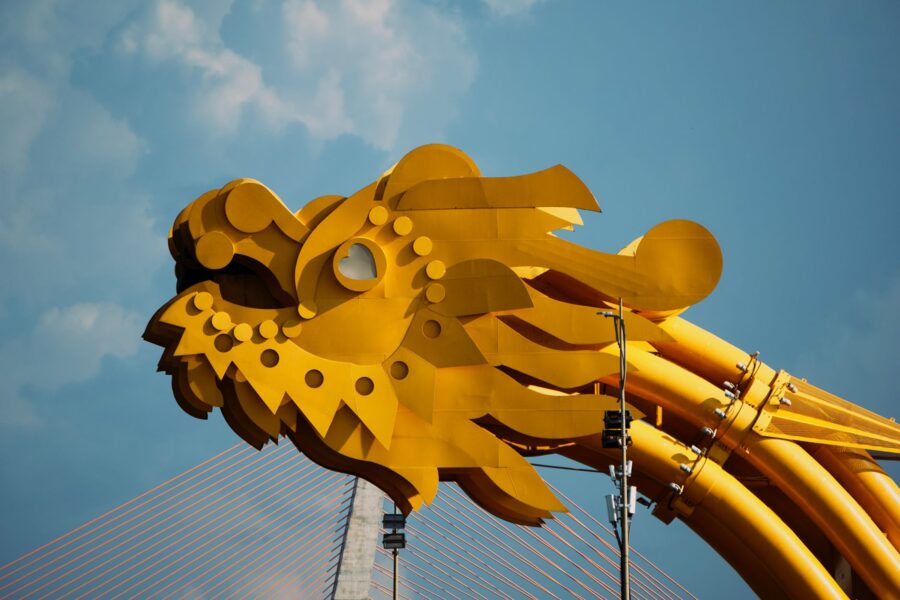
The Dragon Bridge breathes fire at nine o’clock on Saturday and Sunday nights, and by half past eight the pavement around its head is three deep in phones. It is the one show Da Nang puts on for visitors. The rest of the time the city gets on with being the most practical base in central Vietnam: a beach inside the city limits, an airport ten minutes from the river, and the old capital, the old port and the Cham temples all within a day’s reach.
Most people treat Da Nang as the airport for Hoi An and leave the same afternoon. For anyone staying longer than a weekend, I think that is a mistake. Hoi An’s beaches shift with every storm season; Da Nang has the long, swimmable sand, more rooms at every price, the train station and the Museum of Cham Sculpture, which explains everything you will see at My Son.
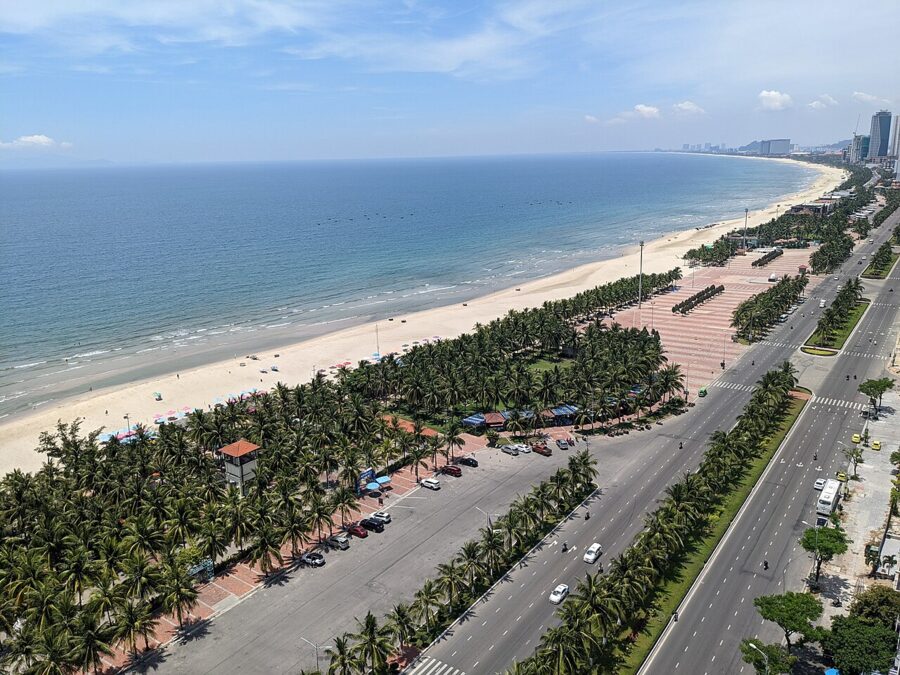

Is it worth a visit on its own? For three or four nights, yes, if you like a city that works: Grab cars arrive in minutes, the seafront has a footpath its whole length, and the food is cheap and regional. Skip it if you want old streets and quiet. Da Nang has been rebuilt at speed since it became a centrally run city in 1997, and most of what you see along the river is younger than that.
Contents
How the city fits together
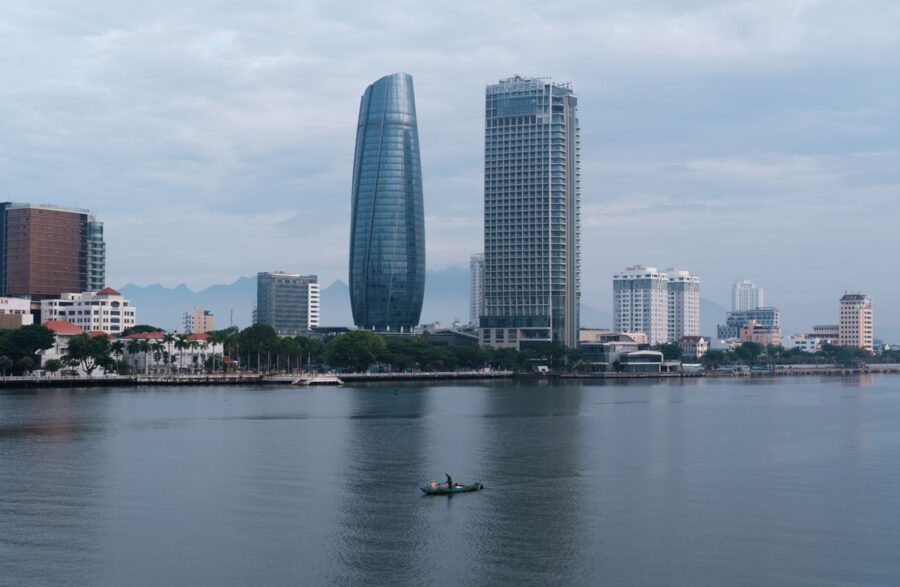
The Han River (sông Hàn) runs north into Da Nang Bay and splits the city in two. The west bank is the old centre: markets, museums and the riverside promenade on Bach Dang Street. The east bank is a strip of hotels, seafood restaurants and towers between the river and the open sea, with the beach running south from the Son Tra peninsula towards the Marble Mountains and, eventually, Hoi An.
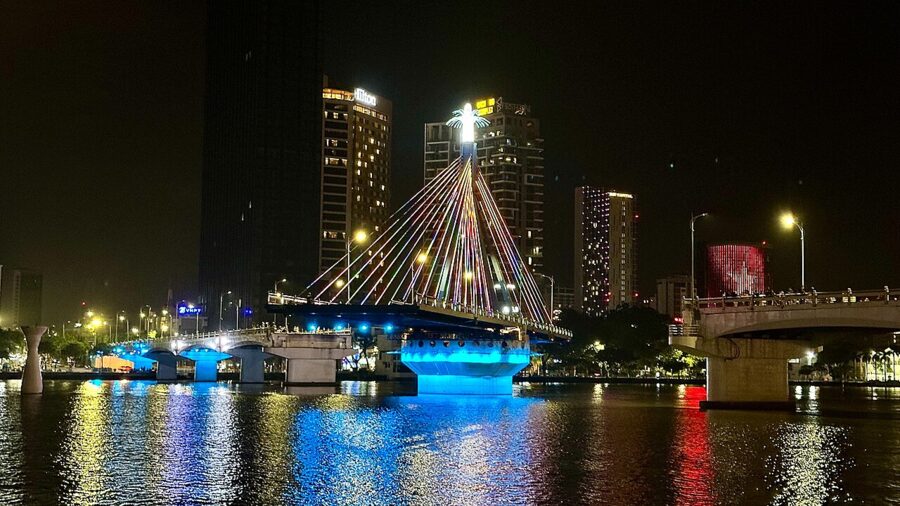
Several road bridges link the two halves. The two that matter to a visitor are the Dragon Bridge (Cầu Rồng), which carries Nguyen Van Linh Street from the airport side towards the beach, and the Han River Bridge (Cầu sông Hàn), opened in 2000 and built to pivot on its central pier for shipping; the city still swings it open late on some nights, such as over Tet.

Where to stay depends on what you came for. The east bank near My Khe suits a beach trip and puts you a short ride from the Dragon Bridge; the west bank around Bach Dang and Tran Phu suits eating, walking and early trains. Non Nuoc, further south near the Marble Mountains, is resort country: quieter sand, longer rides into town.
Da Nang now includes Hoi An
On 1 July 2025 Vietnam abolished its districts and merged dozens of provinces, and Quang Nam province was folded into Da Nang. Under the National Assembly’s Resolution 202/2025/QH15 the new city covers 11,859.59 square kilometres and had 3,065,628 people at the merger, divided into 94 local units: 23 wards, 70 rural communes and the Hoang Sa special zone. The old Da Nang was about a ninth of that area.
For a traveller the change is mostly on paper, but it is everywhere on paper. Hoi An’s Ancient Town is now Hoi An ward of Da Nang city, the Cham Islands are Tan Hiep commune and My Son is in Thu Bon commune, so bookings and tickets now read “TP Đà Nẵng” instead of “Quảng Nam”. If an app cannot find an address under its new ward name, search the street alone.
My Khe and the city beach
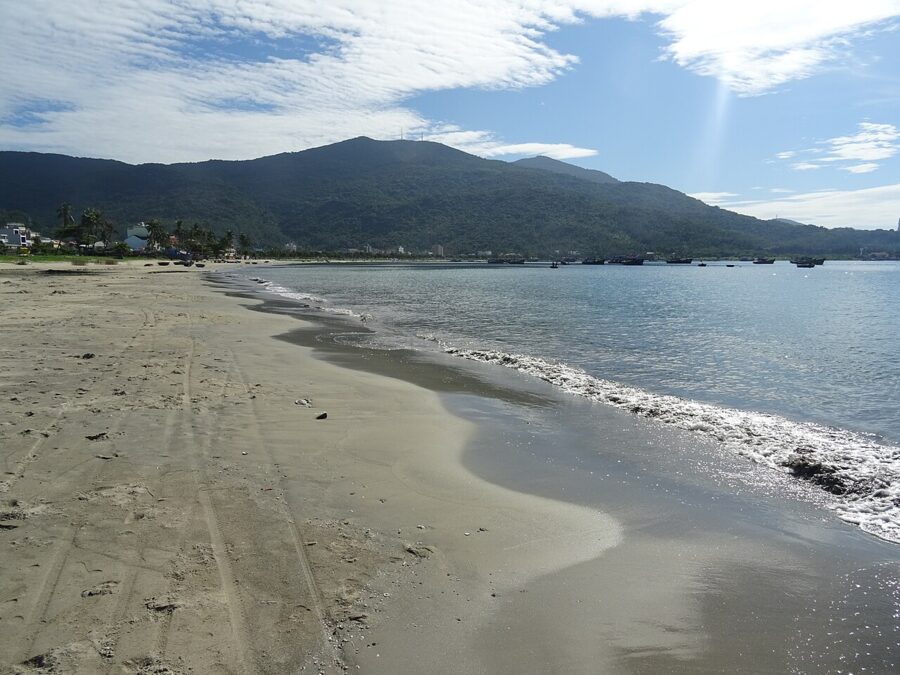

My Khe (Bãi biển Mỹ Khê) is the name everyone uses for the city’s beach, though strictly it is one stretch of a single run of sand that carries on south as Bac My An, then Non Nuoc below the Marble Mountains. It is wide, clean and public, with no entrance fee and a paved promenade behind it.
The best hours are the early ones. From before five the sand fills with residents swimming, jogging and doing group exercises, and the sun comes up out of the sea behind the fishing boats. By nine they have gone to work; from about four the beach fills again until dark. At midday in summer it is empty and close to unbearable.
Swim between the flags in front of the lifeguard posts. From roughly May to August the sea is usually calm, warm and clear. From October to February the north-east monsoon pushes big surf onto this coast, rip currents are common and the red flags go up. Surfers like it then; swimmers should not.
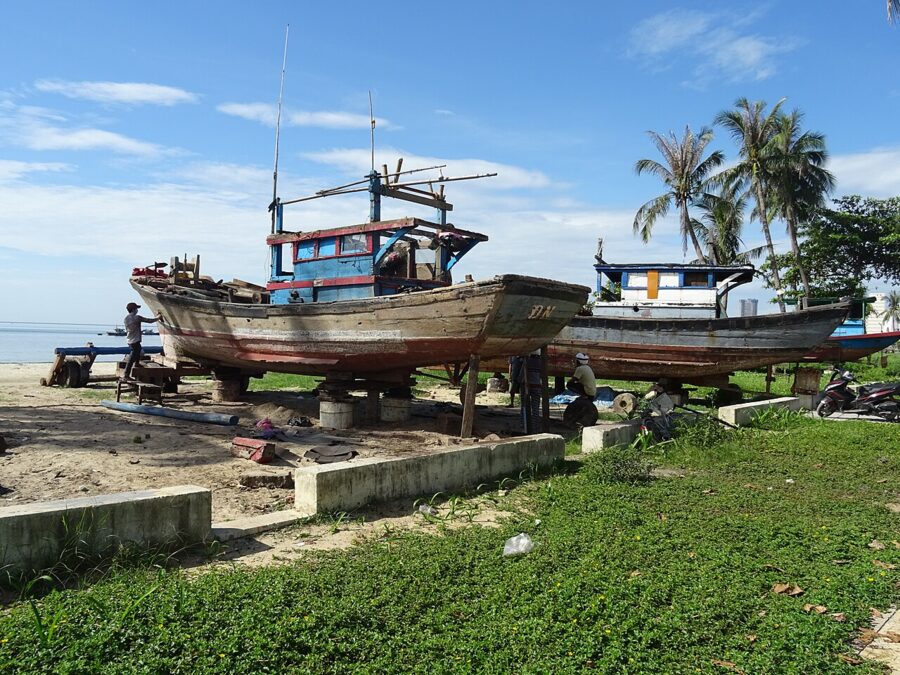

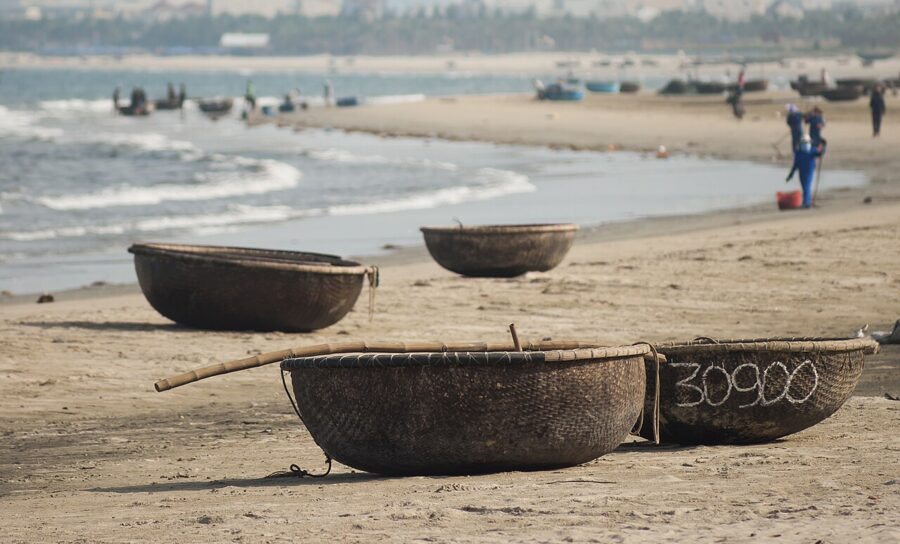
The fishing fleet still works this coast, and the round woven basket boats (thúng chai) are pulled up on the sand between trips. Further south, past the big resorts, the beach gets quieter, and at Non Nuoc you can swim with the limestone peaks behind you.

The Dragon Bridge and the river at night
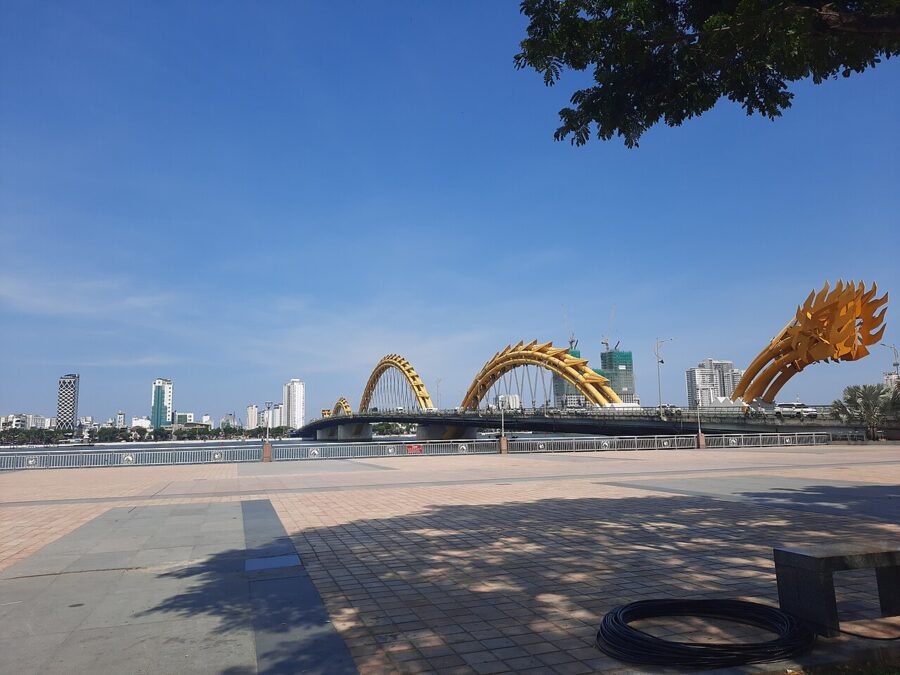

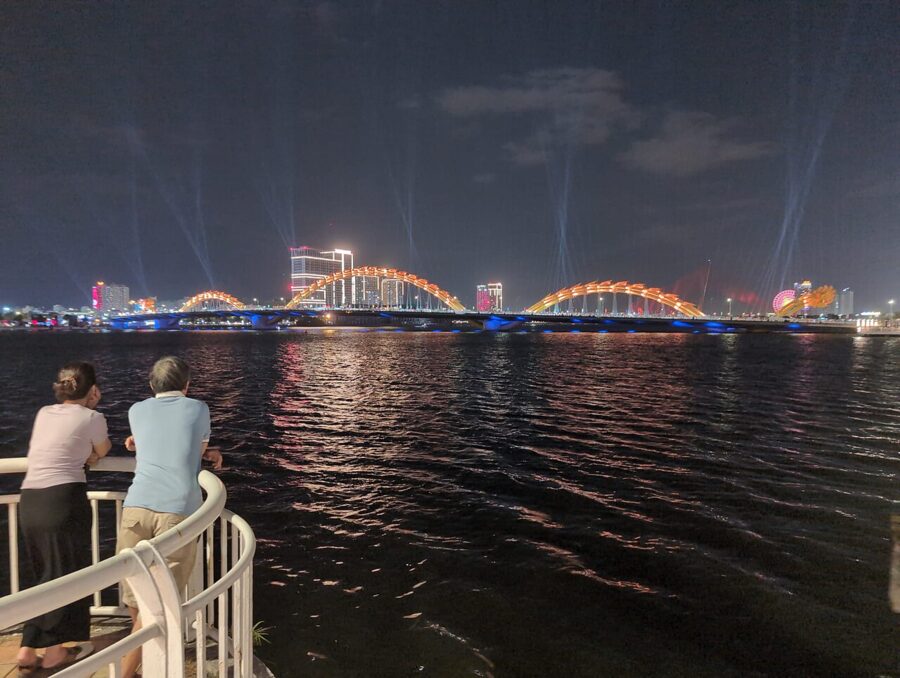
The Dragon Bridge is 666 metres long, a yellow steel dragon whose body rises and falls in arches over six lanes of traffic. It opened on 29 March 2013, thirty-eight years to the day after North Vietnamese forces took the city in 1975, and the head faces east towards the sea. After dark its lights cycle through colours, and on weekend nights it performs.
The show runs at 21:00 on Saturdays and Sundays, with extra nights around big holidays such as Tet and National Day on 2 September. Police stop traffic onto the bridge about fifteen minutes before. The dragon breathes fire first, in rolling bursts from its mouth, then sprays water, and the whole thing is over in well under twenty minutes. If you stand on the bridge right under the head, you will get wet.
The best place to watch is the east bank, on the riverside near the head, or one of the cafés with an upper floor on that side; arrive by 20:15 on a Saturday. The west bank gives you the whole length of the bridge but the fire looks small at that distance.
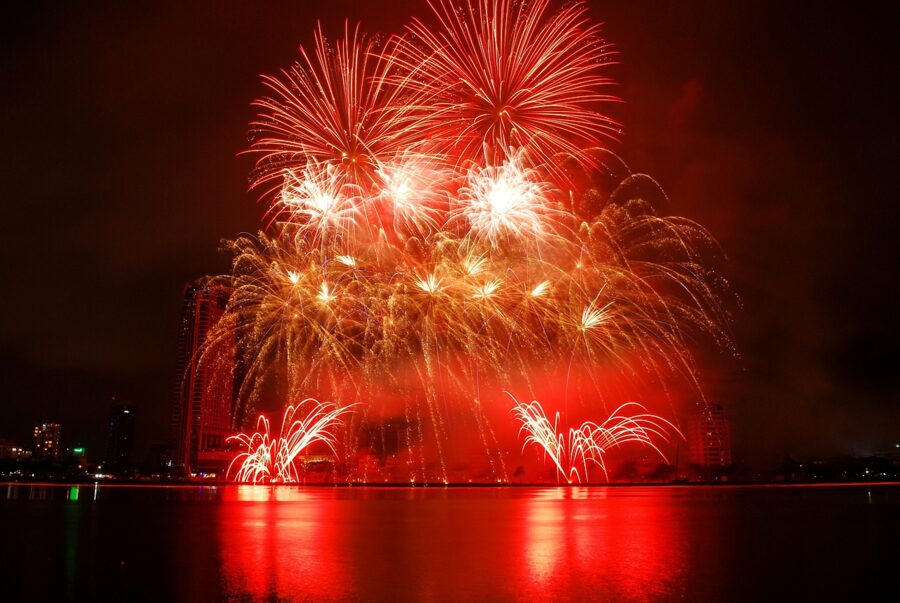
Between late May and mid-July the river hosts the Da Nang International Fireworks Festival (DIFF). In 2026 it ran over six competition nights from 30 May to 11 July, with ten teams and grandstand seats from 1 million to 4 million dong (about $38 to $154). You do not need a seat: the riverbanks fill with people watching free, so arrive two hours early and bring water. The city sets the 2027 dates closer to the season.
The Marble Mountains
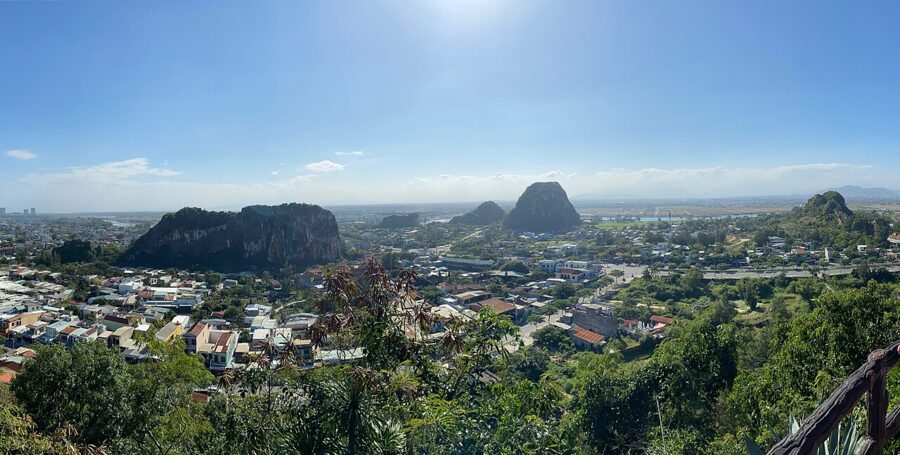

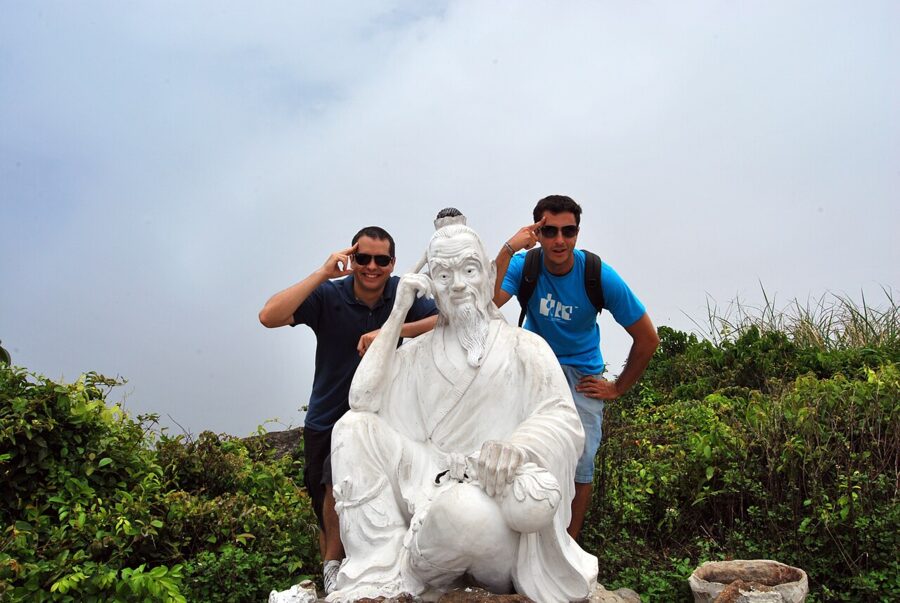
The Marble Mountains (Ngũ Hành Sơn, the Five Elements Mountains) are a cluster of limestone and marble outcrops rising straight out of the flat coast south of the city. Each is named for an element, Kim (metal), Moc (wood), Thuy (water), Hoa (fire) and Tho (earth), and Hoa Son is in fact two peaks, so there are six hills in all. Their caves have held shrines for centuries, and in 2018 the complex became a special national relic, the country’s highest heritage rank.
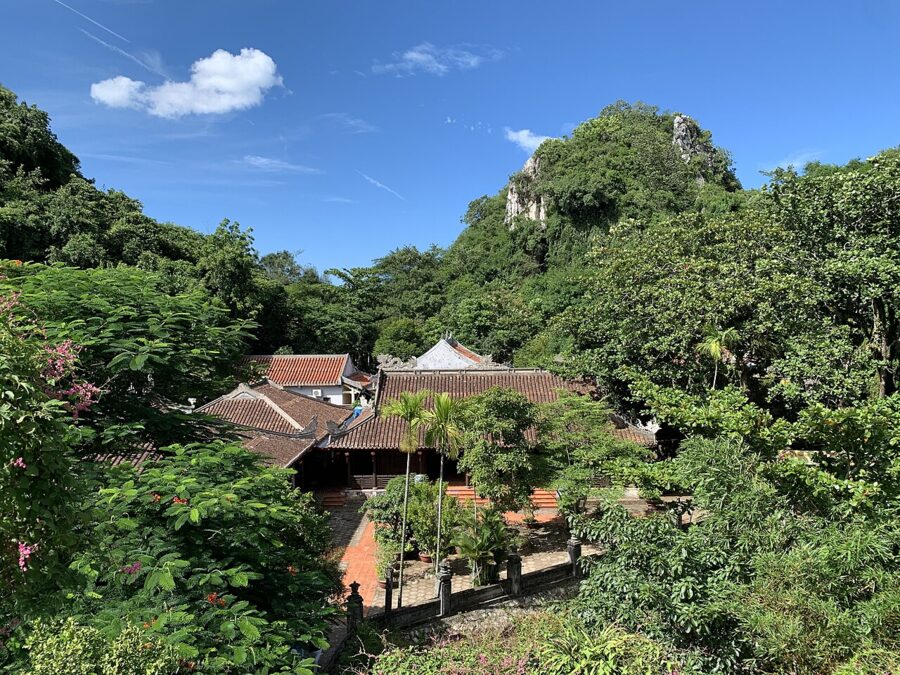
Thuy Son, the Water Mountain, is the one you visit. A stairway of about 150 steps climbs from the main gate on Huyen Tran Cong Chua Street, and a lift does the first part of the climb if the heat is bad; the rest is on foot. At the top are Linh Ung Pagoda, Tam Thai Pagoda, viewpoints across the coast and a chain of caves, some lit by holes in the rock.

| Ticket (as of 2025) | Price |
|---|---|
| Thuy Son, adult | 40,000 dong (about $1.50) |
| Lift up Thuy Son | 15,000 dong (about $0.60) one way, 30,000 dong (about $1.15) return |
| Am Phu cave, adult (separate ticket) | 20,000 dong (about $0.80) |
| Site guide | 50,000 dong (about $1.90) per group |
| Children under 6 | Free |
Huyen Khong cave is the reason to climb. It is a tall chamber with a seated Buddha, shrines along the walls and openings in the roof, so the light falls in shafts through the incense smoke late in the morning. Tang Chon and Van Thong caves are smaller and darker, with passages that climb steeply over polished rock. Wear shoes with grip: the marble steps are polished smooth by feet and slippery after rain.
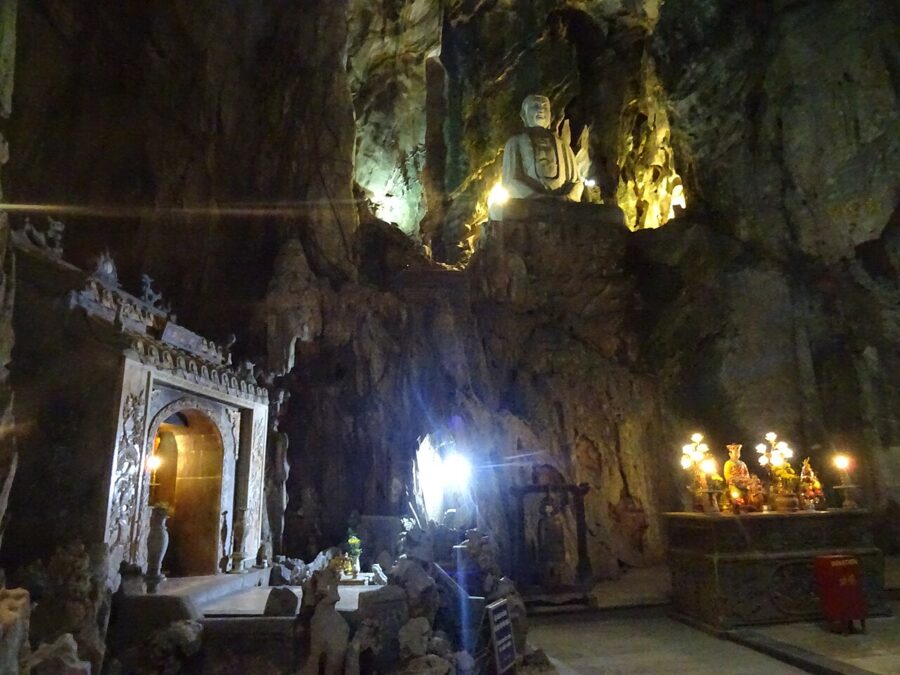

Am Phu cave, at the foot of the mountain, is something else. Its name means the underworld, and the cave is laid out as a descent through Buddhist hell, with statues of the punished in the gloom and a climb back up towards paradise at the end. It needs its own ticket and at least half an hour. Children tend to love it; some adults find it a bit much.
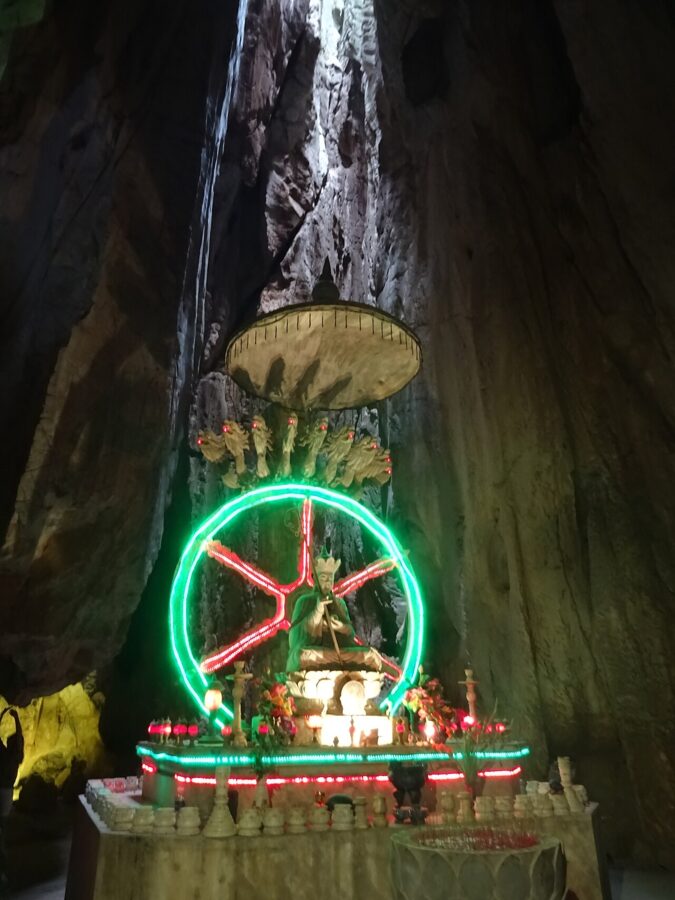

The cave walls and cliffs carry 78 carved inscriptions, 76 in classical Chinese and two in Vietnamese Nôm script, the oldest dated 1631. In November 2022 these cliff inscriptions (ma nhai) were entered on UNESCO’s Memory of the World register for Asia and the Pacific, and they are easy to walk straight past. Look up at the cave mouths and on the rock faces along the paths.
At the foot of the mountains, the carvers of Non Nuoc stone village have worked marble for generations, and their craft was listed as national intangible heritage in 2014. The road to the gate is lined with workshops selling everything from a pocket Buddha to a two-metre lion. The mountains themselves are protected, so the stone comes from elsewhere, and some cheaper pieces are resin. Haggle hard if you buy.
Go when the gates open, around seven, or after half past three; in between, tour coaches unload at the main gate and the caves fill. Two hours covers Thuy Son and Am Phu. A Grab from the Dragon Bridge takes about twenty minutes along the beach road, and Non Nuoc beach is across the road if you want a swim afterwards.
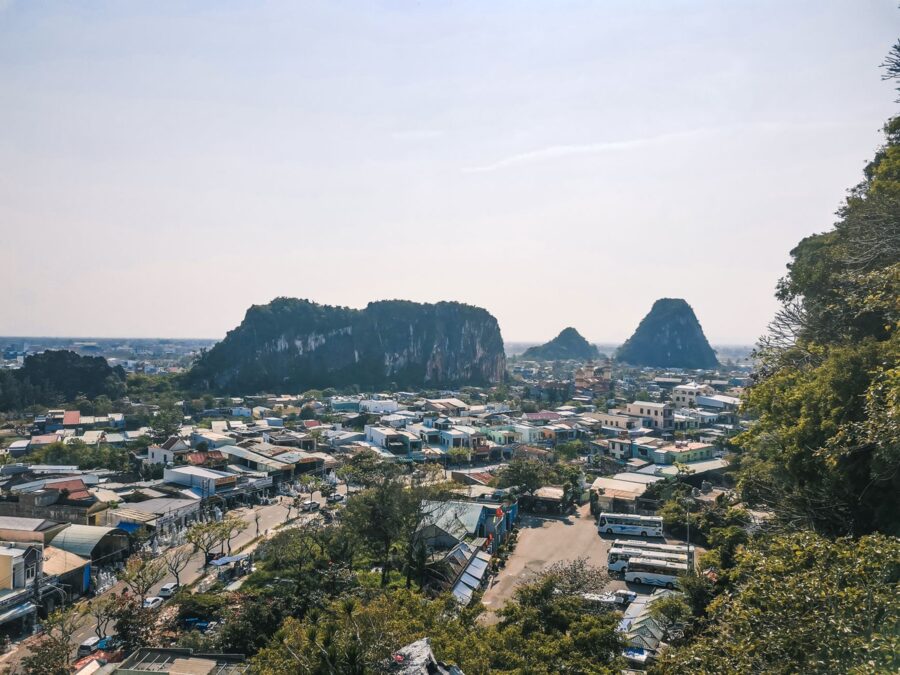
Son Tra peninsula
Son Tra is the green headland that closes the north end of the beach. Much of it is forest reserve, home to the red-shanked douc langur, a monkey with a grey body, maroon legs and a face that looks painted on, and how much of it to build on has been argued over for years. For a visitor it means a pagoda, a few viewpoints and some of the best coastal riding near the city.
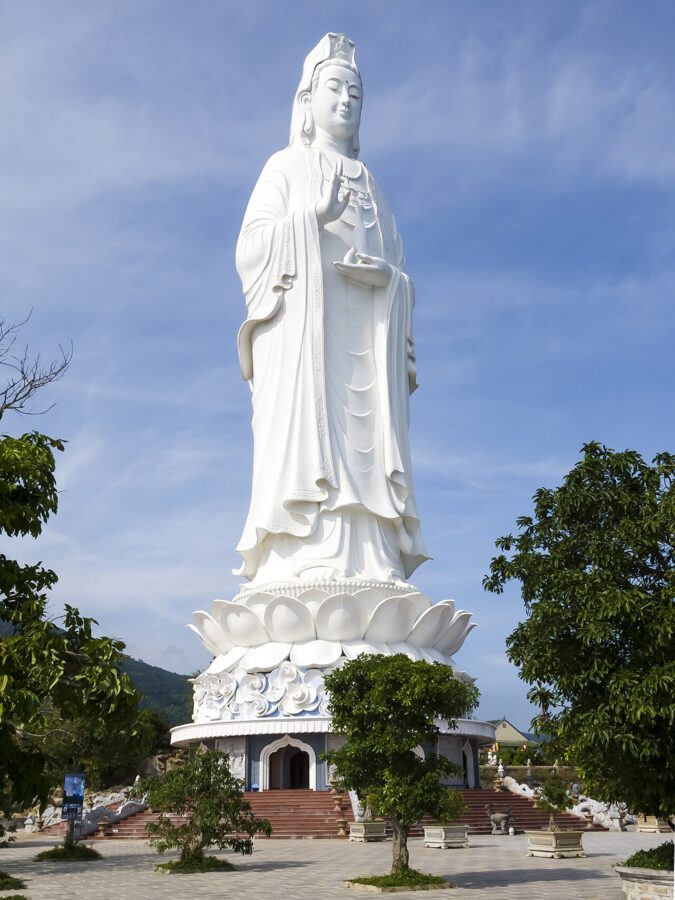

Linh Ung Pagoda at Bai But is the reason most people go. The pagoda was built in the 2000s, and its white statue of Quan Am, the Bodhisattva of Mercy, stands 67 metres high, facing out to sea as a protector of the fishing boats. You can see it from almost anywhere on My Khe. The grounds are free, and the terrace in front of the statue looks back across the bay to the city.
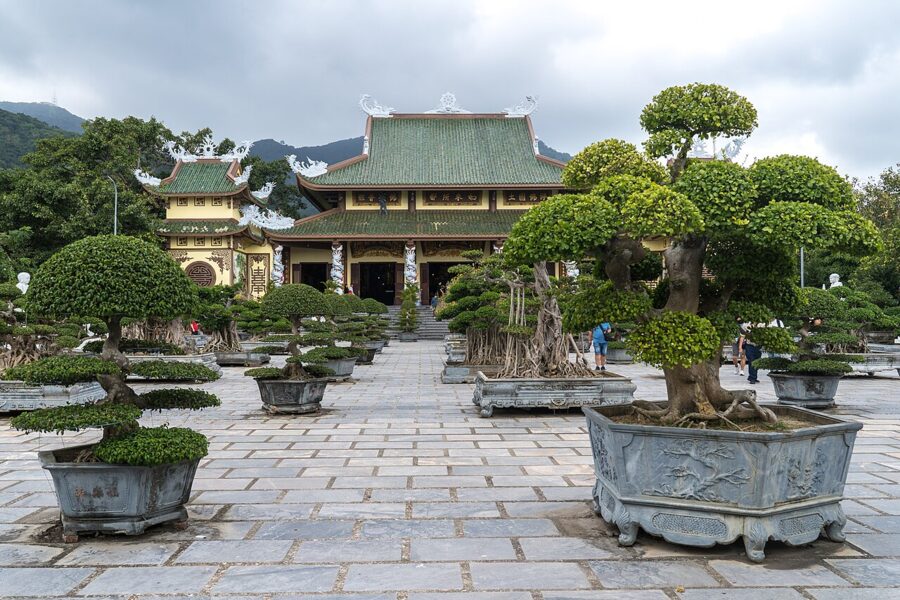

Above the pagoda the roads get complicated. As of August 2026 the peninsula’s management board ran three approved routes:
- Tien Sa, Suoi Om and Ban Co Peak: bicycles, motorcycles and walkers, but not automatic scooters, the kind most visitors rent. It was closed that month for storm repairs.
- Yet Kieu, Ban Co Peak and Bai Bac: one-way, and closed to bicycles, automatic scooters and coaches over 24 seats.
- Bai Bac junction to the old banyan tree: on foot only.
Opening hours are 07:30 to 18:30 from March to September and 07:30 to 17:30 from October to February. In the wet season the board suspends sightseeing whenever the weather turns, and on 9 October 2026 it closed the peninsula to sightseeing until further notice as the rains began. Between October and February, ask your hotel whether the roads are open before you set out. The rest of the year, go early and look for the langurs in the trees along the upper road.
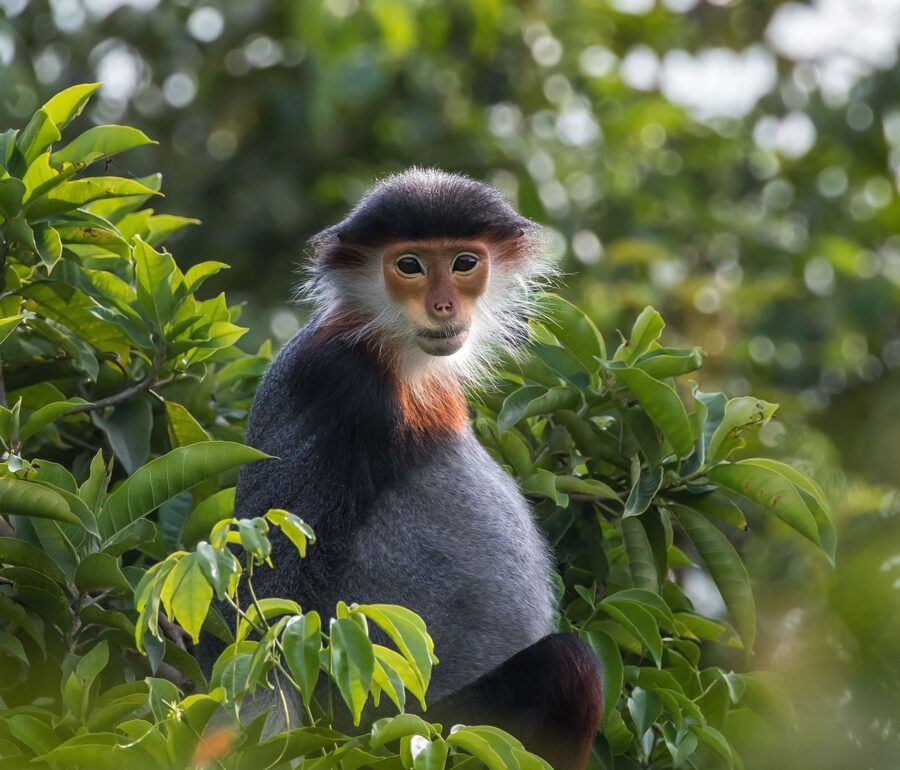
Feeding the monkeys is banned, and in July 2026 the city cracked down on roadside stalls and on people doing it anyway. Watch them from the road and keep your food in the bag.

The Museum of Cham Sculpture
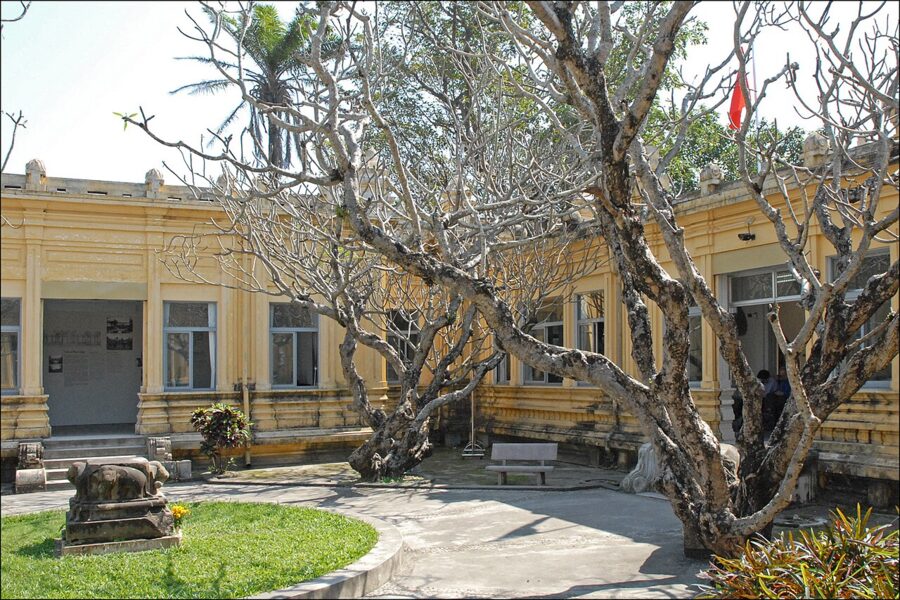

The kingdom of Champa ruled this coast for more than a thousand years before the Vietnamese pushed south, and its best surviving sculpture is in one yellow colonial building at the west end of the Dragon Bridge. The École française d’Extrême-Orient began the museum in 1915 and opened it in 1919 with 160 pieces gathered from ruined temples. It now holds more than 2,000 artefacts, shows nearly 400 of them, dating from roughly the fifth to the fifteenth centuries, and twelve of them have been declared national treasures.
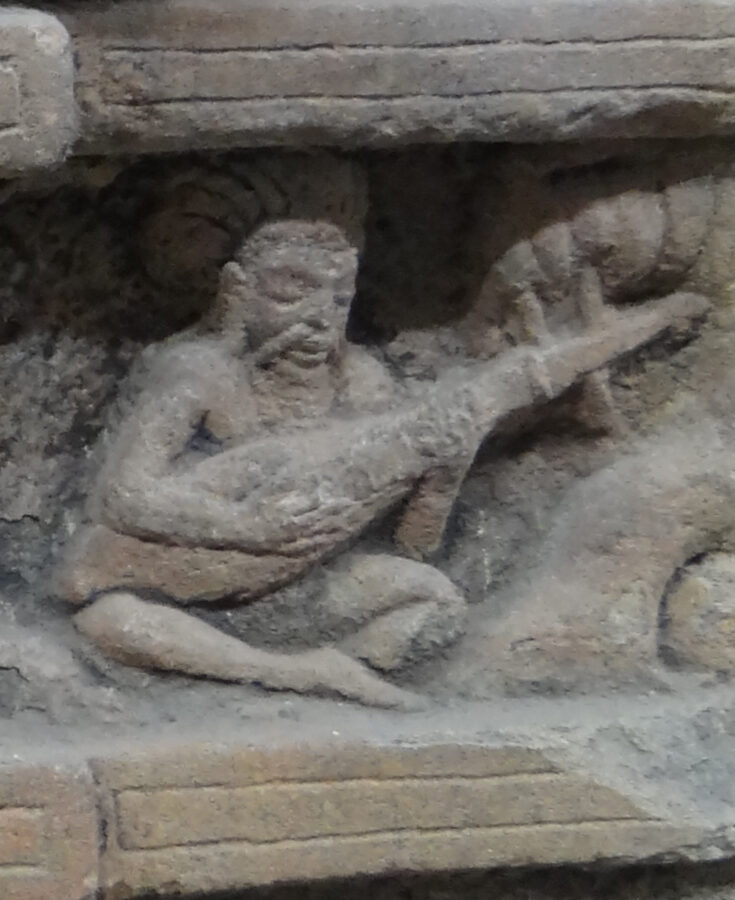
The rooms are arranged by site: My Son, Tra Kieu, Dong Duong, Thap Mam and others. That makes it the best possible preparation for My Son, whose towers stand empty because their carvings are here. Look for the altar pedestal from Tra Kieu, carved with dancing apsaras and musicians, and the many Shivas, Ganeshas and Garudas that show how thoroughly Hindu the kingdom was.
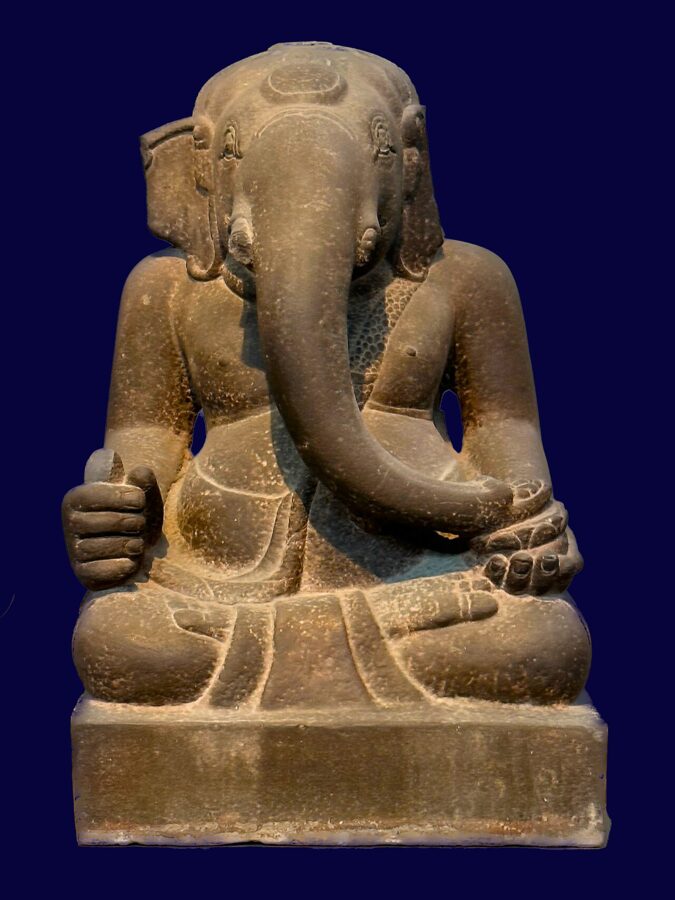
The museum opens daily from 07:00 to 17:00, and a ticket costs 60,000 dong (about $2.30), as of July 2025. Give it ninety minutes. On a hot day it makes a good first stop of the morning, followed by coffee by the river.

Ba Na Hills and the Golden Bridge
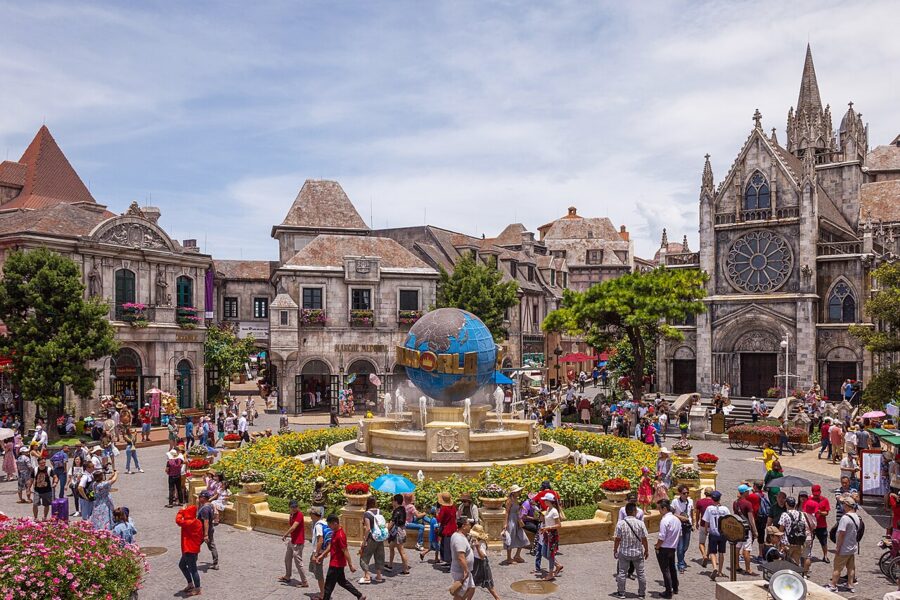
Ba Na is a mountain about 25 to 30 kilometres south-west of the city, and the top of it is now a theme park. The French found it in 1901, when Governor-General Paul Doumer sent a Captain Debay to look for a cool hill station, and villas followed. The summit is 1,487 metres high and averages about 18°C. Little of the colonial resort survives; Sun World built a new one in its place: a mock French village with a stone church, gardens, a funicular, an alpine coaster, an indoor amusement park called Fantasy Park and buffet restaurants.
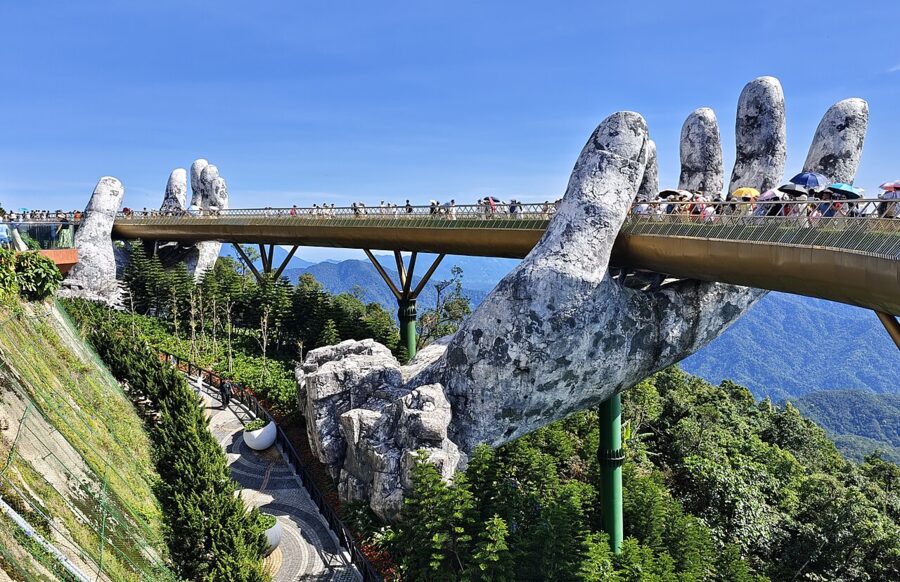
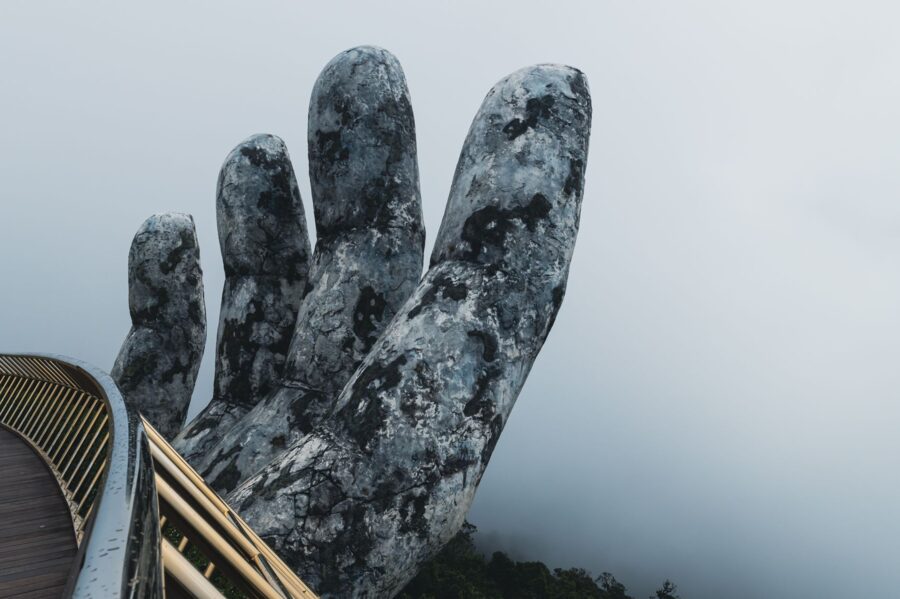
The Golden Bridge (Cầu Vàng) is why it is famous. It is a 150-metre gold-painted footbridge that curves around the hillside, held up by two enormous weathered hands. It opened in June 2018, designed by TA Landscape Architecture of Ho Chi Minh City, and the hands are fibreglass over wire mesh, made to look like moss-covered stone. Photographs of it went round the world that summer, and it has not been quiet since.
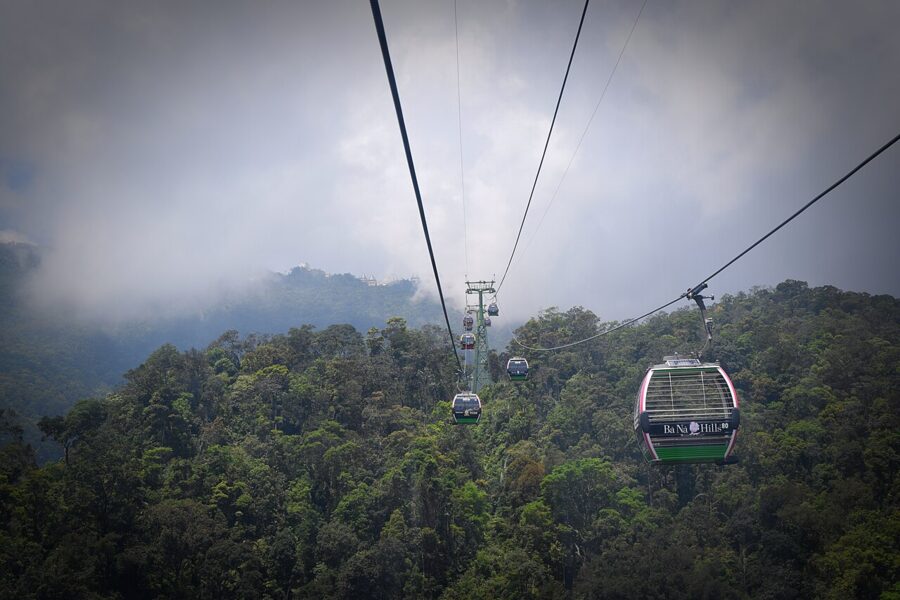
Getting up is part of the trip. The cable car from Toc Tien station to L’Indochine opened in March 2013 and set four Guinness records, among them a length of 5,801 metres and a rise of 1,368 metres. The ride crosses forest and waterfalls, then cloud. On a clear day the view back to the coast is the best thing on the mountain.

The ticket is the problem. As of 2026 a full-price adult ticket for visitors from outside Da Nang is 1 million dong (about $38), and children’s tickets are 800,000 dong (about $31). Since the 2026 Tet holiday Sun World has sold the ticket with three days of unlimited cable-car rides, subject to conditions you should check at the counter.
Under its “First 18-25” offer, visitors aged 18 to 25 pay from 500,000 dong (about $19) until 31 December 2026. Buffet lunches cost extra, food on the mountain is at theme-park prices, and Sun World runs offers constantly, so check its booking page before you go.
Now the crowds. The bridge is busiest from about ten until two, when it is a slow shuffle of selfie sticks, and on Vietnamese holidays the queue at the cable-car base runs long. Cloud often settles on the summit, sometimes all day, and in the wet months from September to December the views can disappear completely. You will go up into a white room with a bridge in it.
So is it worth it? If the Golden Bridge is the picture you came for, yes: be at the base station when the first cars run, head for the bridge before anything else, and you will have it with a few hundred people instead of a few thousand. If you are lukewarm about theme parks, I would spend the money and the day on Hue or My Son. The park stays open until 22:00, and the summit after the day-trippers leave is cool, quiet and lit, which is the case for staying the night in one of the hotels at the top.

Getting there takes 45 minutes to an hour by car. A Grab is the easy way. A guided trip helps with logistics more than understanding; a fair one includes transport and the ticket and leaves Da Nang early.
What to eat, and where
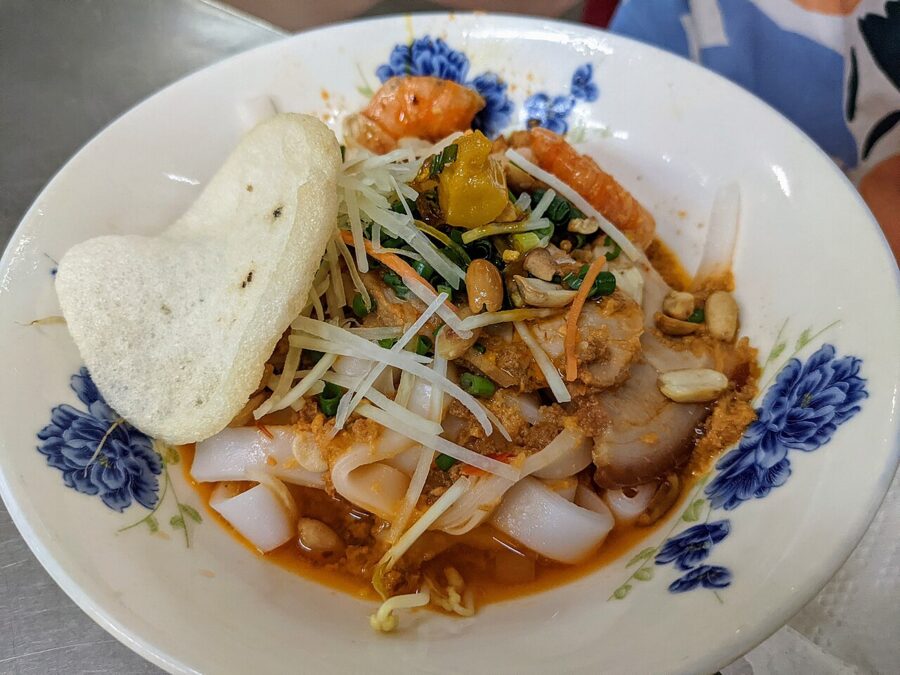

Da Nang eats like the old province of Quang Nam, which is to say with turmeric, peanuts, fermented fish and very little broth. Four dishes are worth hunting down.
- Mì Quảng (Quang-style noodles): wide yellow rice noodles in a shallow pool of rich broth, with shrimp, pork, a quail’s egg, roasted peanuts, a heap of herbs and a toasted sesame cracker to crumble in. It is a breakfast and lunch dish, and the chicken version (mì Quảng gà) is as common as the pork and shrimp.
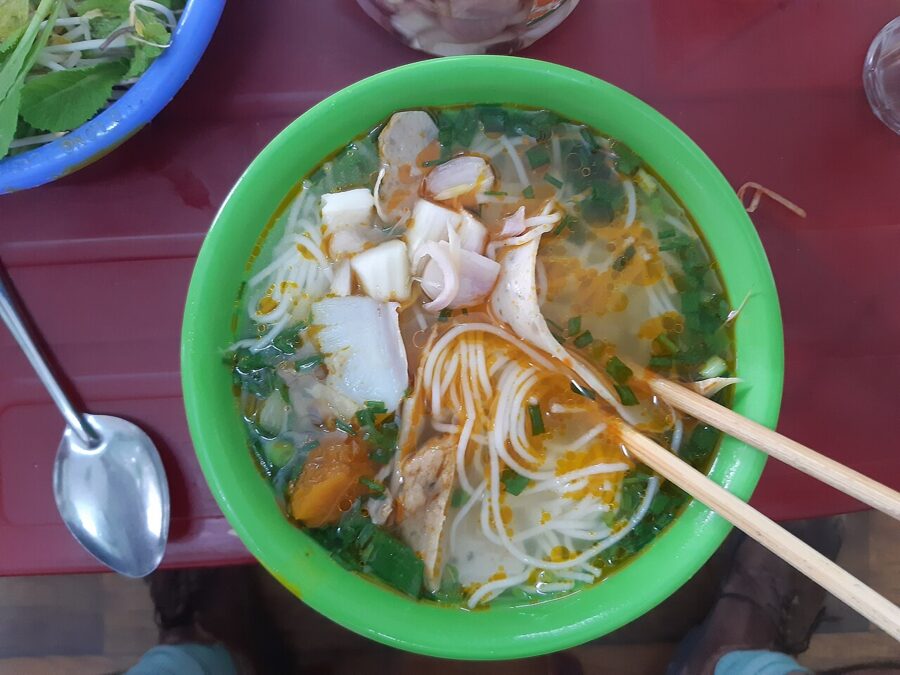
- Bún chả cá (fish-cake noodle soup): the city’s own breakfast, rice vermicelli in a clear broth with slices of fried and steamed fish cake, pumpkin and tomato. Many stalls sell out by mid-morning.
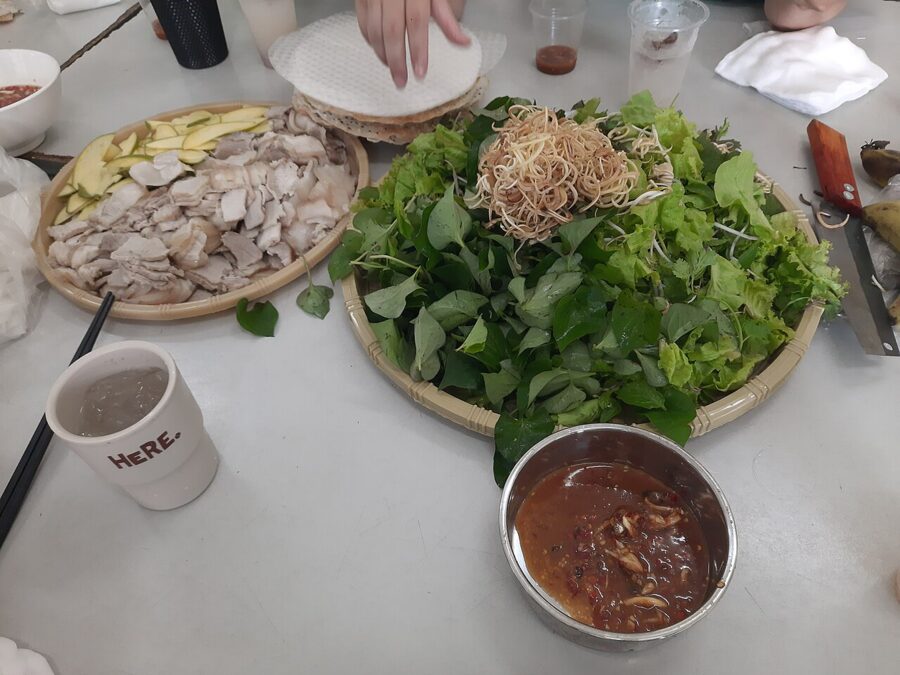
- Bánh tráng cuốn thịt heo (pork in rice paper): thin slices of boiled pork, herbs, cucumber and green banana that you roll yourself in rice paper and dip in mắm nêm, a pungent sauce of fermented anchovy, pineapple and chilli. It is the dish that tells you whether you like Central Vietnam.
- Gỏi cá Nam Ô (Nam O raw fish salad): sliced raw fish cured with lime and served with herbs and a thick dipping sauce, from the fishing village of Nam O at the north end of the bay, which is also known for its fish sauce.

For seafood, the east bank has rows of restaurants along Vo Nguyen Giap and Hoang Sa streets with tanks of fish, crab, clams and shellfish out front. You point, they weigh it and cook it the way you ask. Agree the price per kilo and the weight before it goes in the pot, and check the bill; the places full of Vietnamese families are usually the fairest.

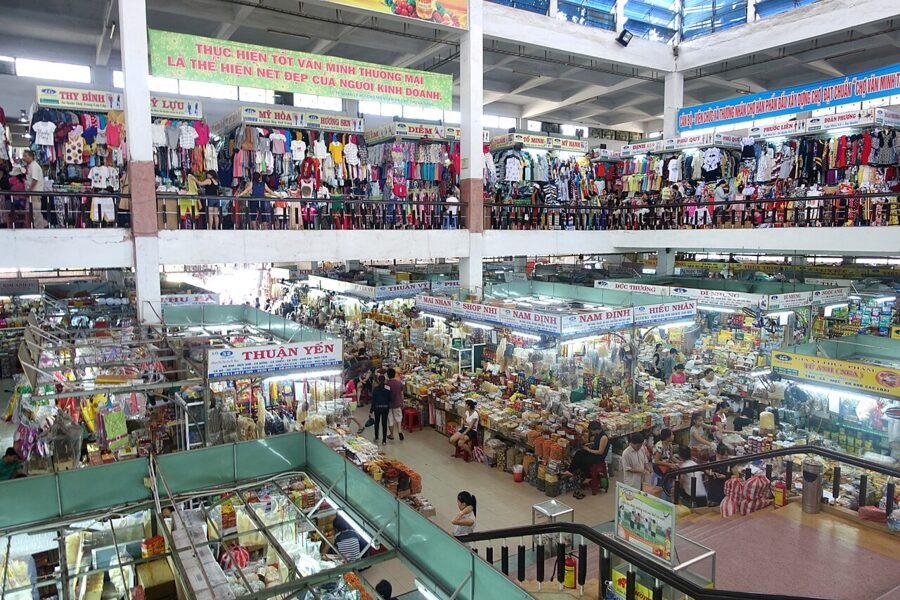
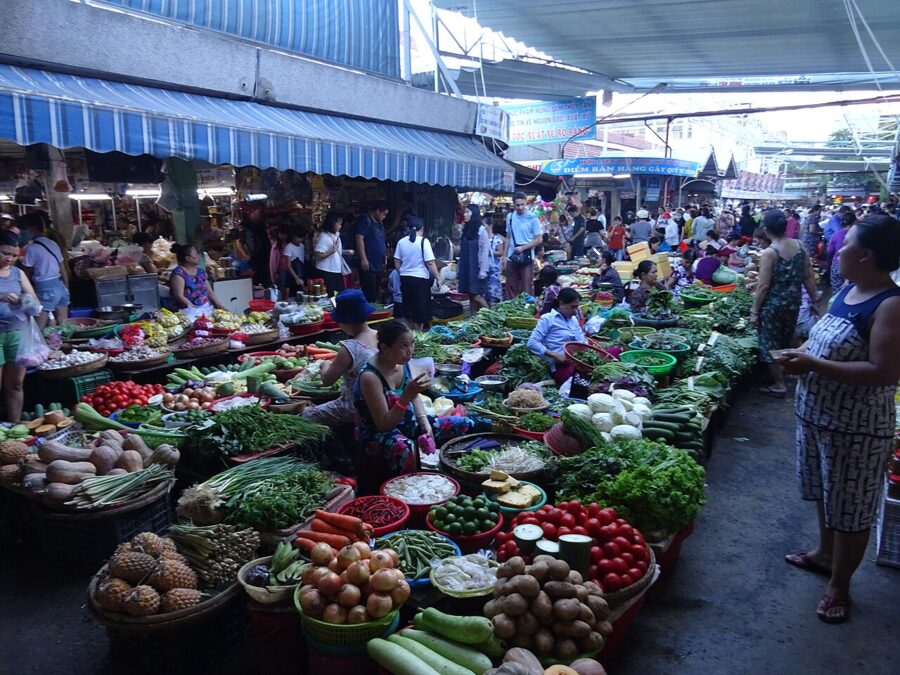
Han Market (Chợ Hàn), on Tran Phu Street opposite the river, is the market visitors are sent to: food and dried goods downstairs, with candied ginger, dried squid and coffee, and clothes, fabric and tailors upstairs who will make a shirt in a day or two. Prices start high. Con Market (Chợ Cồn) on Hung Vuong Street, a few blocks west, is bigger, scruffier and more local, and its food stalls are a cheaper place to eat bánh xèo, the crisp rice pancakes, and the sweet soups called chè.
In the evening, the Helio night market on 2 September Street, next to the Helio Center, runs from about five until half past ten, with food stalls, beer and live music aimed at young Vietnamese more than tourists. It is cheap and loud. For coffee, do as the city does and sit on a low stool on any pavement with cà phê muối, iced coffee topped with salted cream.

Da Nang as a base for the centre
This is where Da Nang earns its place on an itinerary. Hoi An is 30 kilometres south, Hue about 100 kilometres north over the Hai Van Pass, and My Son about 70 kilometres south-west, and all three work as day trips if you would rather not move hotels. Three or four nights in Da Nang covers the city and two of them; add nights in Hoi An if the lanterns are the point of your trip. My itinerary for ten days uses exactly this stretch of coast.

Hoi An
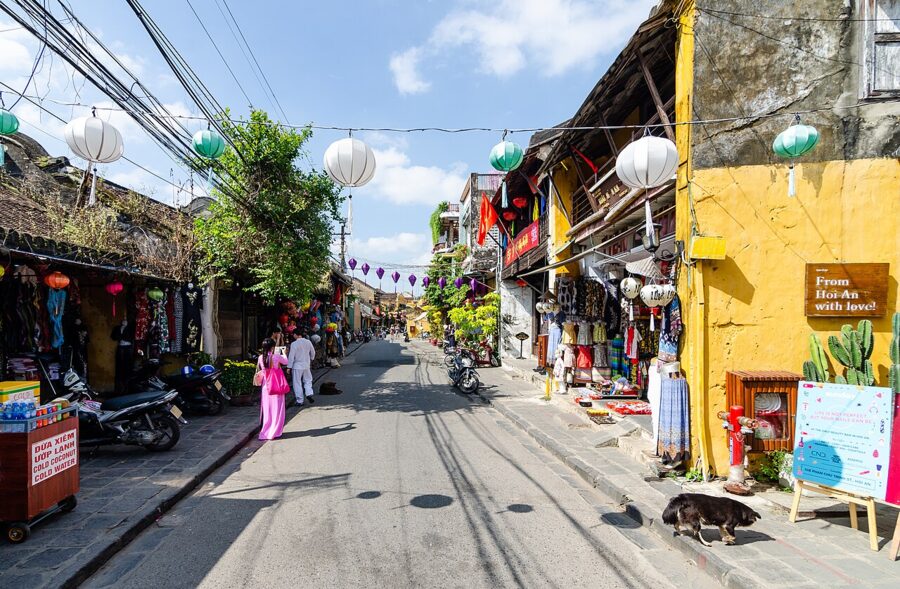
Hoi An’s Ancient Town, a UNESCO World Heritage Site of merchant houses, assembly halls and the Japanese Covered Bridge, is 45 minutes to an hour away by car. A day trip works if you stay into the evening for the lanterns and take a Grab back, since the buses stop in the early evening; the town’s ticket, sites and beaches deserve nights of their own.
Hue and the Hai Van Pass
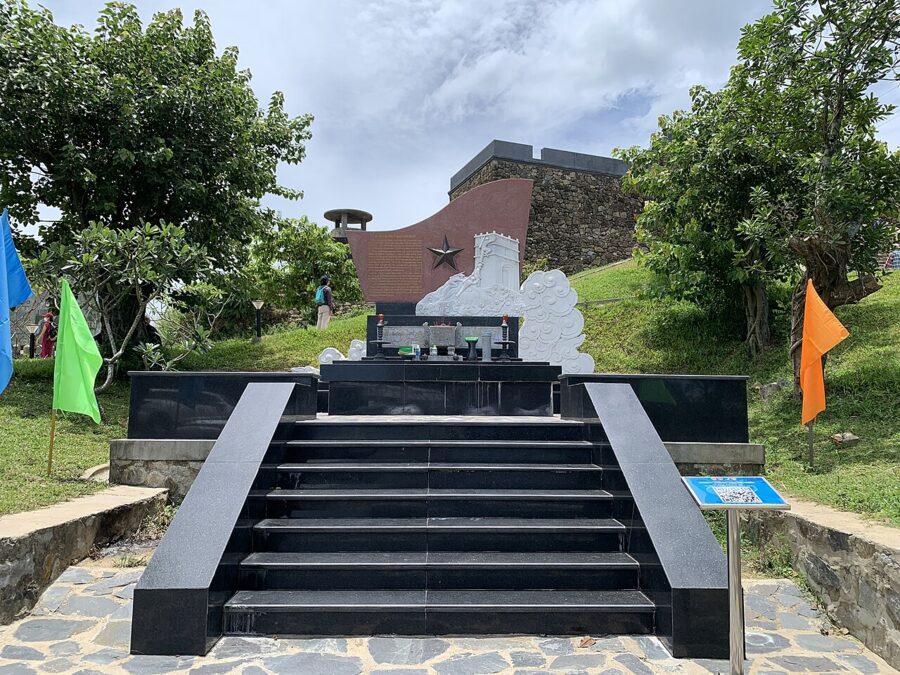

The Hai Van Pass (Đèo Hải Vân) is the mountain wall between Da Nang and Hue, and for a long time it was the frontier between the Vietnamese and Champa. Road traffic now goes through the Hai Van tunnel, opened in 2005, which leaves the old road over the top to motorbikes, cyclists and drivers who want the view. At the summit stands Hai Van Quan, the gate fort of the Nguyen dynasty. It reopened in August 2024 after two years of restoration, and since June 2026 entry has cost 70,000 dong (about $2.70), managed by Hue until 2028.
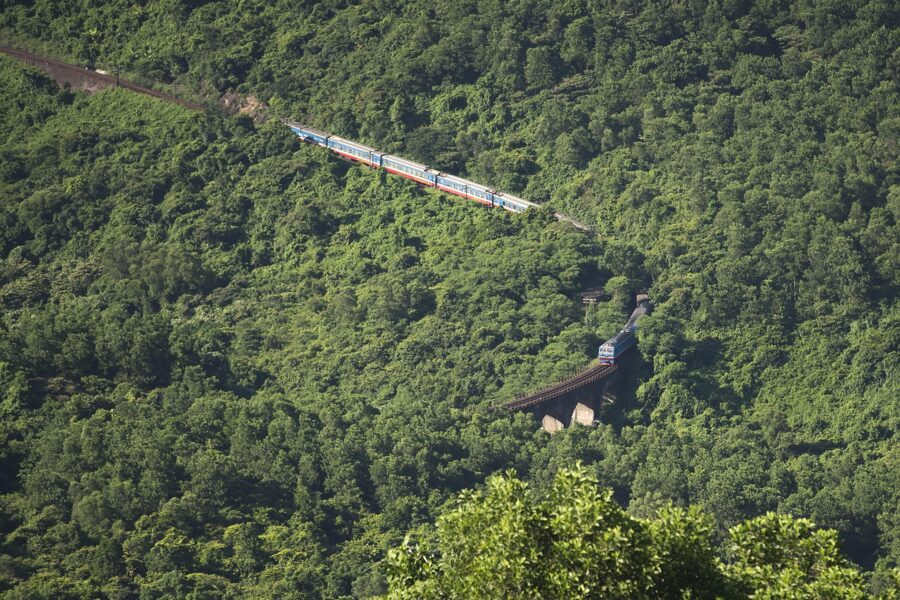
The railway does not use the tunnel. It climbs around the cliffs above the sea, and between Da Nang and Lang Co it has the finest sea views on the whole North-South line.
Vietnam Railways also runs a dedicated sightseeing train between the two cities, the “Kết nối di sản miền Trung” (Central Heritage Connection) train, which takes about three hours, with a morning and an afternoon departure in each direction; check the current times when you book. Regular north-south trains also stop at both stations. Sit on the sea side, which is on the right heading north.
Hue, the Nguyen capital, deserves a night of its own, but a long day from Da Nang is possible: the morning train or a car over the pass, the Imperial City and a tomb or two, and the late train or the tunnel home.
My Son
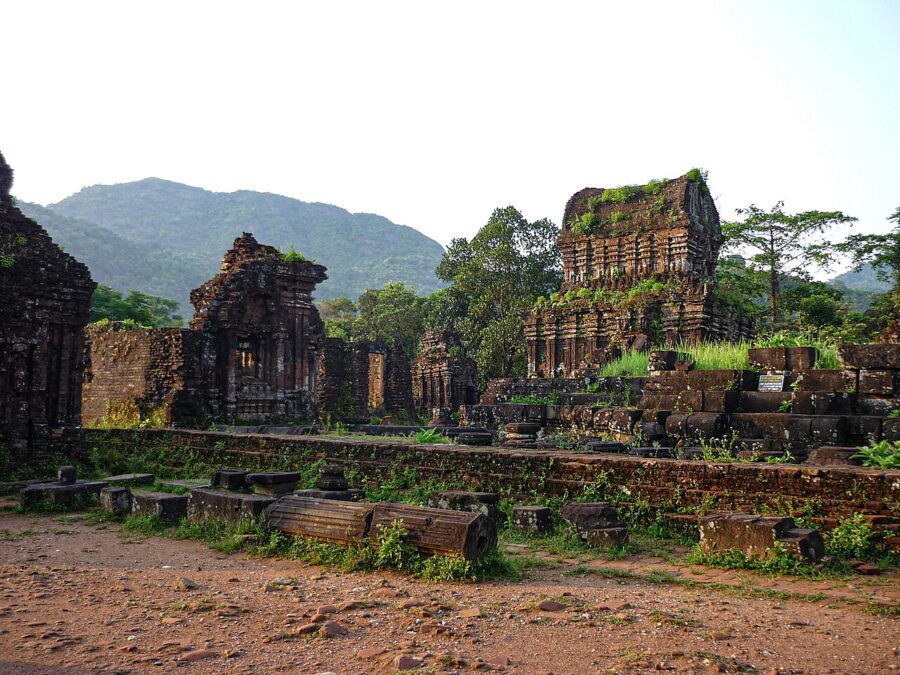

My Son Sanctuary is a valley of brick Cham temples in the hills, raised over roughly nine centuries from the fourth onwards and listed by UNESCO in 1999. From Da Nang it is about an hour and a half by car, so leave early: the site opens at 06:00, and by mid-morning it is hot and the coach parties have arrived. As of November 2026 the site’s own booking page charges foreign visitors 148,000 dong (about $5.70). Visit the Museum of Cham Sculpture first, and the empty plinths at My Son will make sense.
The Cham Islands
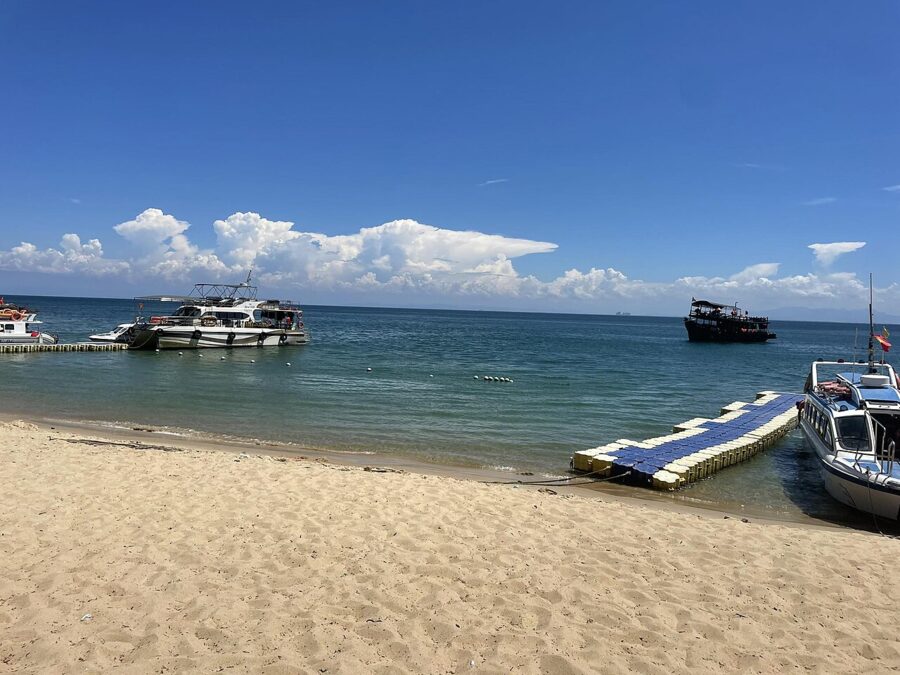
The Cham Islands (Cù Lao Chàm), about 15 kilometres off Hoi An’s coast, are part of Da Nang too now. Speedboats leave from the Cua Dai area, and since 10 June 2026 the island visitor fee has been 70,000 dong (about $2.70). The boats stop whenever the sea is rough, and through much of the stormy season the authorities keep tourist boats in port, so plan an island day for the spring or summer.
Getting there and getting around
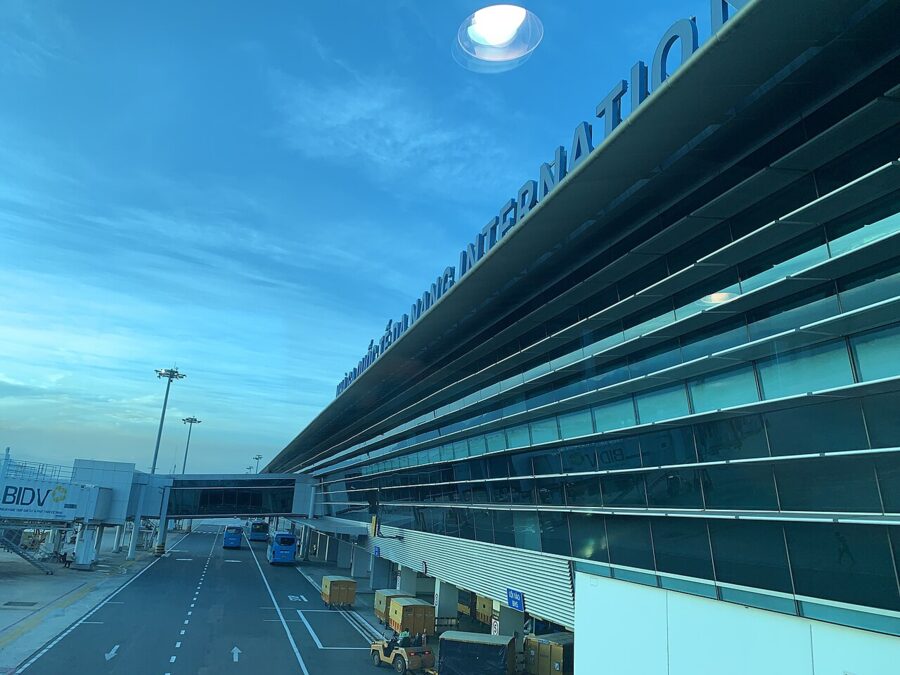

Da Nang International Airport is on the west side of the city, about ten minutes by car from the river. Vietnam Airlines and Vietjet fly here many times a day from Hanoi, about 1 hour 25 minutes, and Ho Chi Minh City. The international terminal takes flights from South Korea, Thailand, Singapore and elsewhere in the region, and since spring 2026 foreign arrivals have been asked to complete the Immigration Department’s free online pre-arrival declaration before landing.
Check your entry rules before you book. Some nationalities enter visa-free for 45 days, and most others need an e-visa from the government portal, evisa.gov.vn; my e-visa guide has the current fees and the list. Put both your arrival and departure airports on the application if they differ.
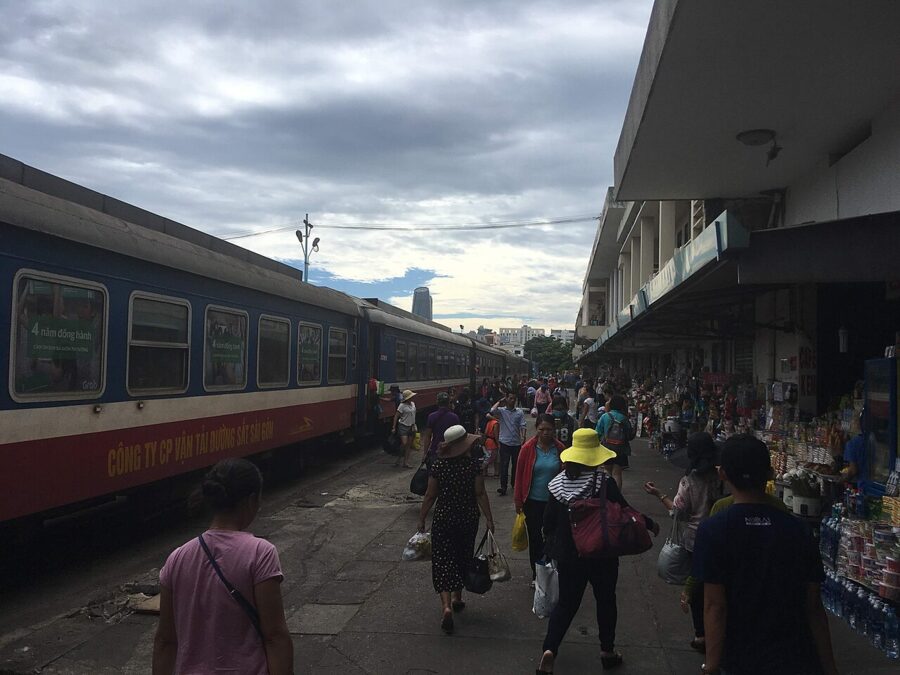
By rail, Da Nang is on the North-South line. The SE19 night train from Hanoi takes 15 hours 50 minutes, a long time in a bunk, but the morning run along the coast is lovely. Da Nang station is on Hai Phong Street on the west bank.

Inside the city, Grab is the answer: cars and motorbike taxis at prices fixed in the app before you set off. Xanh SM’s green electric taxis work the same way through their own app, and metered taxis queue at the airport and the bigger hotels.
DanangBus runs the city buses. Since July 2025 its route 02 has run from the central bus station to Cua Dai beyond Hoi An, and route 01SB runs from the airport towards Hoi An; both stop running in the early evening, so check times on the operator’s site before planning a day around them. Renting a motorbike is easy, but riding one legally needs a licence valid in Vietnam, and insurers can refuse claims without one.
When to go
The centre’s weather splits the year in two. February and March are the driest months, with about 24 and 25 millimetres of rain on average in Da Nang, and the sea settles enough for swimming from around March. From May to August it is hot and calm, the beach is at its best, and the hotels fill with Vietnamese families on their summer holidays. The best time to visit Vietnam guide has the month-by-month detail for all three regions.
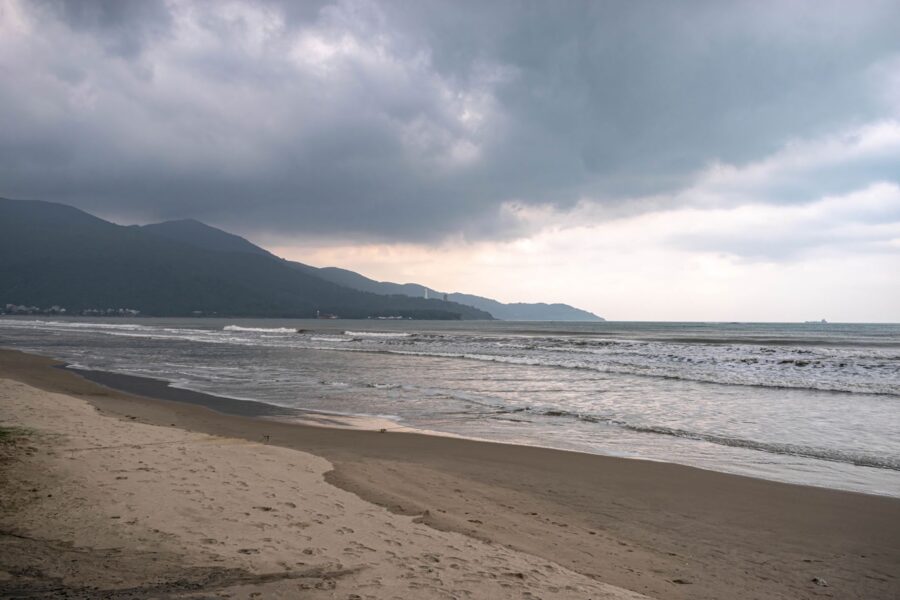
From September to December the rain arrives, heaviest in October and November, and this is typhoon season on this coast. In late October 2025 floods put Hoi An’s old town under water for days, and around 10 November 2026 heavy rain hit Hue and Da Nang again with landslides in the hills. In those months take flexible bookings, leave slack around every train and flight, and expect Son Tra and the Cham Islands to close at short notice and Ba Na to lose its view. February to April is my choice: dry, warm rather than hot, and quieter than summer.
Whichever month you come, keep a Saturday or Sunday night for the river. Get to the east bank by a quarter past eight, find a spot near the head, and wait for the dragon to clear its throat.