
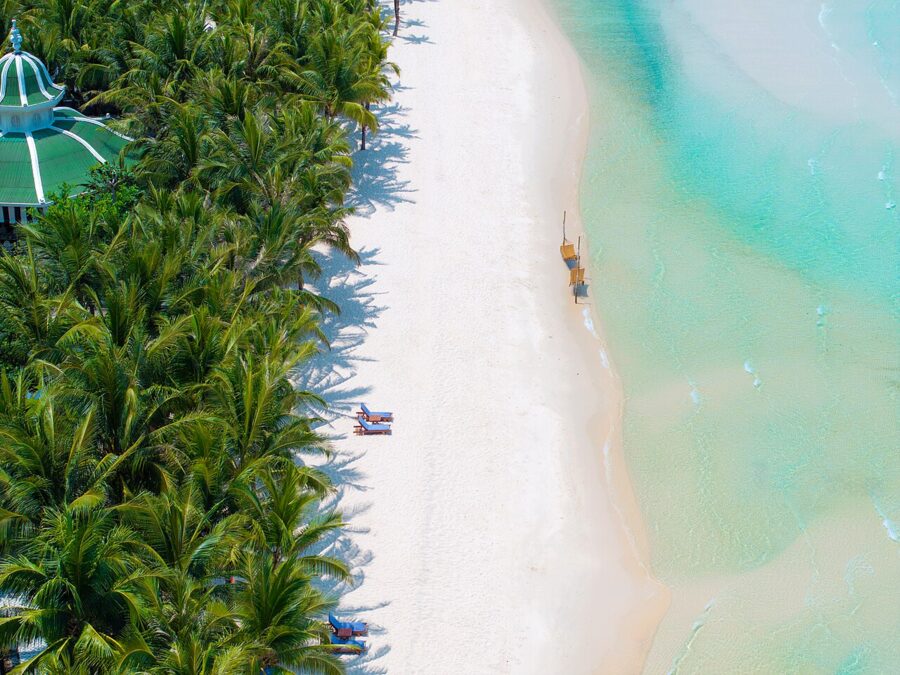
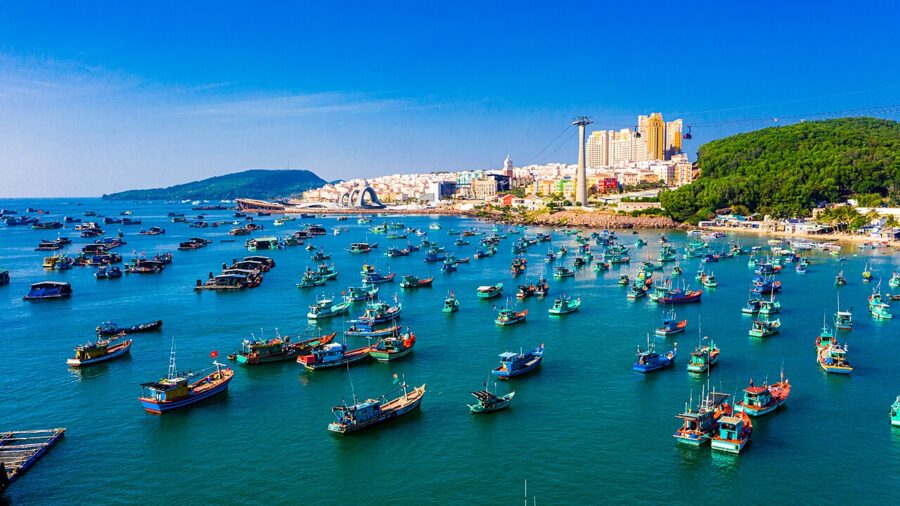
Phu Quoc is about 50 kilometres from its southern cape to its northern one, and the two ends have almost nothing in common. The south has the world’s longest three-rope sea cable car, an Italianate town built in a few years and a nightly firework show. The north has rainforest, pepper vines and starfish in a metre of water.
Which end you sleep at decides which island you get. So does the month. In the dry season the west coast lies flat and its beaches are as good as any in Vietnam; in the wet months the monsoon throws rain and rubbish onto them, and the sheltered east coast is the better bet.
Phu Quoc is worth the flight for a beach week in the dry season, as long as you choose your coast with care. Pick the wrong one and you get a building site in the rain.


Contents
- Is Phu Quoc worth the flight?
- Where Phu Quoc is, and the visa-free rule
- The beaches, coast by coast
- The south: cable car, islands and a town built from scratch
- The north: forest, Ganh Dau and the starfish
- Fish sauce, pepper and the night market
- When to go
- Where to stay, by kind of trip
- How many days
Is Phu Quoc worth the flight?
Yes, with conditions. I would fly to Phu Quoc for five days to a week between December and April, stay on a west-coast or south-east beach, rent wheels for at least one day in the north, and skip most of the ticketed attractions. That trip is easy, warm and good value.
I would not fly there in August expecting the brochure. Nor would I go looking for an island nobody has built on. Large parts of both ends have been built over in the last fifteen years, and the island is a construction site again ahead of the APEC leaders’ summit in November 2027.
Is it cheap? Street food, seafood and taxis cost what they do anywhere in the south, and mid-range beach hotels are good value against Bali or Phuket. The attractions are not: the cable car alone is 850,000 dong (about $32) for an adult, and a family adding a theme park and a show can spend more in a day than on two nights’ rooms.
Da Nang or Phu Quoc? Pick by month: Phu Quoc is a November to April island, while Da Nang is at its best between March and August, so for a beach in June the centre wins. Da Nang also puts Hoi An and Hue within reach. For a week of doing very little in January, choose Phu Quoc.
Where Phu Quoc is, and the visa-free rule
Phu Quoc sits in the Gulf of Thailand off the far south-west corner of Vietnam, about 45 kilometres from Ha Tien on the mainland and closer still to the Cambodian coast. It is Vietnam’s largest island, roughly 575 square kilometres, with a spine of hills that locals call the 99 peaks; the highest, Nui Chua, reaches 603 metres. Since mid-2025 the island has been a special administrative zone (đặc khu) of An Giang province, after Kien Giang was merged into it, so older maps and signs may still say Kien Giang.
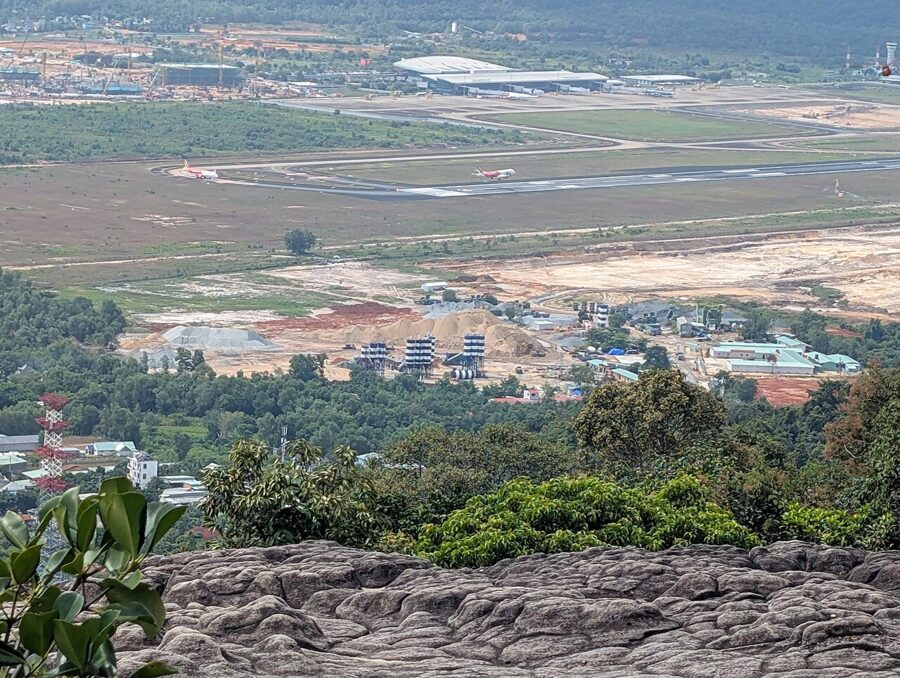
You will almost certainly land at Phu Quoc International Airport on the west side of the island, between the main town, Duong Dong (Dương Đông), and the southern port of An Thoi (An Thới). The ferries from the Mekong Delta come in at Bai Vong (Bãi Vòng) on the east coast.
Thirty days without a visa
Phu Quoc has its own entry rule. As of November 2026, any foreigner who arrives on the island from abroad can stay up to 30 days without a visa, whatever the passport. The exemption also covers people who change planes at another Vietnamese international airport, provided they stay in the international transit area and fly straight on to Phu Quoc.
The catch is that it covers the island only. If you want even a night in Ho Chi Minh City or the Mekong Delta, you need a visa or a national exemption, which for most nationalities means the Vietnam e-visa. The 30 days run from the day you land, and the exemption list can change by government decision, so check with the Immigration Department or a Vietnamese embassy before you book.
Since 1 June 2026, foreign arrivals at Phu Quoc have also been asked to fill in the Immigration Department’s free online pre-arrival declaration at prearrival.immigration.gov.vn, within the three days before departure. You get a QR code to show at the desk. Doing it at the airport works too, but the queue for that is slower.
Flights
Ho Chi Minh City is about an hour away by air and Hanoi a little over two, with Vietnam Airlines and Vietjet flying both routes many times a day. Over Tet and the dry-season peak, book flights before the hotel.
Sun PhuQuoc Airways, started by the Sun Group that built the cable car and Sunset Town, opened its first international route, to Taipei, on 29 March 2026. Seoul, Hong Kong, Singapore (from 25 July) and a daily Kuala Lumpur service (from 1 September) followed, and other Asian carriers fly in too.
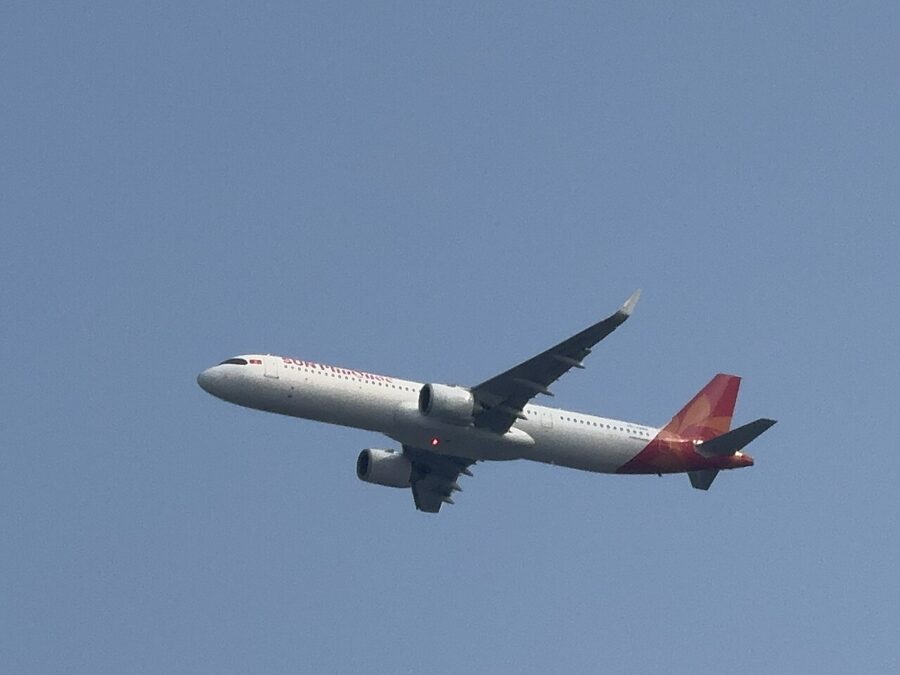

The airport is being rebuilt for APEC. A 3,300-metre second runway was completed in July 2026, and the first phase of a new terminal is due in April 2027; expect building work around it until then.
The ferry from the Mekong Delta
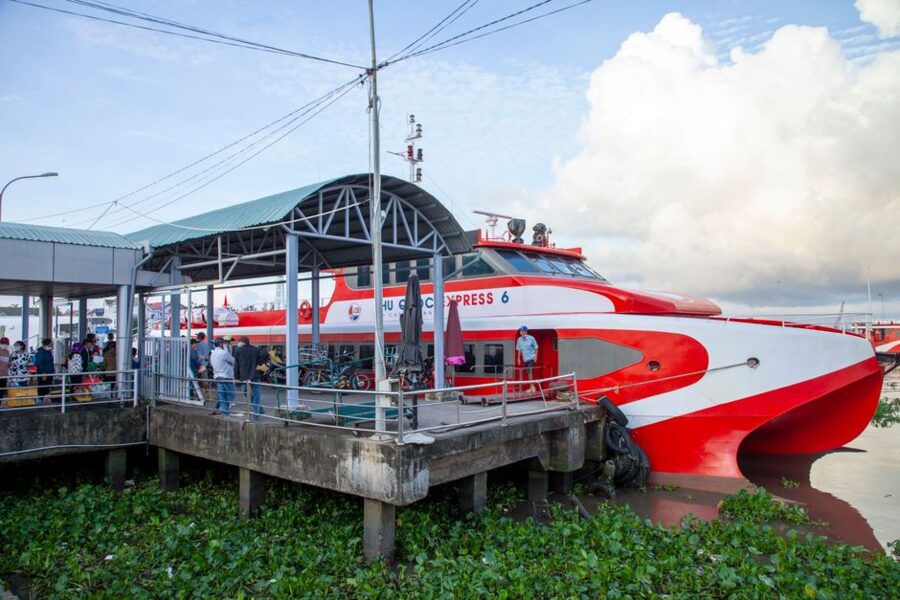
If you are already in the delta, the boat makes more sense than flying back to Saigon. Phu Quoc Express lists these fares for November 2026, and Superdong runs the same two routes:
| Route | Crossing | Adult economy fare |
|---|---|---|
| Ha Tien to Bai Vong | About 1 hour 20 minutes | 216,000 dong (about $8) |
| Rach Gia to Bai Vong | About 2 hours 30 minutes | 315,000 dong (about $12) |
Be at the port 45 minutes before sailing; the time printed on your ticket is the one that counts. Night buses from Ho Chi Minh City’s Mien Tay bus station reach both ports in time for the first boats. In the wet season sailings can be cancelled when the sea gets up, so leave a spare day before a flight.
Getting around the island
Phu Quoc is too spread out for one base to cover everything. Grab works across most of the island and Xanh SM runs electric taxis; on the quiet east and north coasts, arrange a car back before you set off. VinBus runs electric buses between the airport, Duong Dong and the Vinpearl and Grand World area in the north-west; its app shows the current routes and fares.
A motorbike is the usual way to see the north, on roads that are wide and quiet by Vietnamese standards. You need a licence valid in Vietnam, and your insurance may not pay out without one; if you are not a confident rider, hire a car and driver for the day.
The beaches, coast by coast
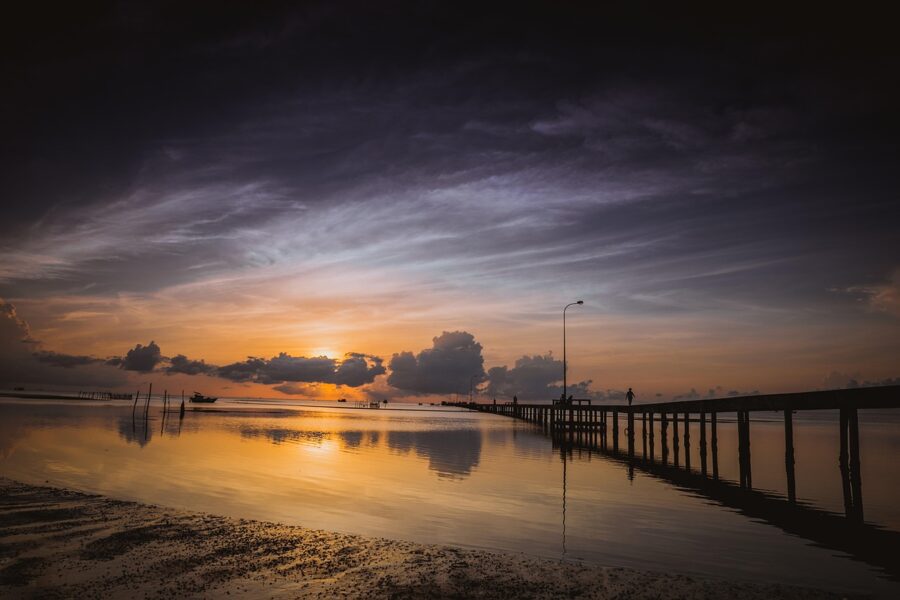
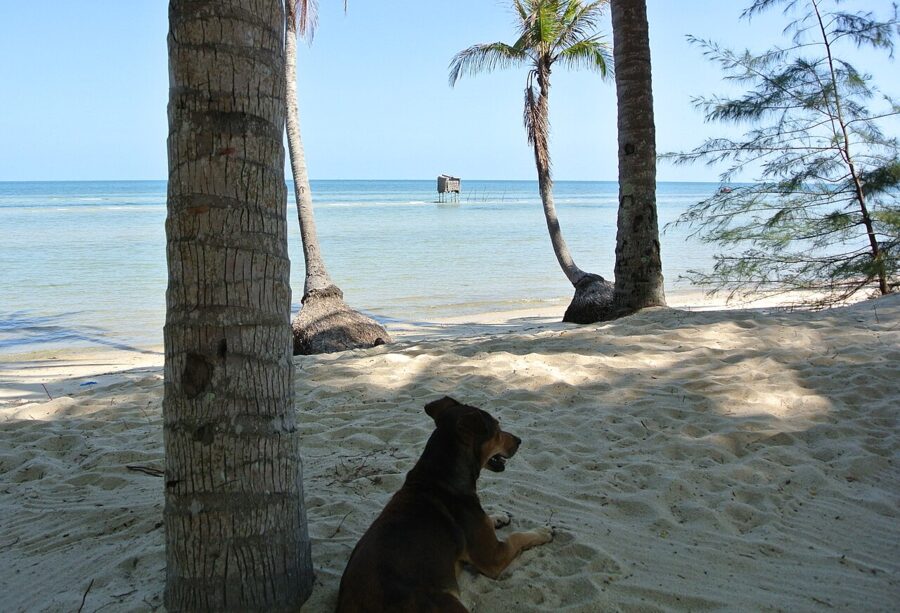
Phu Quoc’s weather has two halves. In the dry season the north-east monsoon blows off the land on the west coast, so Long Beach, Ong Lang, Bai Dai and Ganh Dau get flat water and sunsets over the sea. January and February average about 27 millimetres of rain.
Around May the wind turns south-west and blows straight onto that coast. July to September bring well over 400 millimetres a month on more than 22 wet days, with rough surf, red flags and plastic washed up from the gulf. Then the east and south-east, Sao, Ham Ninh and Bai Vong, are the calmer side.
| Beach | Coast | Best months | What it is like |
|---|---|---|---|
| Long Beach (Bãi Trường) | West | November to April | The main strip: hotels, bars, sunsets, some litter |
| Ong Lang (Ông Lang) | West, north of Duong Dong | November to April | Small coves, low-rise resorts, rocky in places |
| Bai Dai (Bãi Dài) | North-west | November to April | Long and clean, dominated by the Vinpearl complex |
| Ganh Dau (Gành Dầu) | North-west tip | November to April | Fishing village, quiet sand, Cambodia on the horizon |
| Rach Vem (Rạch Vẹm) | North | December to April | Shallow, sandy, known for starfish |
| Sao (Bãi Sao) | South-east | Most of the year | The whitest public sand; busy at midday |
| Kem (Bãi Khem) | South-east | Most of the year | Fine sand, mostly resort frontage |
| Ham Ninh (Hàm Ninh) | East | For the village, not swimming | Fishing pier, mudflats, crab restaurants |
Long Beach and Ong Lang
Long Beach runs south from Duong Dong most of the way to the airport, with most of the island’s mid-range hotels, bars and restaurants on the road behind it. It is the obvious first-trip base, with easy swimming and sunsets in the dry season. The sand is ordinary rather than white, and only the stretches in front of the busiest hotels are raked daily.
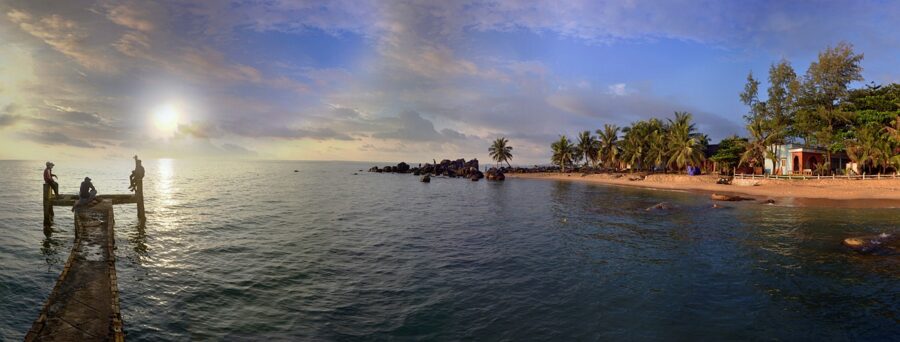
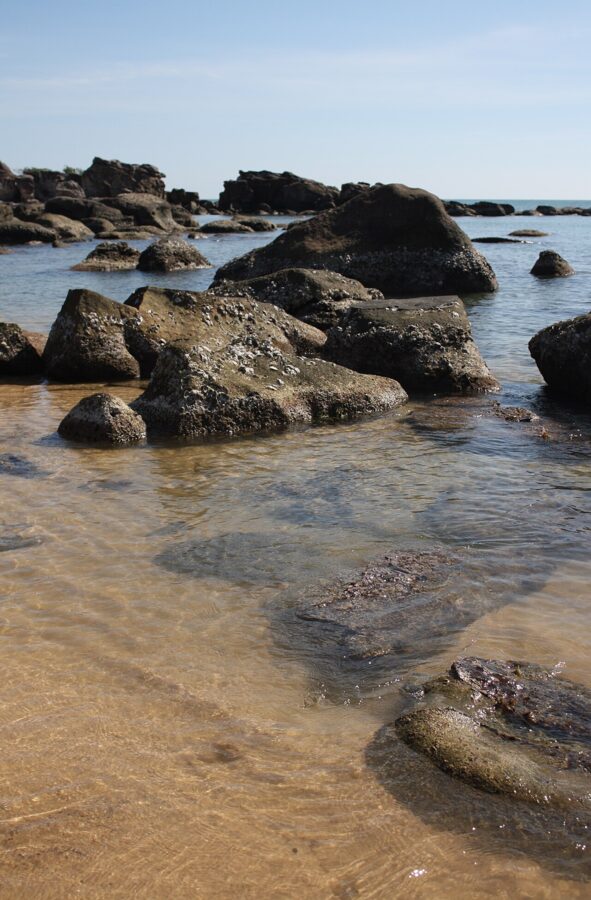
Ong Lang, a few kilometres north of Duong Dong, is a run of small bays backed by trees, with low-rise bungalow resorts rather than towers. The water can be rocky underfoot and some coves are tiny. For a quiet week with dinner at the hotel, it is where I would stay.

Sao and Kem
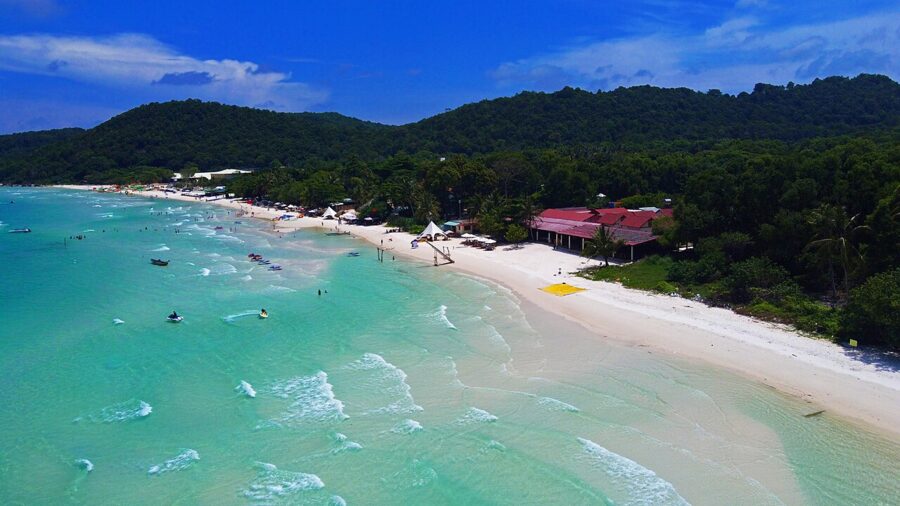
Sao Beach (Bãi Sao) is the one on the postcards: a curve of pale sand and shallow, clear water on the south-east coast, a short ride from An Thoi. It is public, with restaurants renting loungers along the back. Arrive before ten or after three; the tour buses come at lunchtime, and jet skis can spoil the middle of the day.

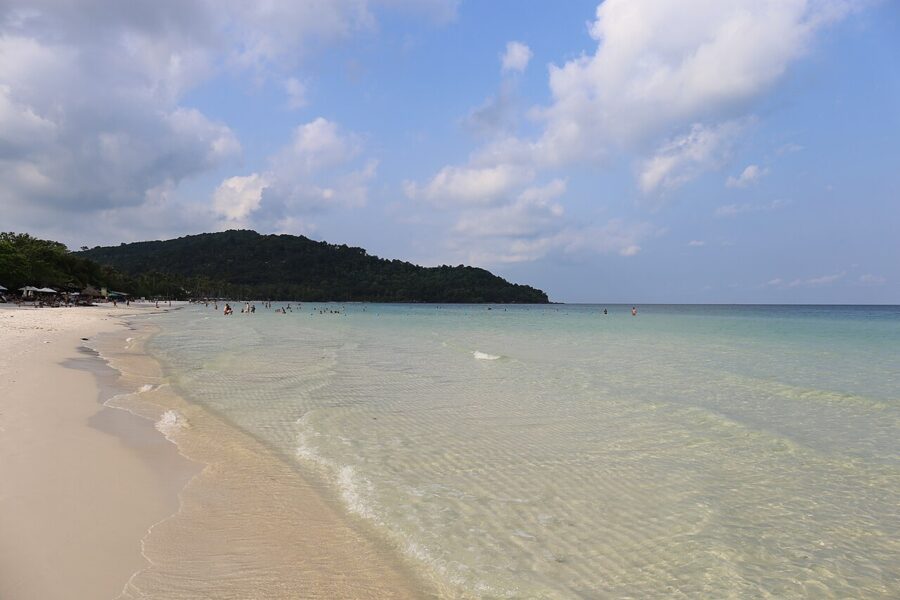
Kem Beach (Bãi Khem), the next bay south, has sand as fine as Sao’s, but most of its frontage belongs to large resorts. If you are not staying on it, ask at your hotel whether a public section is open before you make the trip.

The east coast: Ham Ninh and Bai Vong
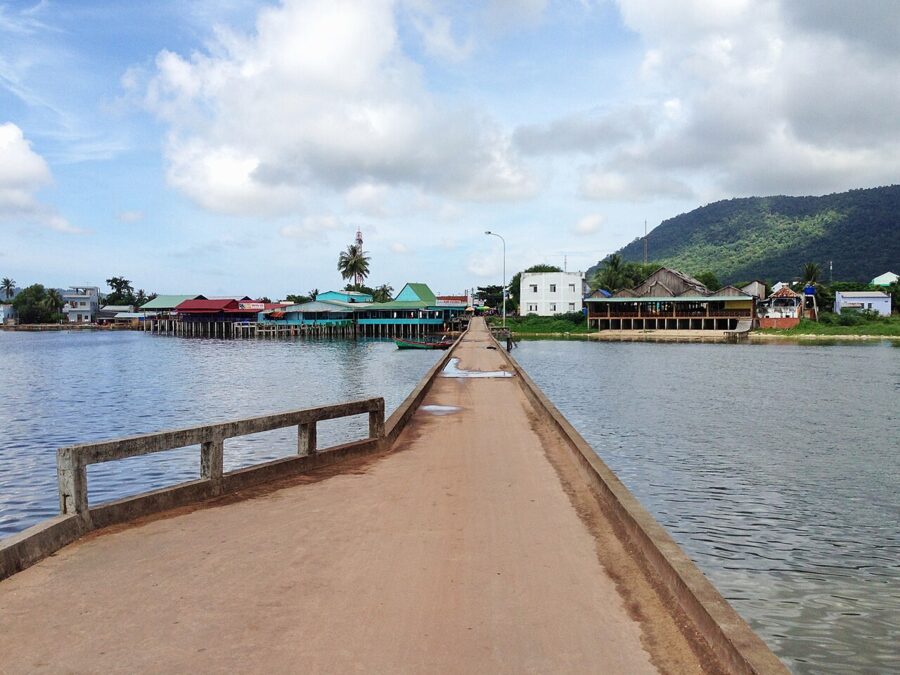
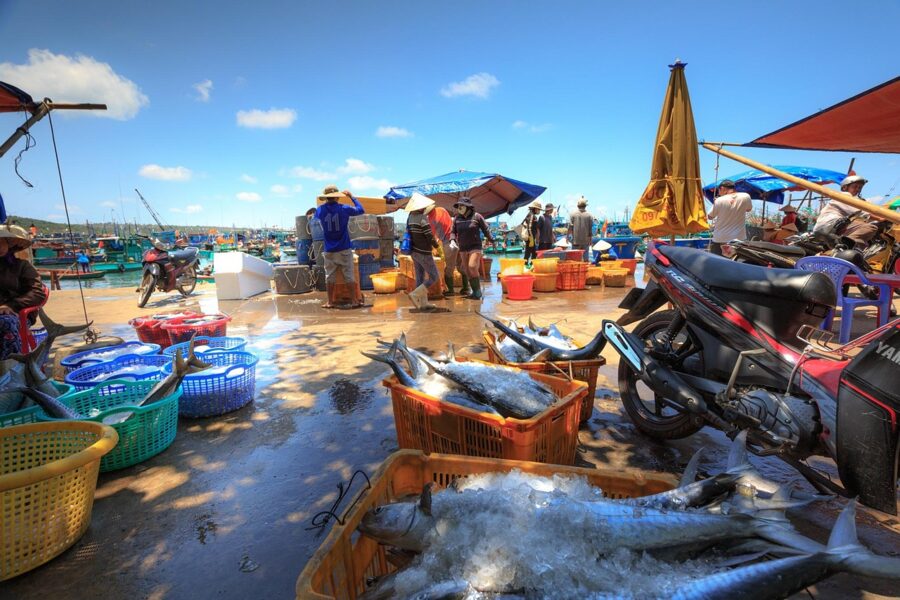
The east side faces the mainland, and it is the quiet half of the island. Ham Ninh (Hàm Ninh) is a fishing village at the end of a long pier, with stilt restaurants selling the local blue swimming crab (ghẹ). The shore here is mostly mudflat and mangrove rather than swimming beach, but the pier at sunrise and a crab lunch are worth the ride.

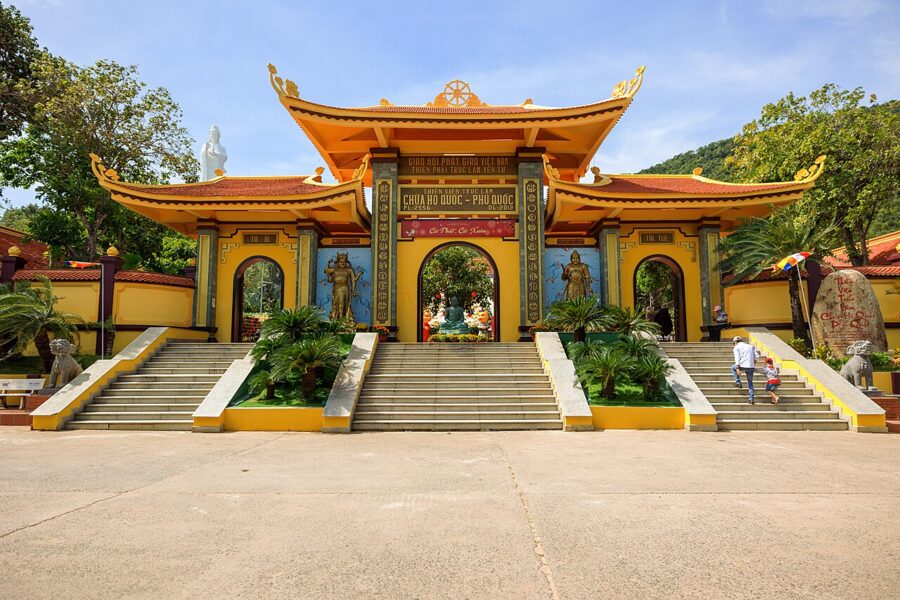
North of Ham Ninh, a few small beaches have calm water when the west coast is being battered. South of it, near the Bai Vong ferry port, Ho Quoc Pagoda (Thiền viện Trúc Lâm Hộ Quốc) sits on a hillside above the sea; it is a working Zen monastery, free to visit, so cover shoulders and knees.


The south: cable car, islands and a town built from scratch
The southern tip around An Thoi is where Phu Quoc’s development is most concentrated. It is also where the island’s oldest working port and its grimmest history site are, a few minutes apart.
The Hon Thom cable car
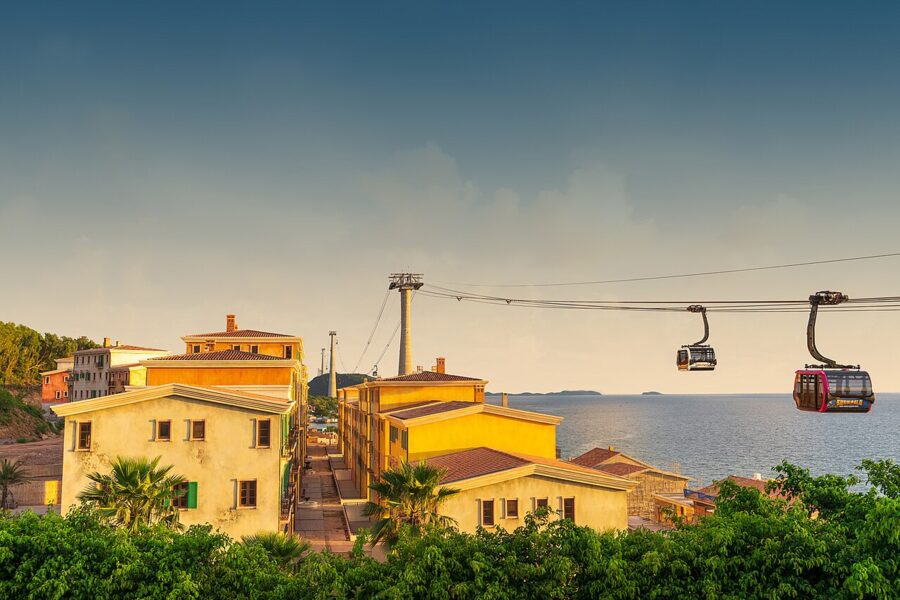
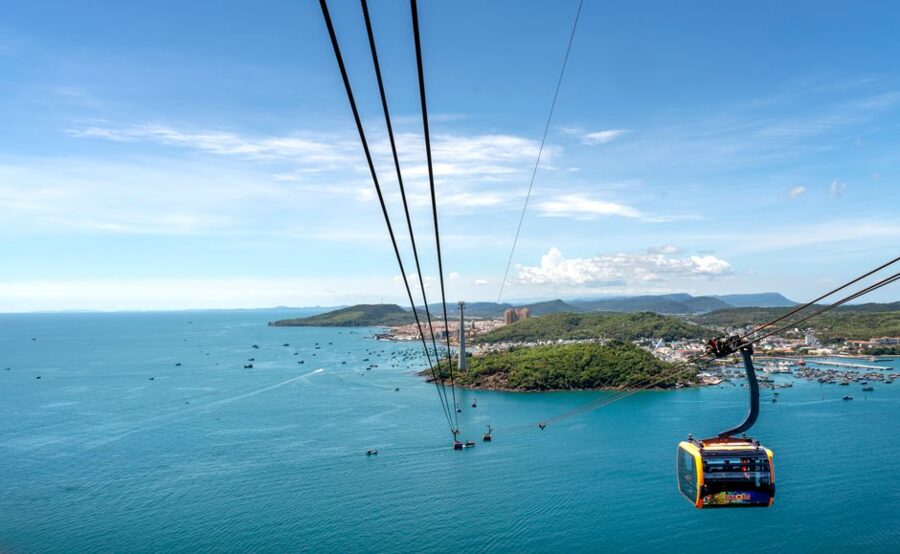
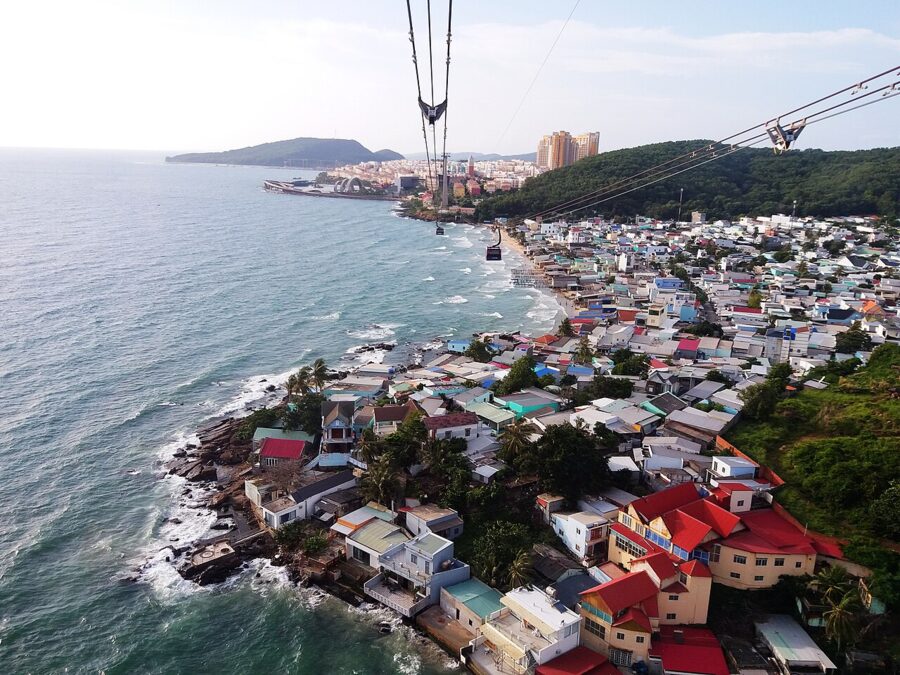
The cable car runs from a station in Sunset Town, An Thoi, across the sea to Hon Thom (Hòn Thơm), the largest island of the An Thoi archipelago. At 7,899.9 metres it holds the Guinness record for the longest three-rope cable car over the sea, and the ride takes about 15 minutes each way, passing over Hon Dua and Hon Roi on the way.
| Hon Thom cable car (as of November 2026) | |
|---|---|
| Adult return | 850,000 dong (about $32) |
| Child, 1 metre to under 1.4 metres | 700,000 dong (about $27) |
| Under 1 metre | Free |
| Operating hours | 9am to 5pm |
| Included | Return ride, Aquatopia water park and the beach on Hon Thom |
Prices are listed with VAT and change with the season and holidays, so check the counter or Sun World’s own booking page before you go. Is it worth it? For the ride itself, yes, once: the view back over An Thoi’s harbour and the archipelago is the best overview of southern Phu Quoc you can get. The water park on the far side is an extra for families, not a reason to go.

The An Thoi islands and snorkelling
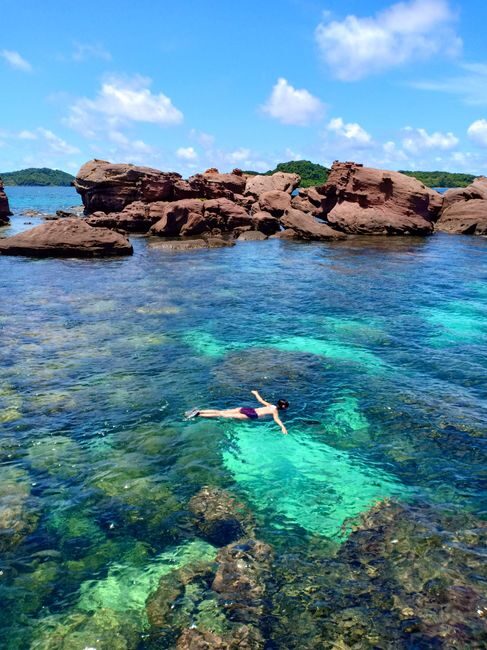
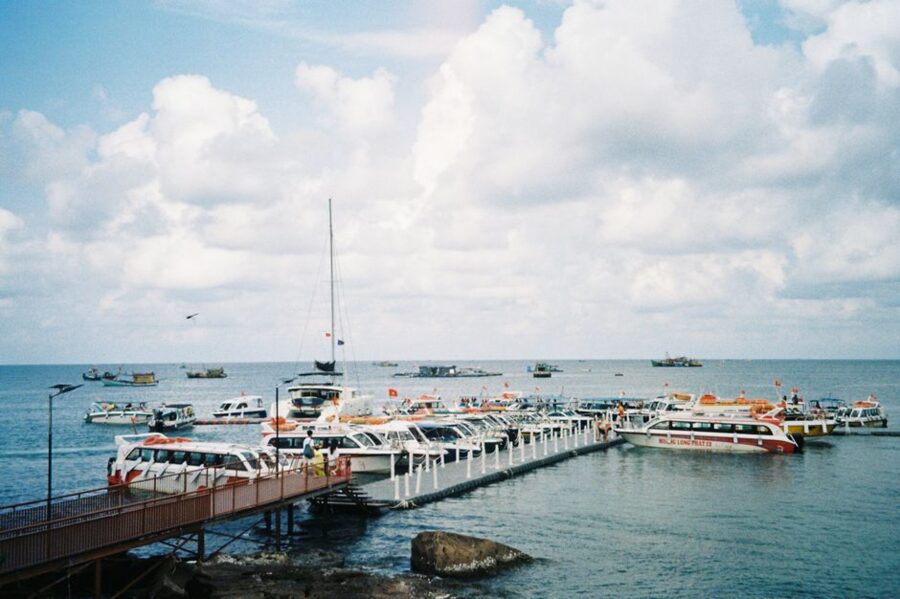
The An Thoi archipelago is a scatter of small islands off the southern cape, and the water around them and off the north of the main island has been a marine protected area since 2007. Boats from An Thoi harbour run half-day and day trips to them, usually with two or three snorkelling stops; Hon Mong Tay, Hon Gam Ghi and Hon May Rut are the common ones.
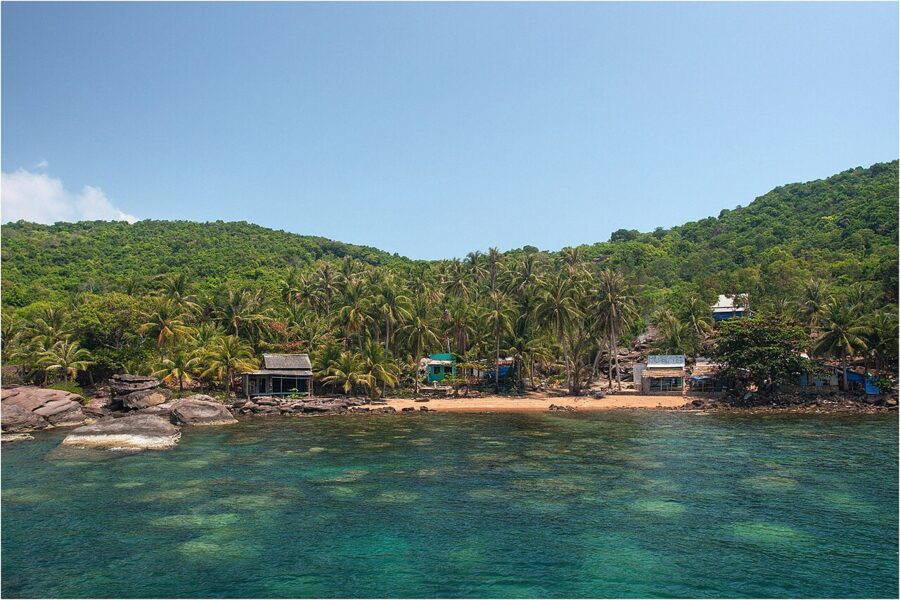

Set your expectations: the reefs are patchy and visibility varies with the weather, so expect fish, rocks and some coral rather than a reef wall. Pick a small-boat operator that limits numbers and skips the floating karaoke bars. A fair trip includes pickup in the south, gear that fits, lunch on board and a life jacket for everyone.
Sunset Town and the shows
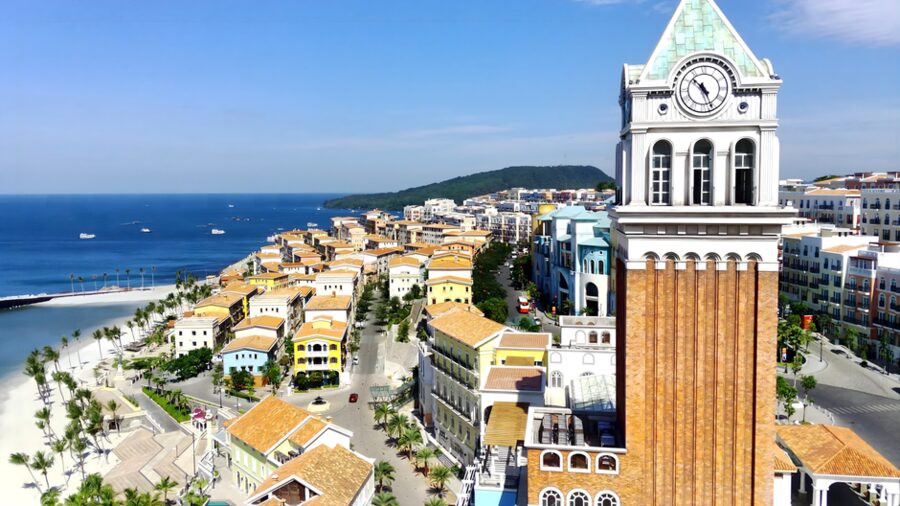
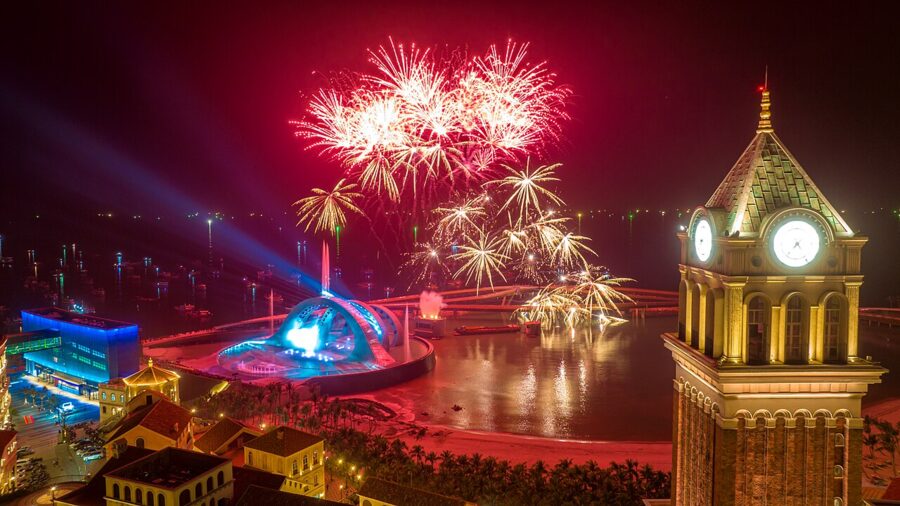
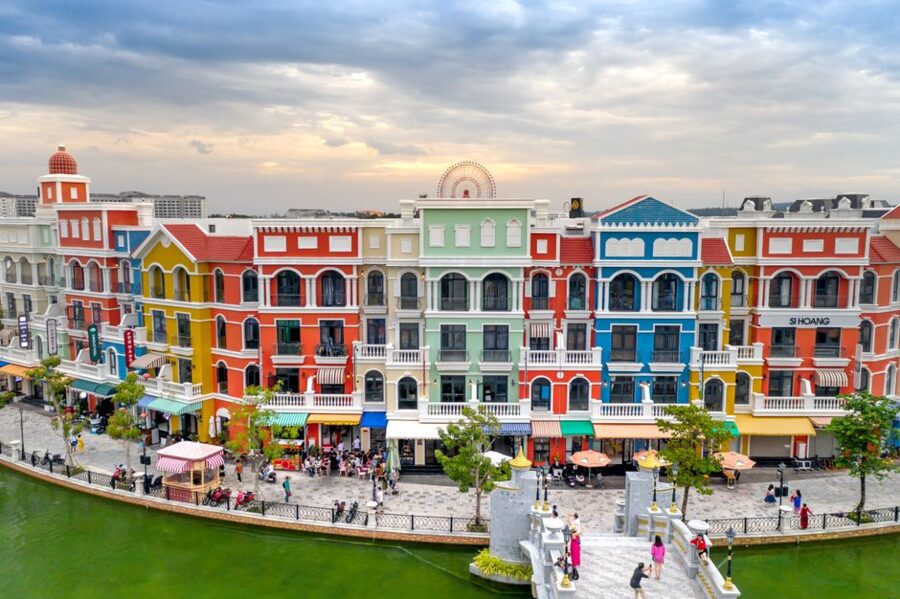
Sunset Town is the Sun Group’s new resort town on the south-west tip, all pastel facades, a clock tower and Mediterranean-style lanes. By day large parts of it can feel empty. At sunset the crowd gathers on the Kiss Bridge, two arms of walkway that almost meet over the water, and it is a good place to watch the light go.
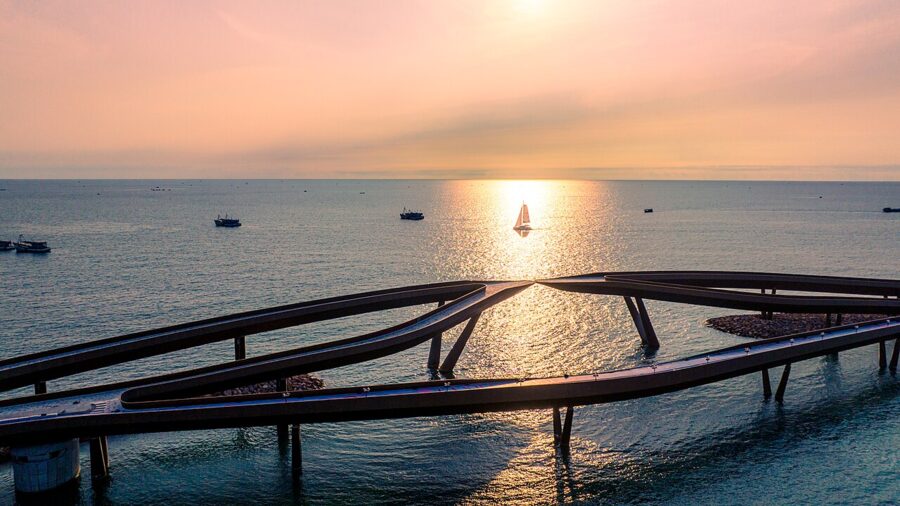

As of November 2026 there is a free fireworks display over the bay at 9.30pm most nights. The Kiss of the Sea show, with water, fire, lasers and projection on a stage by the beach, starts at 9pm every night except Tuesday and needs its own ticket. Symphony of the Sea, a shorter jet-ski and firework show by the Kiss Bridge, is ticketed separately too.

Phu Quoc Prison
On the road north of An Thoi is the site of Phu Quoc Prison, which locals call the Coconut Tree Prison (Nhà lao Cây Dừa). The French opened it to hold Viet Minh prisoners, and under South Vietnam it became the country’s largest prisoner-of-war camp, holding some 40,000 people by 1973. The barracks, wire and watchtowers have been rebuilt as a memorial, and the monument on the site commemorates about 4,000 people who died here.
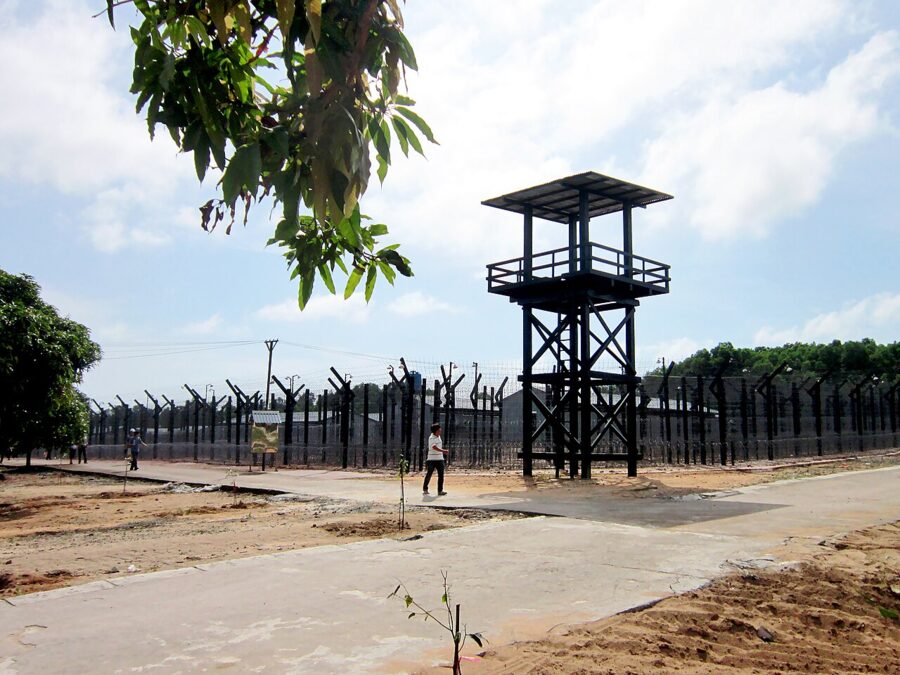

Entry is free. It closes over lunch, roughly from 11.30am to 1.30pm, so go first thing or in the afternoon. Spend an hour; it is the only place on the island that explains why so many Vietnamese families come here for reasons other than the beach.
The development, plainly
Most criticism of Phu Quoc is really about the south and the north-west. Two conglomerates, the Sun Group in the south and Vingroup in the north, have reshaped both ends with theme parks, replica European streets and condominium blocks, some half-empty. Forest was cleared for them.
The next push is for APEC. The government’s 21 projects for the November 2027 summit include the airport, a conference centre, a road from the airport to the south, the first 20-plus kilometres of an urban railway and new reservoirs. In late 2026 that means road works and cranes in the south and around the airport. For peace, stay on the east coast or at Ong Lang until the summit is over.
The north: forest, Ganh Dau and the starfish
Phu Quoc National Park, set up in 2001, covers most of the northern half of the island, and more than half of Phu Quoc falls within the Kien Giang Biosphere Reserve, listed by UNESCO in 2006. Most of it is dense evergreen forest on the 99 peaks, with streams that run in the wet season and drop to a trickle by March.
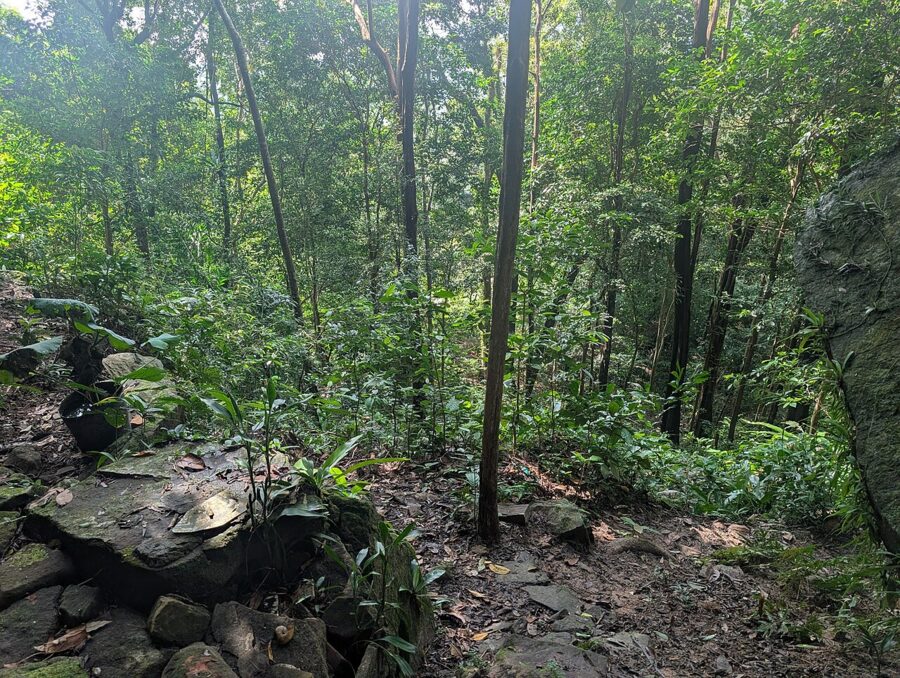
See the park on foot with a local guide, or by road. A day loop from Duong Dong to Ganh Dau, along the forested north coast and back down the east side is the best day out on the island. Fire restrictions in the dry months can close trails, so ask the park office or your guide which are open.
Ganh Dau
Ganh Dau (Gành Dầu) is the north-west tip, a fishing village with a quiet beach and, on a clear day, the Cambodian coast across the water. It is also where the French arrested Nguyen Trung Truc in 1868, the resistance leader who had attacked their post at Rach Gia that year; he was executed in Rach Gia later in 1868. A temple to him stands near the cape, and Vietnamese families come a long way to pray there.
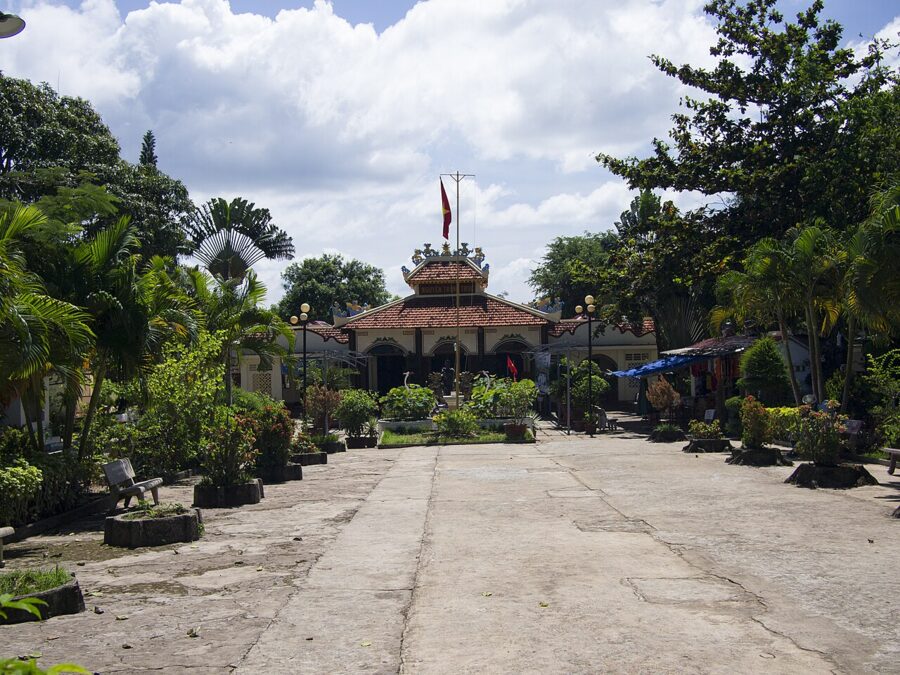

Most of the north’s pepper farms are here and around Cua Duong, and many by the road will let you walk through the rows. The beach at Ganh Dau is clean and quiet in the dry season, and it is one of the best places on the island for a long seafood lunch.
Starfish at Rach Vem
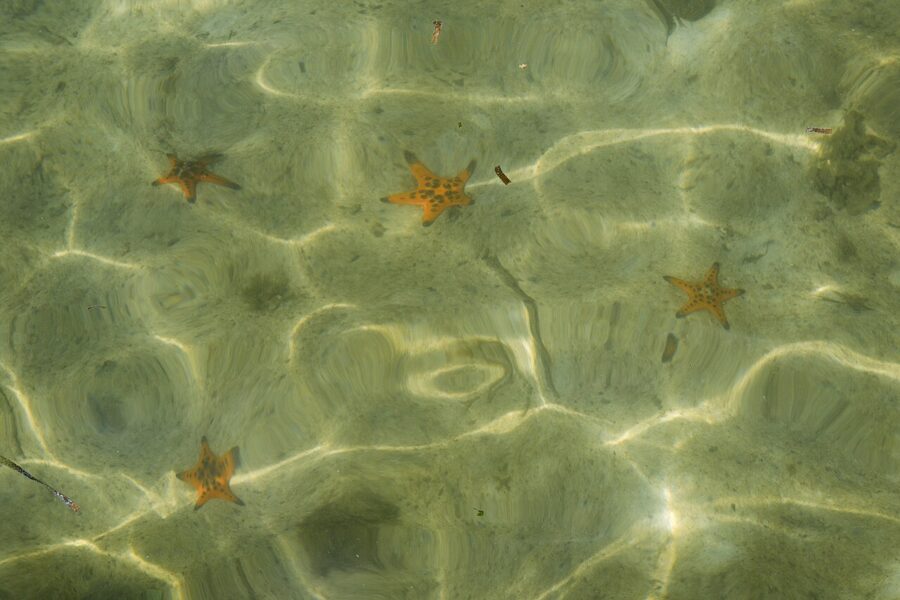
Rach Vem (Rạch Vẹm), on the north coast, has shallow sandy water where large orange starfish gather. You can reach it by road or by small boat from the coast nearby. The animals die if they are taken out of the water, even briefly for a photo, so look and photograph them where they lie.

The theme parks of the north-west
Bai Dai, south of Ganh Dau, is Vingroup’s corner of the island. VinWonders is a large theme and water park; Vinpearl Safari next door is a zoo with an open-range section you tour by bus, open from 9am to 4pm. Grand World, a short ride away, is a resort district of painted canals and gondolas that comes alive in the evening.
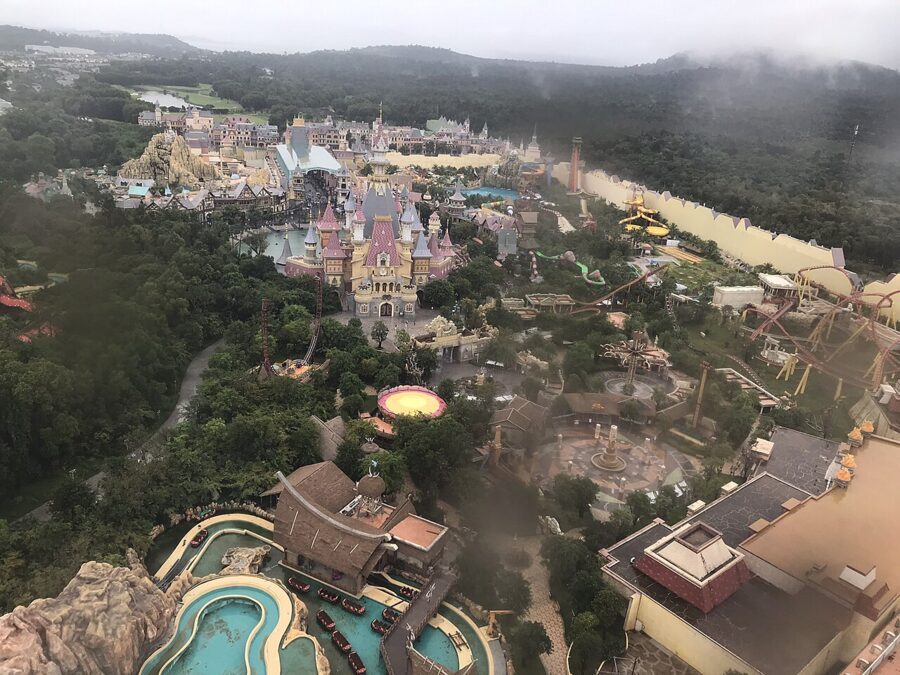

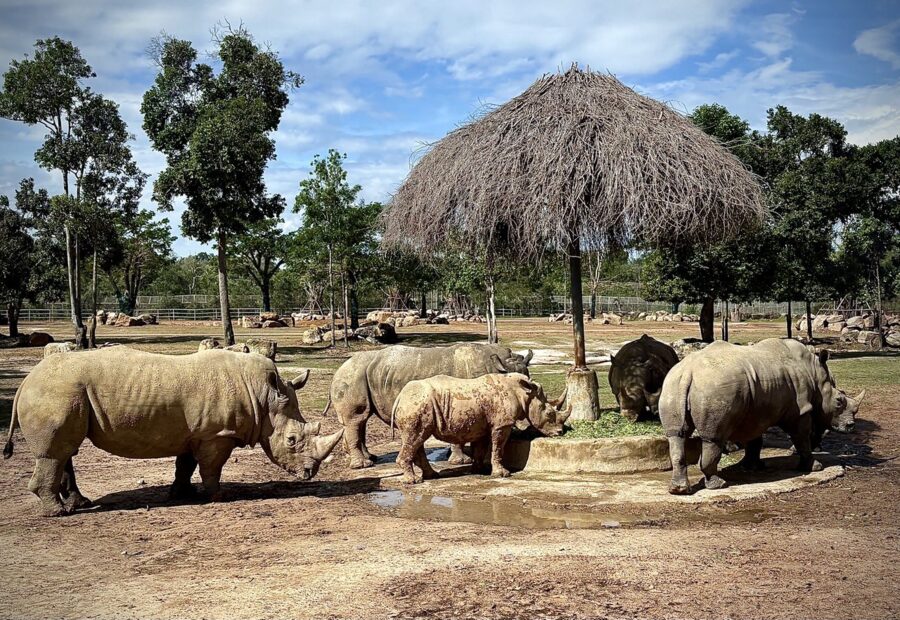
For children these are a real day out, and I would not talk a family out of them. Adults on their own came to an island to avoid them. Prices move with the season, so check the operators’ own pages.
Fish sauce, pepper and the night market
Phu Quoc’s name was a brand long before it was a resort. The island’s fish sauce (nước mắm) was registered in the European Union as a protected designation of origin in 2012, the first Vietnamese product with that status, and most Vietnamese will tell you it is the best in the country.
Fish sauce and the barrel houses
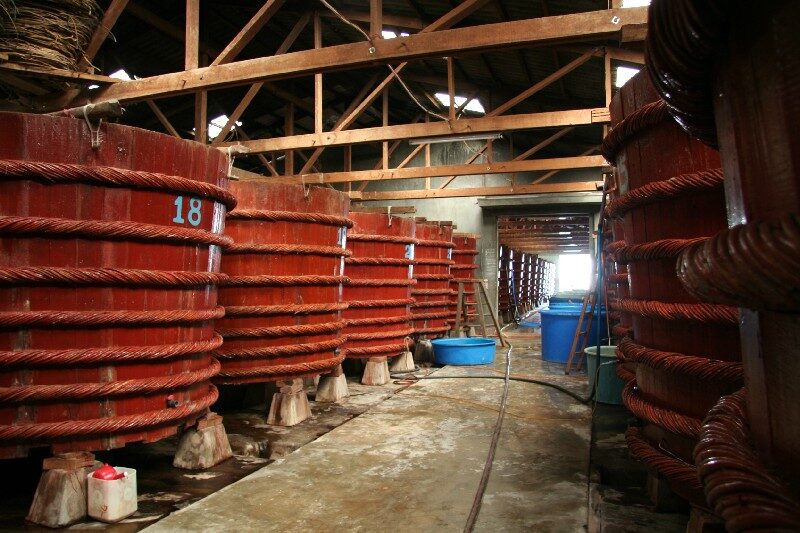
It is made from anchovies (cá cơm) caught offshore, layered with salt in huge wooden barrels and left to ferment for about a year before the first, richest sauce is drawn off. The protein content, shown on the label as a figure with an “N”, is the quality measure; the higher the number, the stronger and more expensive the sauce.
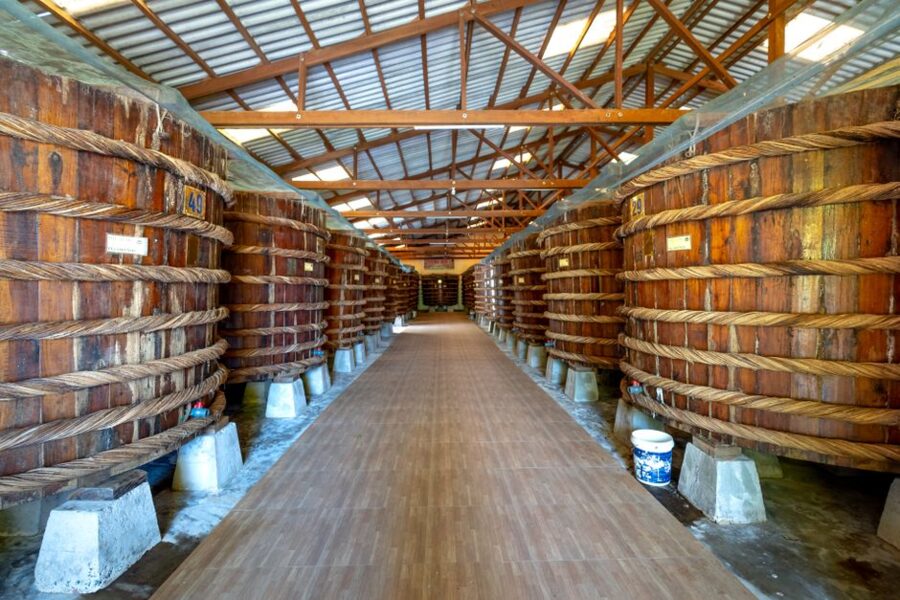
Several barrel houses (nhà thùng) around Duong Dong let you walk through and taste. Buy there, where the label shows the maker, rather than unlabelled bottles from a stall. Check your airline’s packing rules before you buy, and seal and wrap it well; a leaking bottle scents a suitcase for good.

Pepper, pearls and sim wine
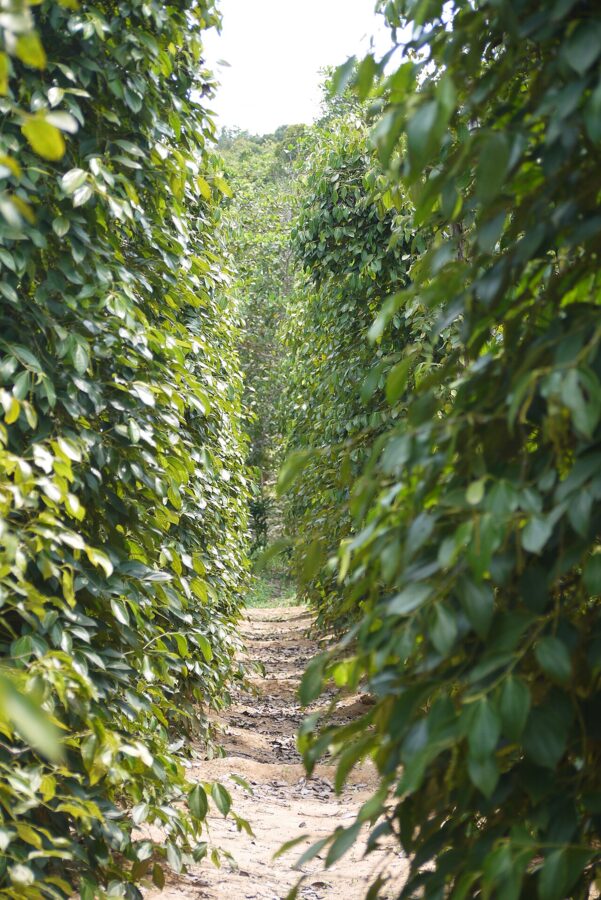
Phu Quoc’s black pepper grows on vines trained up posts, mostly in the north around Ganh Dau and Cua Duong. The farms by the roadside sell it dried and in brine, and the green peppercorns are worth trying in a seafood dish. Pearls are farmed off the island too, though the cheaper strings in the tourist shops are not necessarily local.

The other souvenir is rượu sim, a sweet, dark wine made from rose myrtle berries that grow wild on the island’s hills. It tastes somewhere between port and cough syrup, and a small bottle is plenty.
What to eat
Two noodle dishes belong to Phu Quoc. Bún quậy (stirred noodles) is a fish-cake and shrimp broth that you season yourself at the table with salt, sugar, chilli and kumquat, stirring it all together. Bún kèn is a cold noodle bowl with a fish broth thickened with coconut milk, closer to Cambodian cooking than to anything in the north of Vietnam.
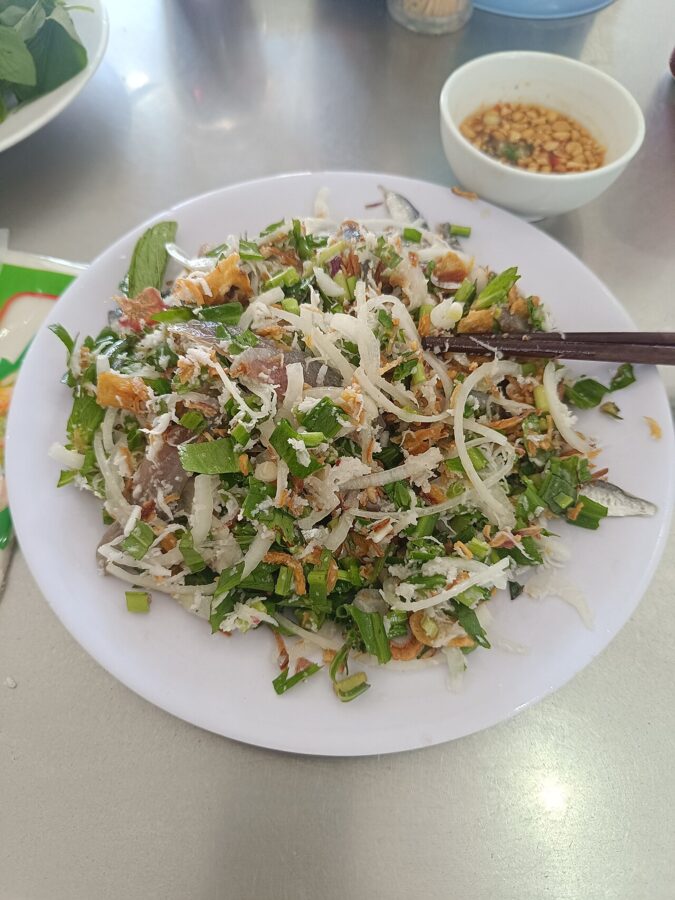
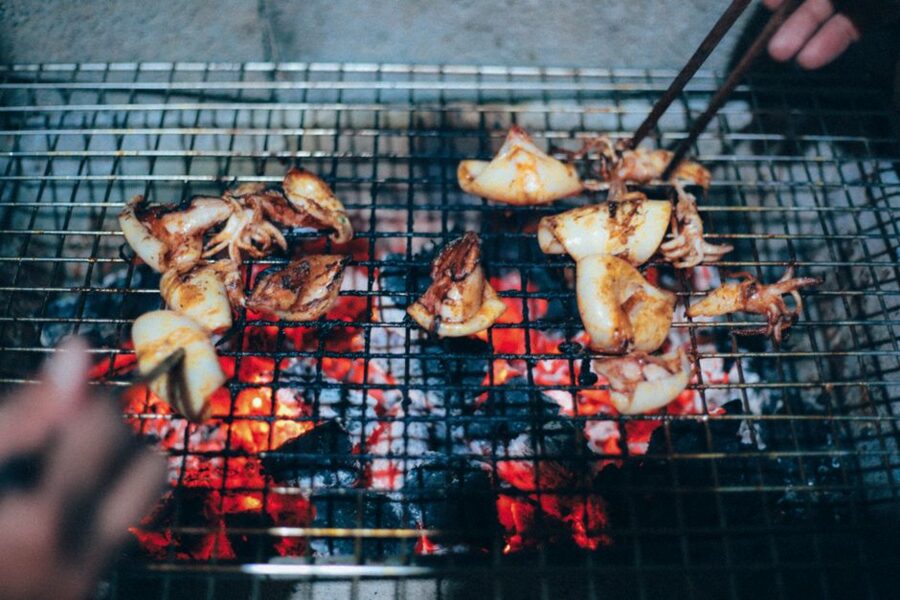
Then there is gỏi cá trích (raw herring salad): fresh herring cured in lime, tossed with coconut, onion and herbs, rolled in rice paper with greens and dipped in a peanut-chilli sauce. Order it wherever you see it on a local menu. With grilled squid, sea urchin and Ham Ninh crab, that is a full seafood tour of the island.

The night market and Dinh Cau
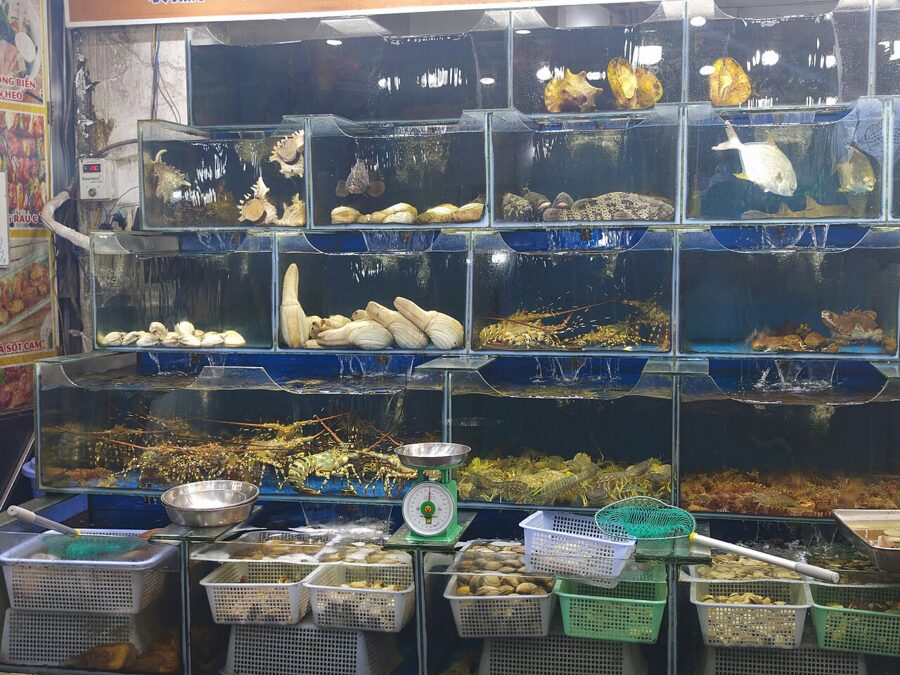
For years the Phu Quoc night market (chợ đêm) filled a street near the mouth of the Duong Dong river every evening with seafood grills, fruit and pearl stalls. Its lease ran out at the end of 2025. After an extension through Tet, the special zone’s chairman said in April 2026 that it would not be scrapped and that a new, permanent site was being found, while stalls continued to trade near Dinh Cau. Ask your hotel where it is running this season before you go.

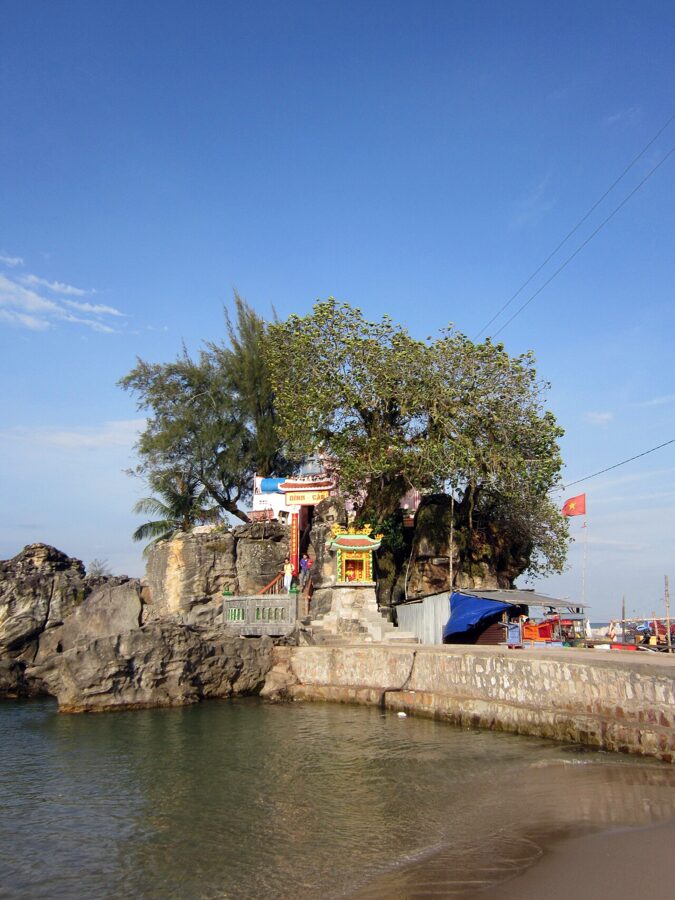
Whatever happens to the market, Dinh Cau (Dinh Cậu) is still the place to start an evening in Duong Dong. It is a small shrine on a rock at the river mouth, reached by a causeway and 29 steps, built for the spirits that protect the island’s fishermen; the present building dates from 1937. Arrive between five and six for the sunset, then walk into town to eat.

When to go
December to March is the best of it: dry, sunny, calm on the west coast, and hot without being heavy. November and April are good too, though April and May are the hottest months. From May the rains build, and July to September are the wettest months, best spent on the east coast or skipped. For how Phu Quoc fits into a wider route, the best time to visit Vietnam sets the island against the north and centre month by month.
Prices follow the weather. Hotels cost most between Christmas and Tet, which falls on 6 February in 2027, when Vietnamese families fill the flights. The wet season brings real discounts, and on the right coast it can still be a pleasant week.
Where to stay, by kind of trip
Choose the area first, then the hotel. A wrong base costs you an hour in a taxi every day.
- First visit, a week, eating out every night: Long Beach, between Duong Dong and the airport. The widest choice of mid-range hotels, plenty of restaurants within walking distance and sunsets on the doorstep.
- Quiet and low-rise: Ong Lang and the coves north of it. Small bungalow resorts in gardens, dinners at the hotel, and a motorbike or taxi for anything else.
- Families with children: Bai Dai in the north-west, for VinWonders and the safari park, or the south-east for Sao’s shallow water and the cable car.
- Best sand and a big resort: Kem and the south-east coast. Expensive, self-contained and good in either season.
- Budget and a local feel: Duong Dong town. Guesthouses close to the market, the river and Dinh Cau, with the beach a short walk away.
- July to September: the east or south-east coast, or a resort with a good pool. Ask for a sheltered beach when you book.
- November 2027: the APEC leaders’ week will tie up roads and hotels around the south and the airport. Avoid those dates unless you have a reason to be there.
How many days
Three nights is enough for the south and a beach. Five gives you a day in the north and a day doing nothing. A week lets you split it: half on the west coast in the dry season, half on the east, or a few nights at each end.
If you only have one day to spend off the beach, make it the north: Ganh Dau in the morning, the starfish shallows at midday, the pepper farms and the east coast in the afternoon. Then come back to the west coast for the sunset at Dinh Cau, where the island’s day still ends.