
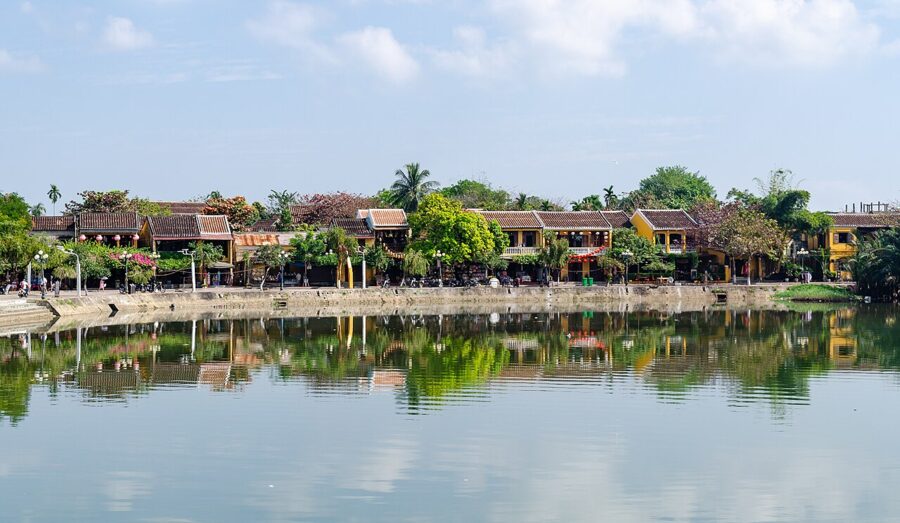
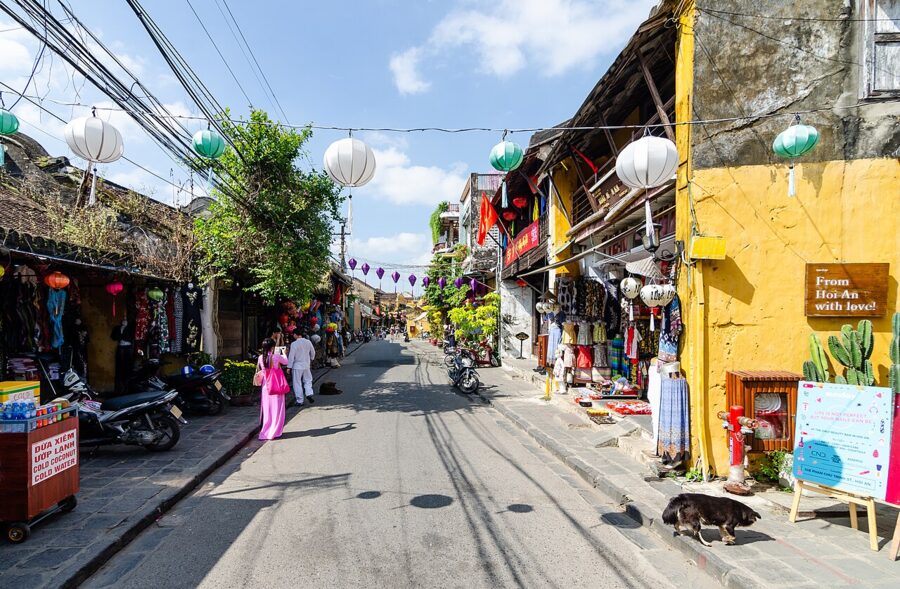
Hoi An’s Ancient Town packs more than a thousand timber shophouses, temples and clan halls into a few blocks of riverbank, and the hour you walk them decides what you see. At six in the morning it is a trading port: shutters going up, women carrying baskets to the market, the Japanese Bridge empty. At eight in the evening it is the most photographed street party in Vietnam.
Both versions are worth having, but plan around the first. The town has also changed more in the last eighteen months than in the twenty years before: since 1 July 2025 it has been part of Da Nang, the flood of late October 2025 was the worst in sixty years, and the ticket rules were rewritten in early 2026.

I would give Hoi An three nights: one for the old town, one for the countryside and the sea, one for the Cham temples at My Son.

Contents
- Hoi An is now part of Da Nang
- The Ancient Town ticket, and what it buys
- Lantern nights and the river at dusk
- Tailors: how it works, how long it takes, what is fair
- Out of town: villages, beaches and islands
- My Son as a day trip
- What to eat in Hoi An, and where
- Getting to Hoi An
- Weather, the flood season and when to go
- How many days, and where to stay
Hoi An is now part of Da Nang
The national reorganisation of 2025 abolished Vietnam’s districts and merged Quang Nam province into Da Nang City. Hoi An lost its city status on 1 July 2025 and was split into wards: Hoi An ward (phường Hội An), which holds the Ancient Town, with Hoi An Dong and Hoi An Tay wards around it, and Tan Hiep commune, which is the Cham Islands.
On the ground almost nothing changed except addresses. Bookings, map apps and receipts now say “phường Hội An, TP Đà Nẵng” where they used to say “Hội An, Quảng Nam”, and old ward names such as Minh An or Cẩm Phô survive only on old signs. If a taxi app cannot find a place under its new address, search the street name alone.
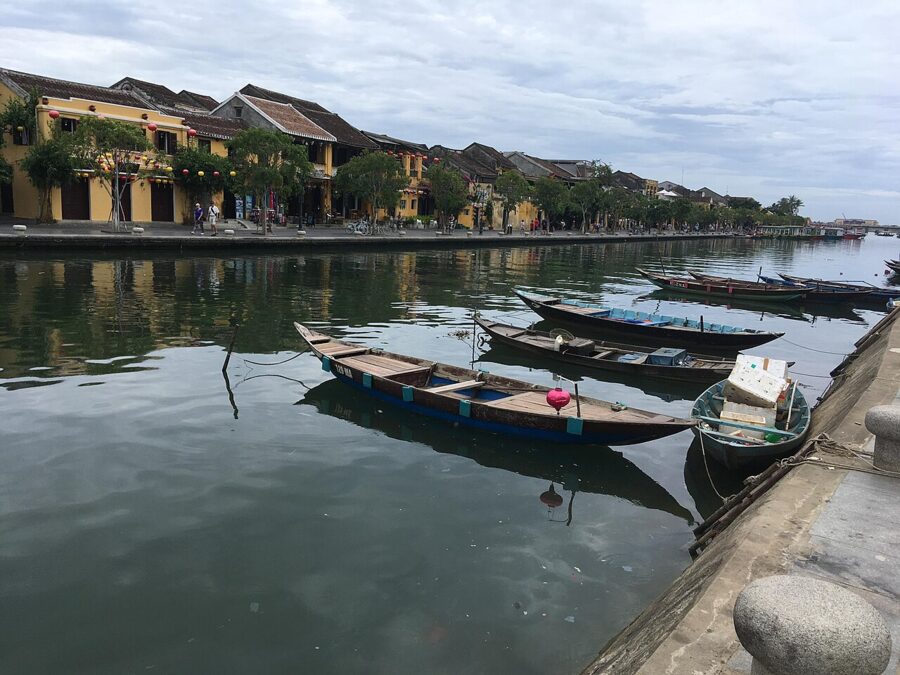
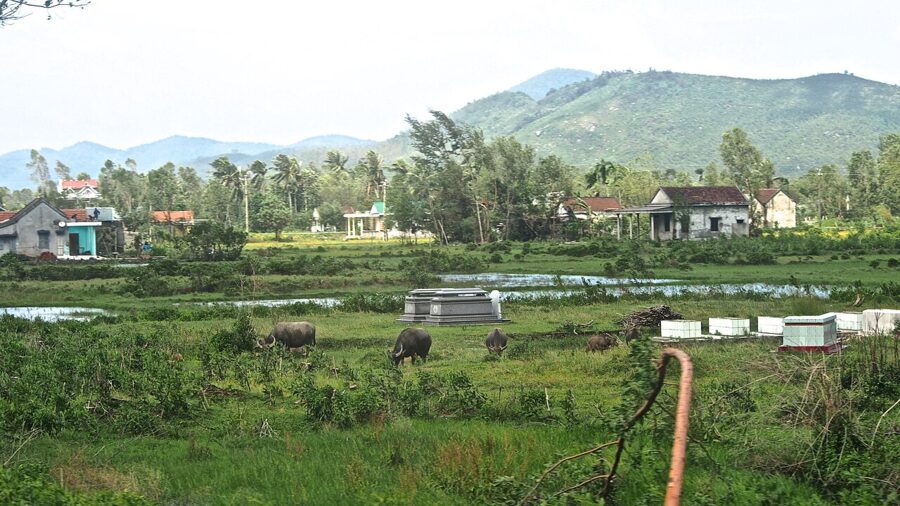
The Ancient Town sits on the north bank of the Thu Bon River (sông Thu Bồn), with the An Hoi islet across a narrow channel called the Hoai River. The beaches at An Bang and Cua Dai are four to six kilometres east, Tra Que vegetable village about three kilometres north, and Da Nang’s airport roughly 30 km up the coast.

The Ancient Town ticket, and what it buys
You can walk the streets without a ticket, but the Hoi An World Heritage Conservation Centre asks every visitor to buy one before entering, and you need it for any of the ticketed buildings. As of its January 2026 notice there are two tickets. Since February 2026 Da Nang charges Vietnamese and foreign visitors the same heritage fees, so neither depends on your passport.
| Ticket | What it includes |
|---|---|
| 80,000 dong (about $3) | The Ancient Town streets; one entry to the Japanese Bridge or Quan Cong Temple; two other sites of your choice |
| 120,000 dong (about $4.60) | The Ancient Town streets; one entry to the Japanese Bridge or Quan Cong Temple; the museums; three other sites of your choice |
One purchase covers your stay, up to three days, so keep the stub: staff ask for it at the entrances to the old town as well as at the sites. Children under 16, students and Vietnamese citizens aged 60 and over enter free under the city’s 2026 fee rules. Groups buying eight or more tickets get a free guide from the conservation centre.
Buy the 120,000 ticket. The difference is less than two dollars, and the museums are the only places in town that explain what you are looking at.
The streets are closed to motor traffic from 09:00 to 21:30 in summer and to 21:00 in winter, and Phan Chau Trinh Street becomes a walking street from 17:30. Before nine, motorbikes still pass, which is the price of having the place to yourself.
The Japanese Bridge after its restoration
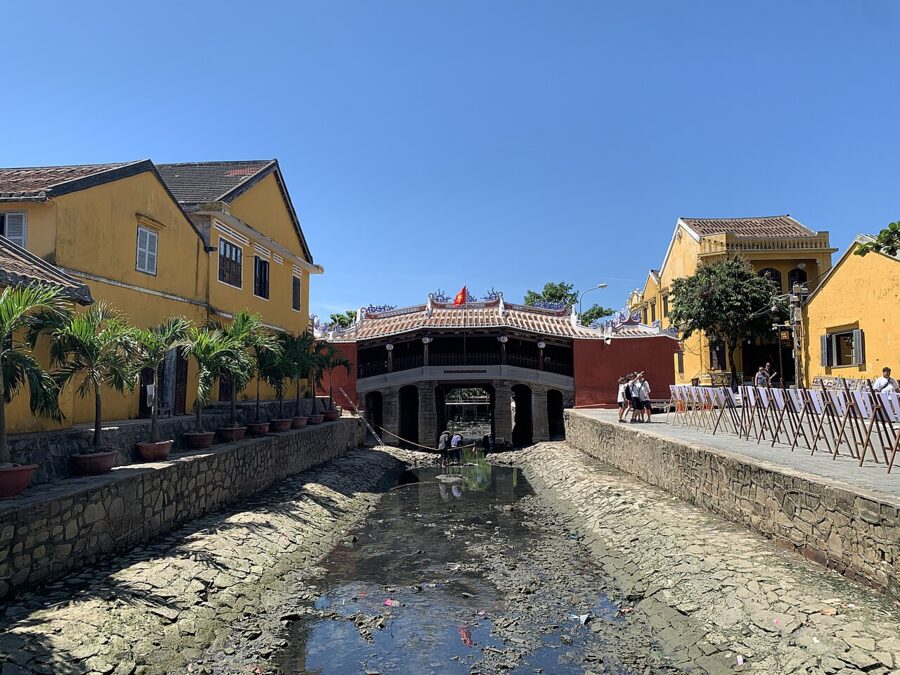

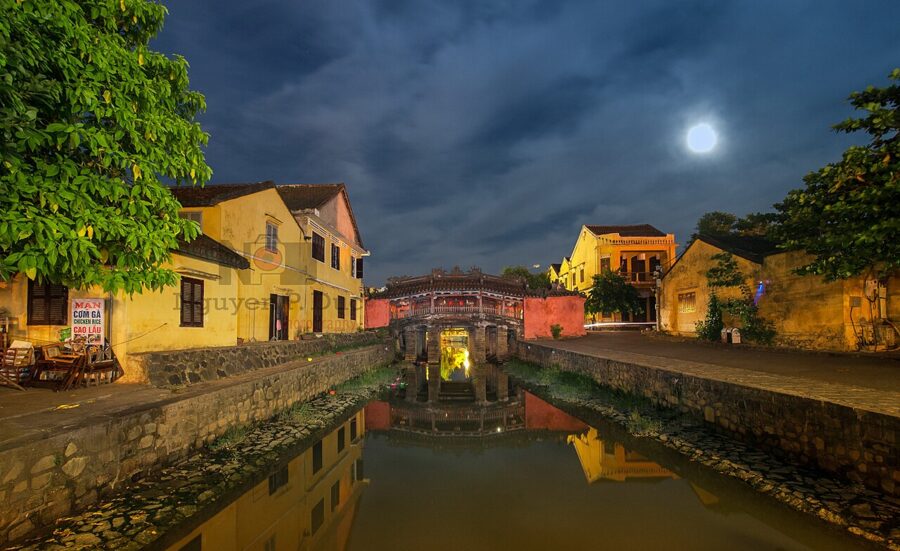
The Japanese Covered Bridge (Chùa Cầu) is the image on the 20,000-dong note. Tradition credits the Japanese merchant community with building it around the turn of the seventeenth century, and in 1719 the Nguyen lord Nguyen Phuc Chu named it Lai Vien Kieu, the bridge of friends from afar. A small temple is built into its north side.
The bridge was taken apart and rebuilt between December 2022 and August 2024, at a cost of more than 20 billion dong (about $780,000), and reopened on 3 August 2024. The fresh paint and bright timber drew loud complaints that a four-hundred-year-old structure now looked new, and the city promised to tone the colours down. Stand back from it today and the shape is unchanged, which was the point of the work.
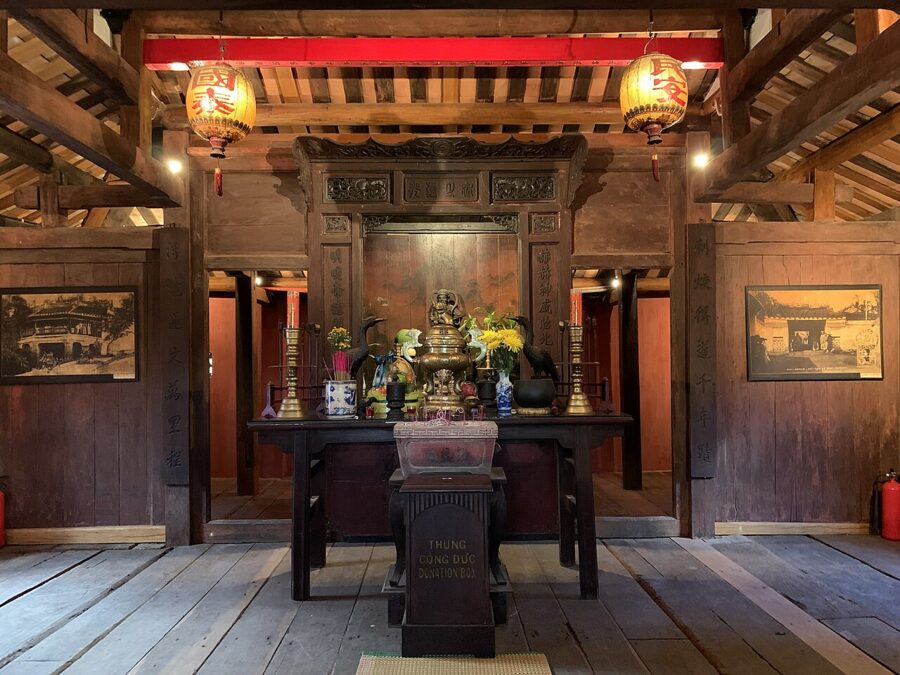

The flood of October 2025 then put nearly half a metre of water through the bridge and left a line on its walls, with peeling paint and loose joints reported a month later. Crossing it uses the bridge-or-temple entry on your ticket, but you can see it perfectly well from the streets at either end and from the riverbank. Go before 07:30 or after 21:00; in between, the queue to stand in front of it is the busiest spot in town.
Which houses, halls and museums to choose
The ticketed sites are Chinese assembly halls, merchant houses still lived in by their families, family chapels and small museums. After the 2025 flood the authorities counted thirty old houses damaged, nine badly, so ask at the ticket booth which sites are open that week.
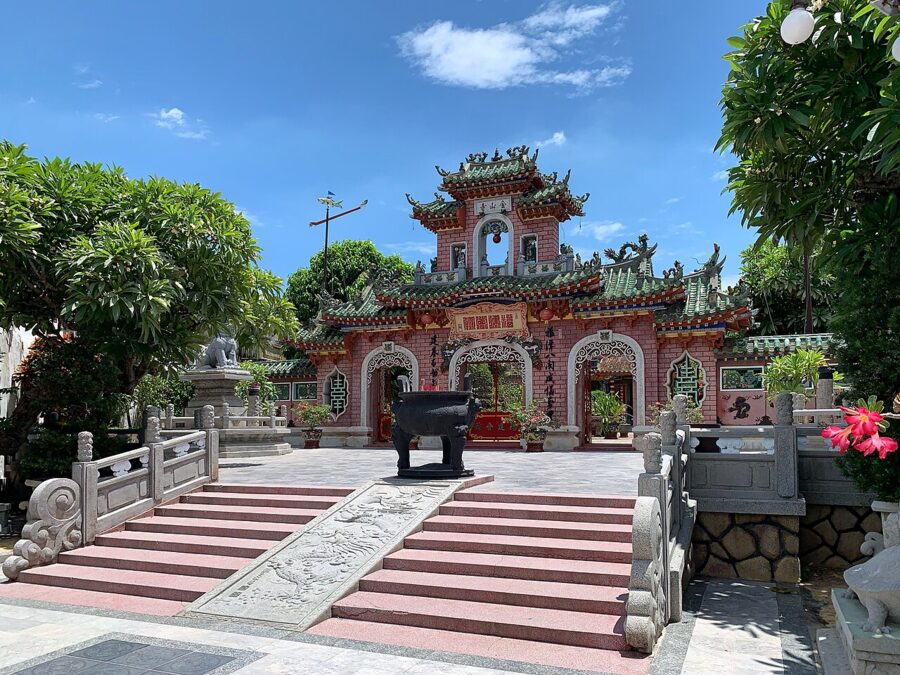

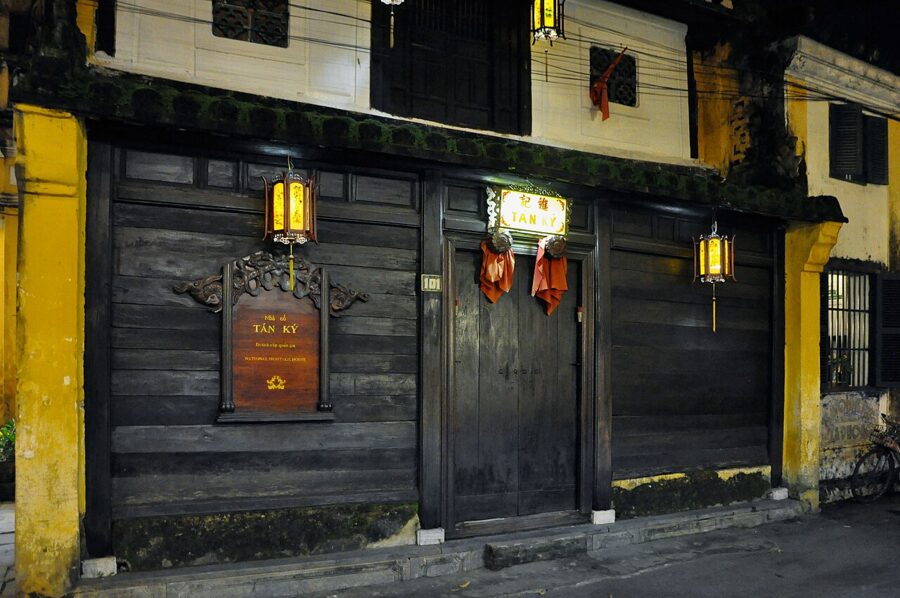
With a 120,000 ticket, I would choose these. The Fujian Assembly Hall (Hội quán Phúc Kiến) at 46 Tran Phu is the grandest of the halls, and its courtyard does not fill until mid-morning. Tan Ky Old House at 101 Nguyen Thai Hoc dates from 1741 and is still the family’s home; its owner marked the 2025 flood line on the wall, about two and a half metres above the floor.

For the third site, pick Phung Hung Old House for a second merchant house, or a smaller hall such as the Cantonese or Chaozhou ones if you prefer carving. Spend the bridge-or-temple entry on Quan Cong Temple (Miếu Quan Công) rather than the bridge: the temple’s courtyard and its statue of the general Guan Yu are only visible from inside.
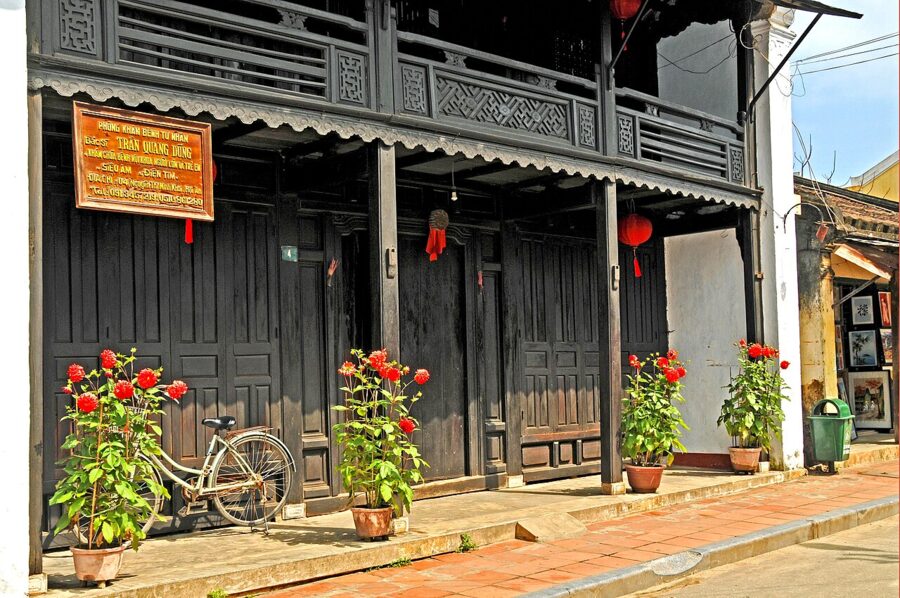

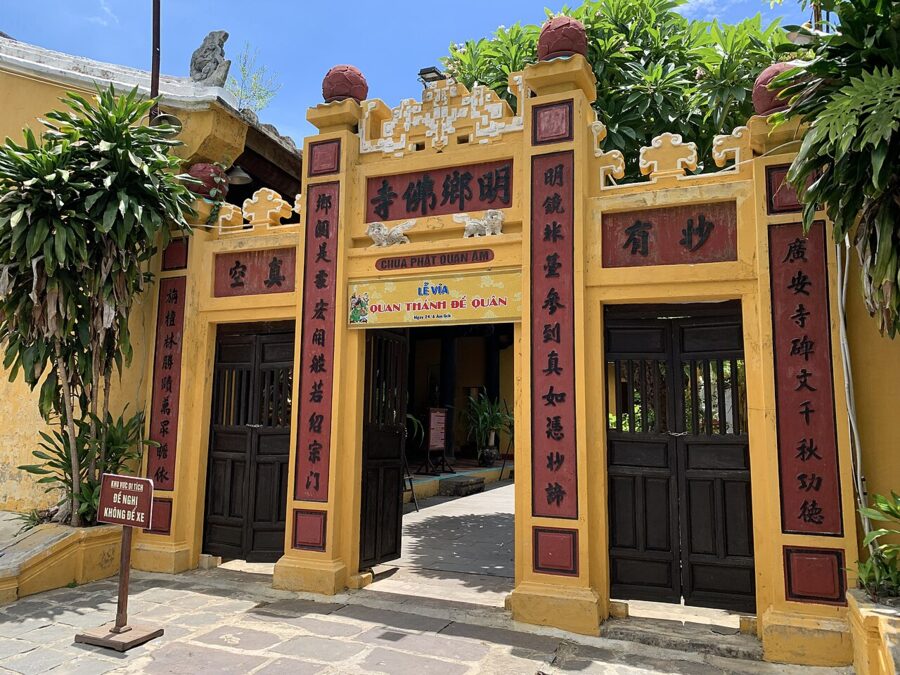

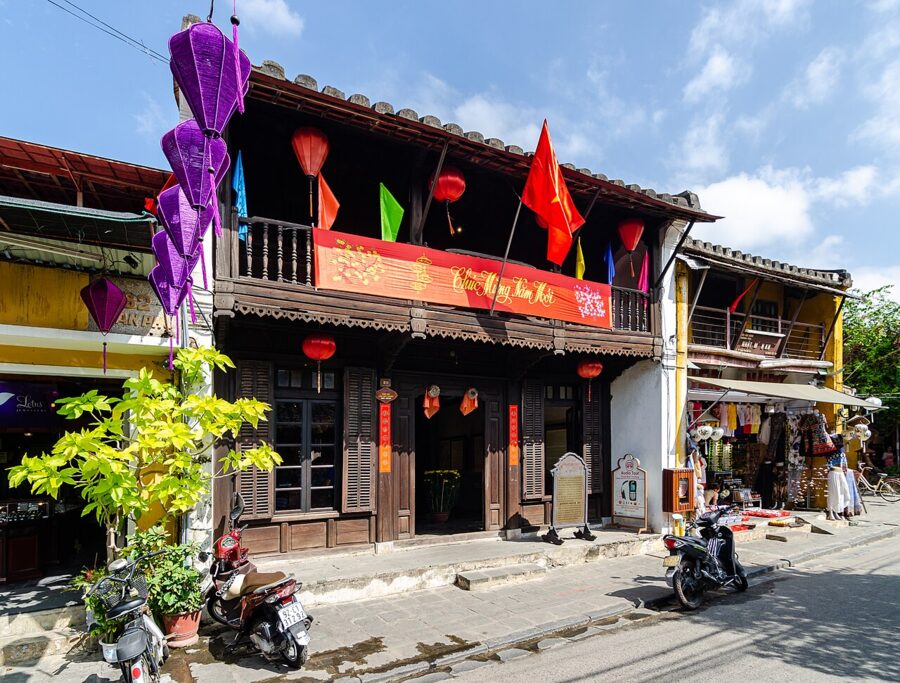
Of the museums, the Museum of Trade Ceramics at 80 Tran Phu is the one that makes sense of the town: an old timber shophouse holding Chinese, Japanese, Thai and Middle Eastern pottery found in and around Hoi An, the physical proof of who traded here. The Sa Huynh Culture Museum covers the Iron Age people who lived on this coast before the Cham.

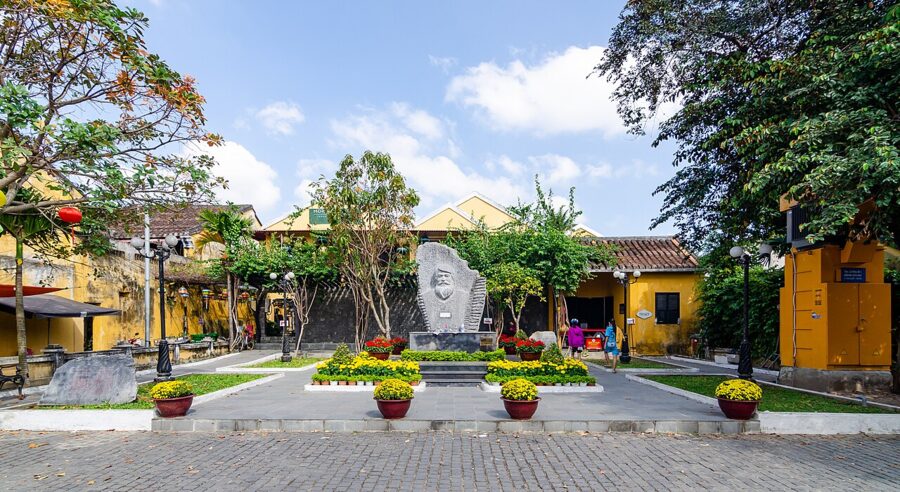
Free and easy to miss is the small garden on Tran Phu with a bust of Kazimierz Kwiatkowski, the Polish conservation architect known here as Kazik. From the 1980s he surveyed and restored buildings in Hoi An and at My Son, and the town credits him with persuading officials that the old houses were worth keeping.

Shows, tea and the night programme
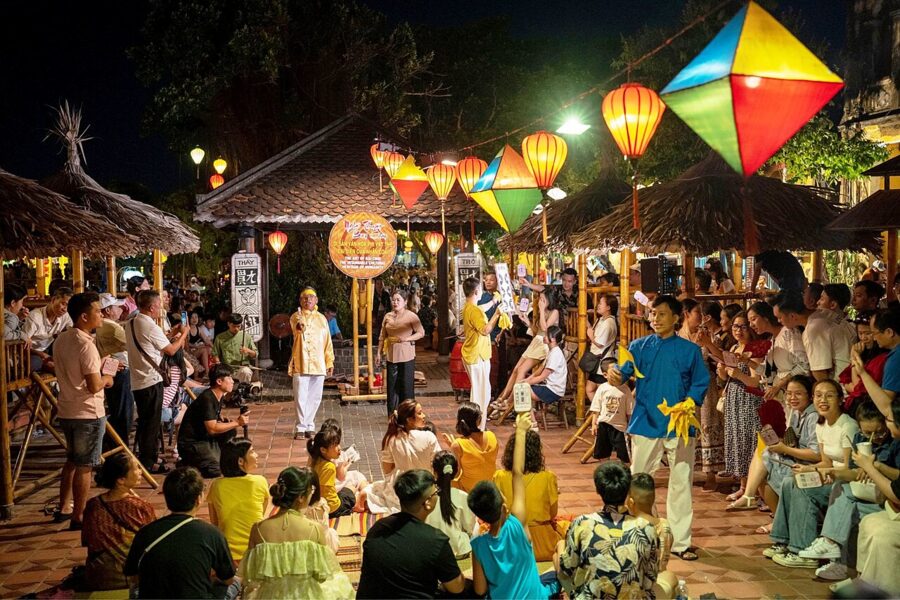
The conservation centre runs a short traditional music and dance show daily at 10:15, 15:15 and 16:15, since March 2026 in the upstairs hall at Song Hoai Square, 01 Cao Hong Lanh. A Japanese tea ceremony runs at 06 Nguyen Thi Minh Khai at 09:30 and 16:30. In the evenings there are street performances of traditional instruments, folk games and bài chòi, a sung card game of central Vietnam that UNESCO lists as intangible heritage.

Lantern nights and the river at dusk
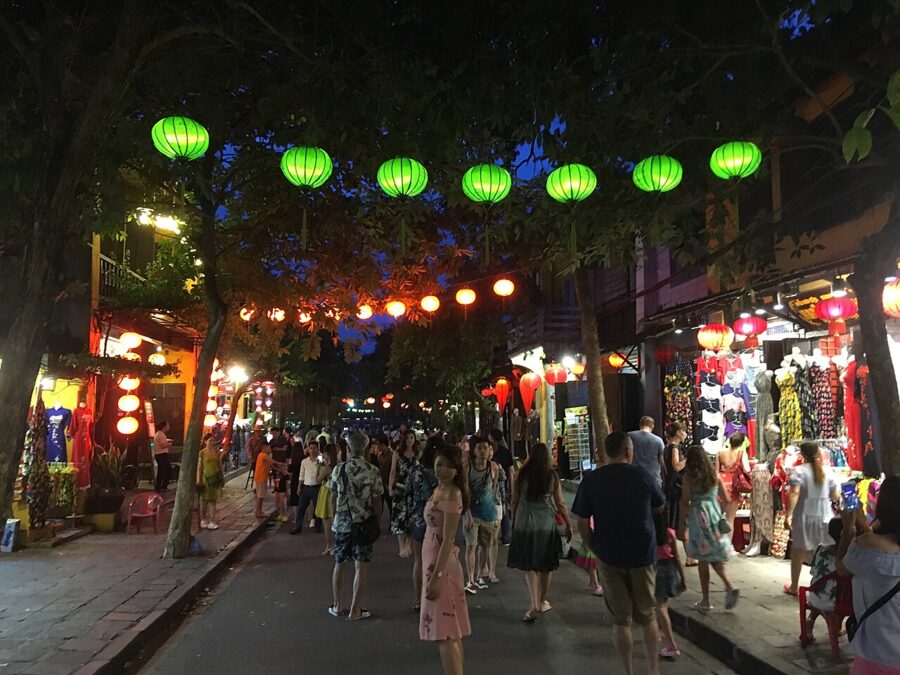

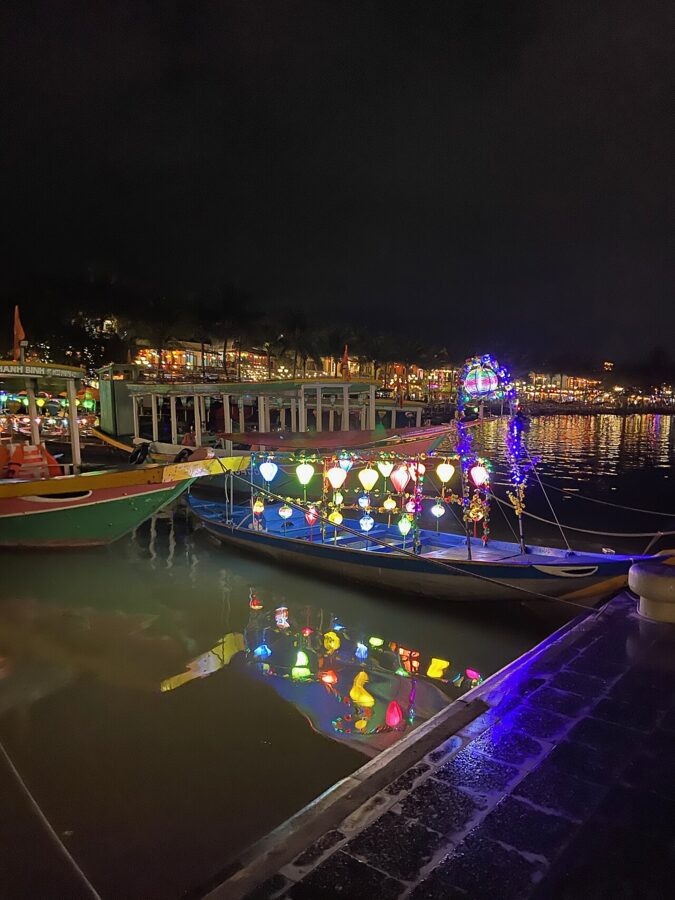
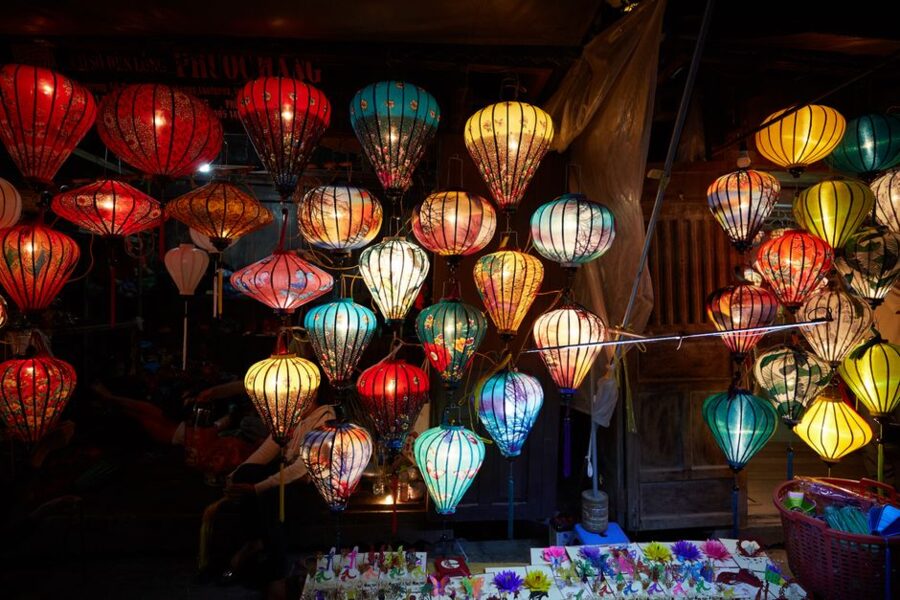
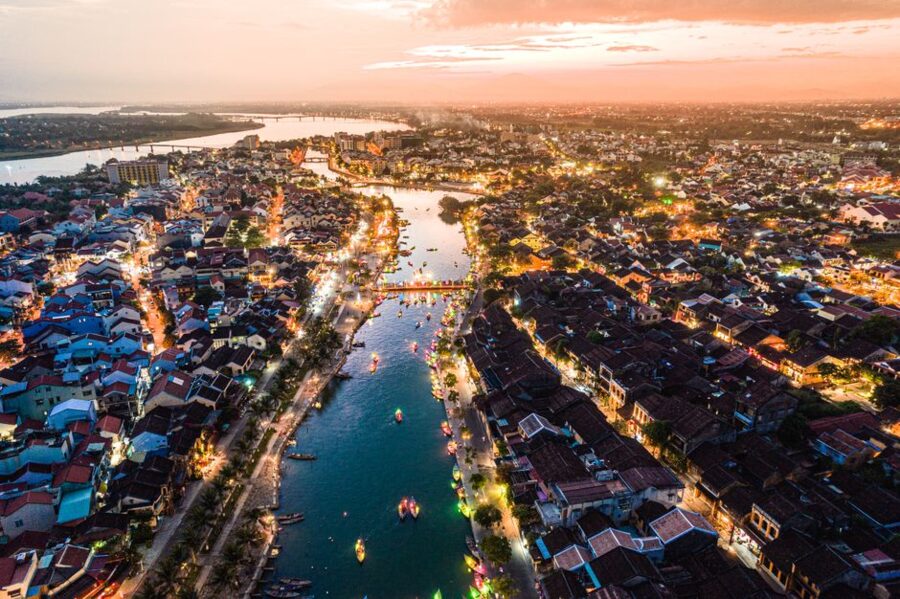
Hoi An lights its lanterns every evening, not only at festivals. From about six the streets along the Hoai River fill, boats start taking passengers out, and children sell paper candle lanterns to float on the water. The river is busiest from roughly 18:00 to 22:00, and on a dry Saturday Bach Dang Street and the bridges to An Hoi are close to shoulder to shoulder.
The boat trips are short loops in small wooden boats. Agree a price per boat, not per person, before you step aboard. I would take a boat once, early in the evening, and then watch from the An Hoi side.

Across the An Hoi bridge, Nguyen Hoang Street turns into a night market each evening, with lanterns, souvenirs and grilled snacks. It is fun for an hour and then repetitive; the lantern shops in the streets behind it are where to buy one to keep.
Full-moon night
On the fourteenth day of every lunar month, the eve of the full moon, the old town holds its Ancient Town Night (Đêm phố cổ). Electric light on the main streets is turned down and the town runs on candles and lanterns, with family music groups, chess players, folk singing and bài chòi along the streets. Any Vietnamese calendar app shows the lunar date.
It is the most beautiful night of the month and the most crowded. If your dates allow, spend it in town and do your ticketed sightseeing on another day.
When the old town is quietest
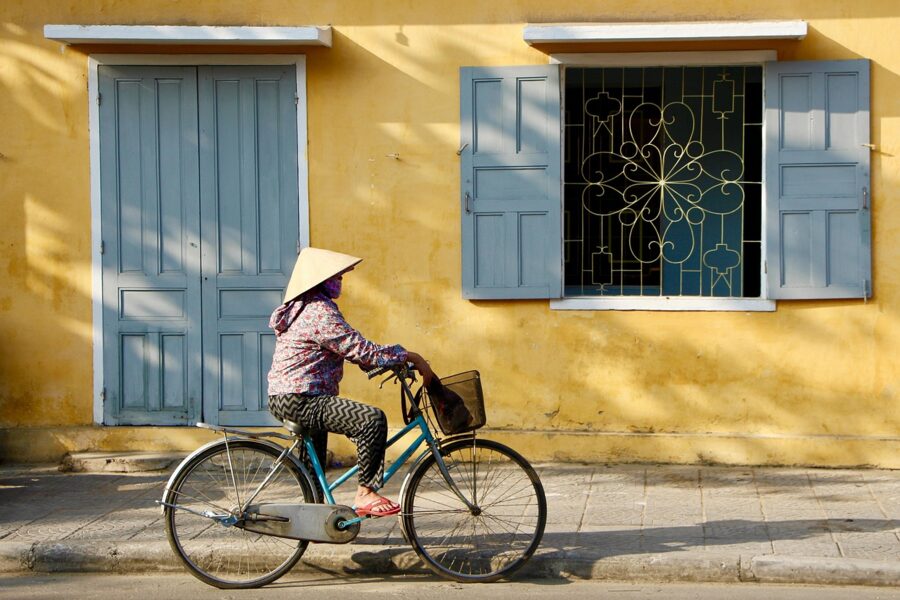
Early morning beats every other answer. Before eight, the streets belong to residents, the light on the yellow walls is soft, and the market is busy with locals rather than tour groups. Midday in the hot months comes second, when the tour buses take their groups to lunch.
The busiest times are evenings, Saturdays, the Lunar New Year, the 30 April, 1 May and 2 September holidays, and the Vietnamese summer holidays in June, July and August. Rainy-season evenings in October and November can be close to empty, but that is also when the river comes up.
Tailors: how it works, how long it takes, what is fair
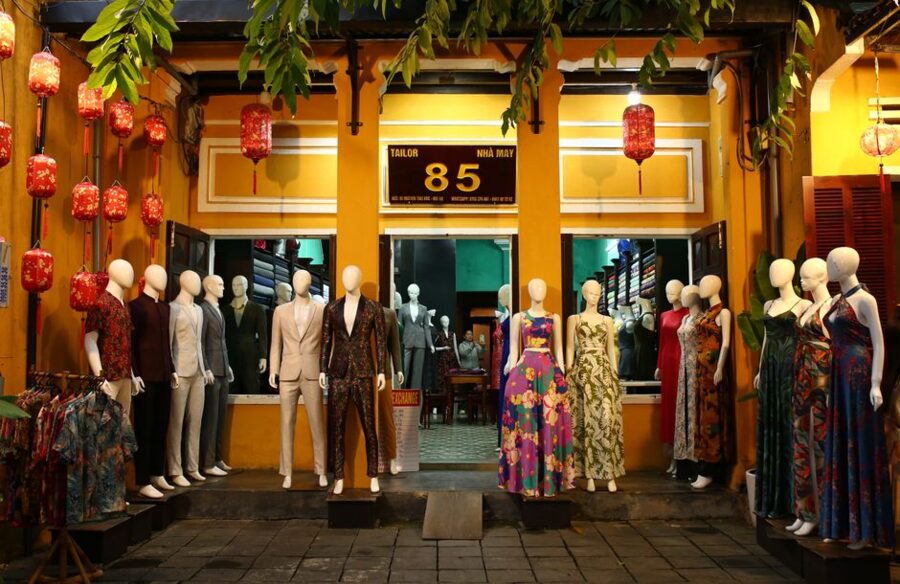
Hoi An has hundreds of tailors, and having clothes made is one of the few things here that is better than its reputation. You choose a design (from a catalogue, a photo, or best of all a garment you already own), choose the cloth, are measured, and come back for fittings until it is right.
Time makes the difference. Shops will promise a suit in 24 hours, but a good result needs two or three fittings with a day between them: allow three to five days for a suit, two or three for shirts, trousers or a dress. Go to a tailor on your first afternoon in town, not your last.
Prices are usually quoted in dollars. Price surveys published in 2026 put a typical made-to-measure two-piece suit at roughly $180 to $250 in a wool blend, more in pure wool; a suit under $100 is synthetic cloth and quick work. Ask for the fibre label on the bolt, and pay a deposit rather than the full price upfront.
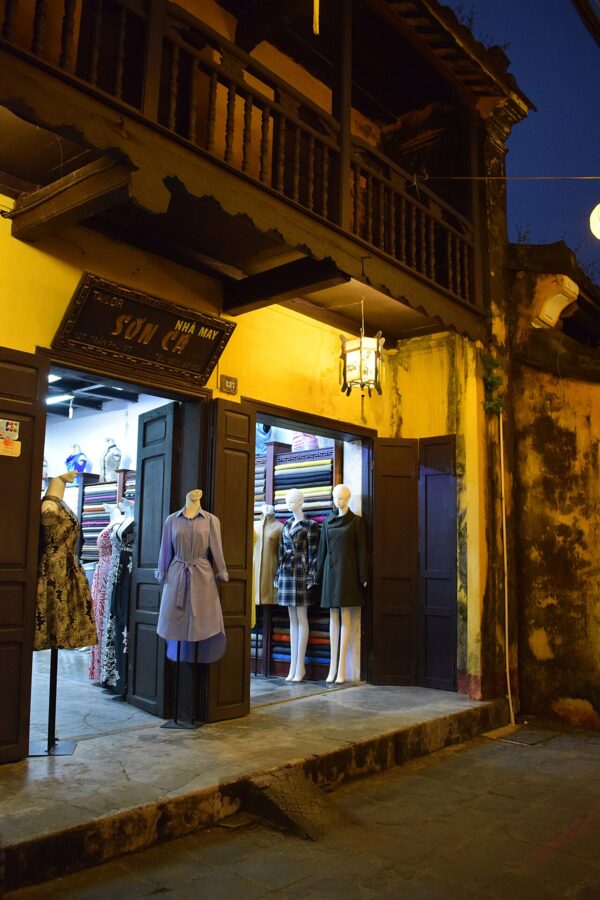

The most common mistake is letting someone else choose the shop. Cyclo drivers, touts and some guides take a commission for bringing customers, and it is in your price. Walk in yourself, compare two or three shops on the same design, and look inside a finished jacket for even seams, a sewn lining and real buttonholes.
At fittings, wear the shoes you will wear with the clothes, then sit, raise your arms and move. If the result is wrong after the third fitting, it will not be right after the fifth.
Out of town: villages, beaches and islands
The countryside around Hoi An is flat, and the best way into it is by bicycle. Most hotels lend or rent bikes, and every village below is within half an hour’s easy riding of the old town. Leave early, as the roads have little shade after nine.
Tra Que vegetable village
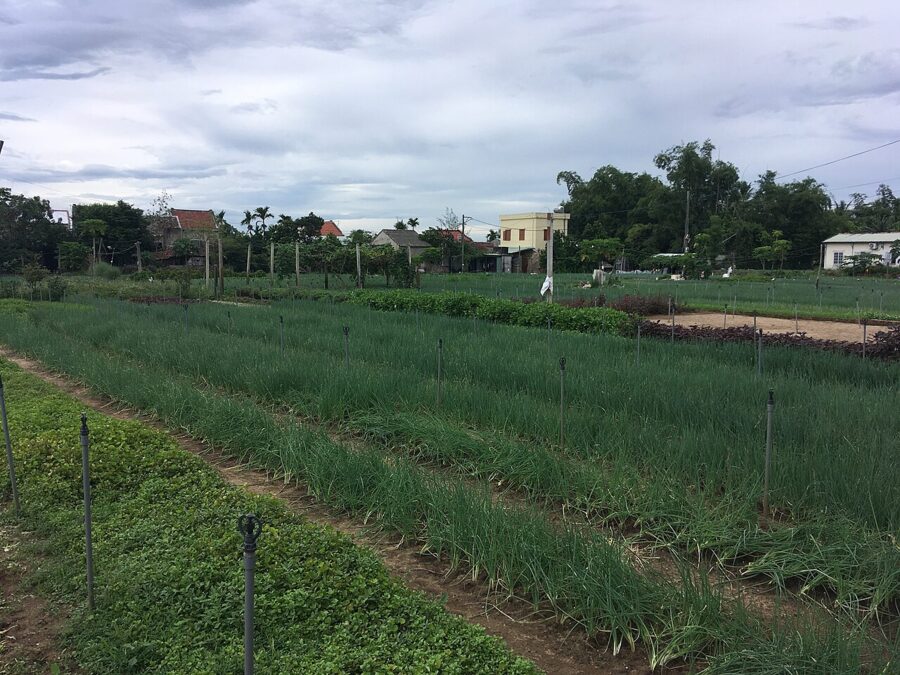
Tra Que (làng rau Trà Quế) is a village of herb and vegetable gardens about three kilometres north of town. Its fields supply the mint, basil and lettuces that go into the town’s noodles, and the growers still fertilise their beds with weed from the nearby lagoon. Ride through on the lanes between the beds and keep off the soil; the cooking classes run there by local households are pleasant but optional.

Thanh Ha, Kim Bong and the coconut forest
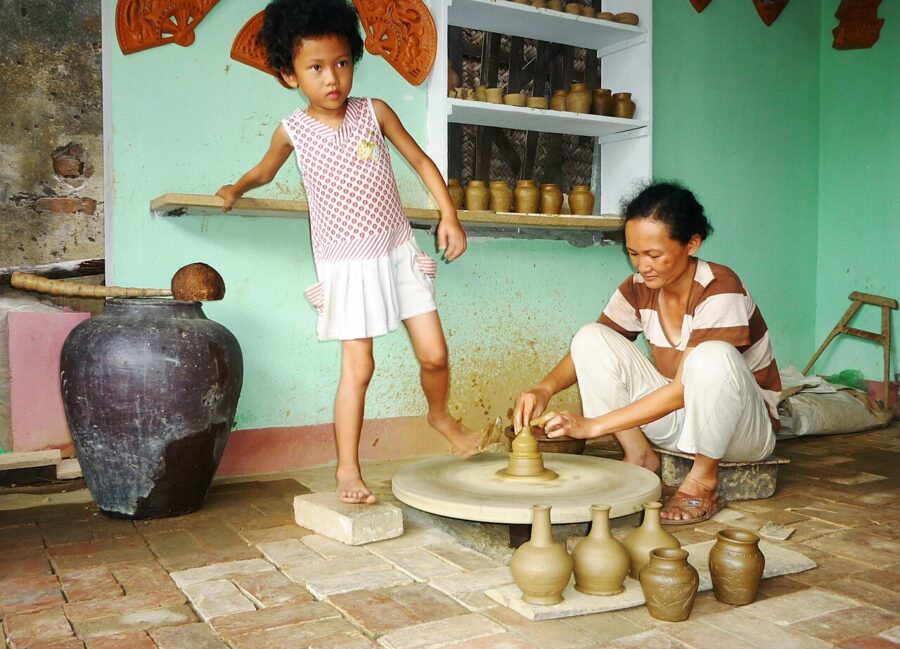
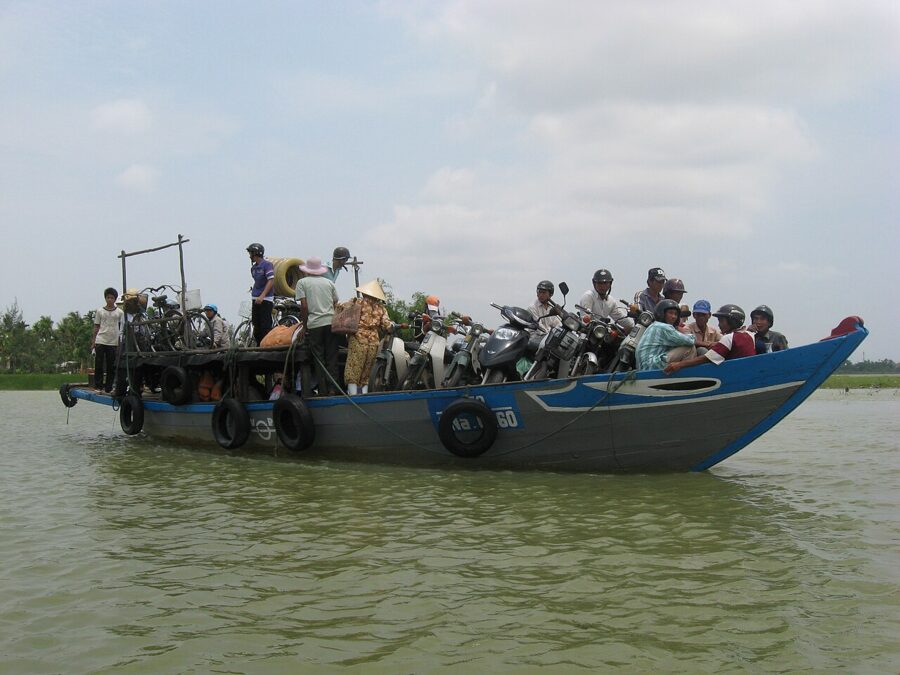
Thanh Ha pottery village (làng gốm Thanh Hà), about three kilometres west on the river, has made pots since the late fifteenth century, and potters still work at the roadside. Across the Thu Bon on Cam Kim island, the carpenters of Kim Bong village built the boats and houses of the old port, and the short ferry from Bach Dang Street is a trip in itself.


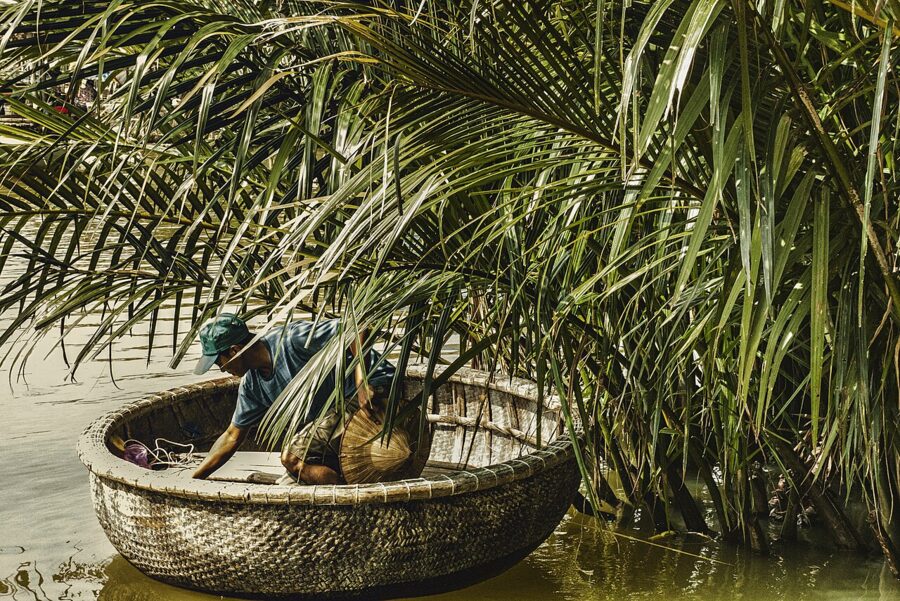
East of town, in Cam Thanh, the water coconut forest (rừng dừa Bảy Mẫu) is where round basket boats (thuyền thúng) take visitors through the channels. Expect loudspeakers and spinning displays on the main channels in high season; go early, or ask to be taken along the side channels.
An Bang and Cua Dai, after the storms
Hoi An’s coast has been losing sand for more than a decade, and the storms of late 2025 made it much worse. Waves cut cliffs of six to seven metres behind the restaurants on the An Bang side, a bar on Lac Long Quan Street collapsed, and swimming was banned in the worst stretches while soldiers laid sandbags.
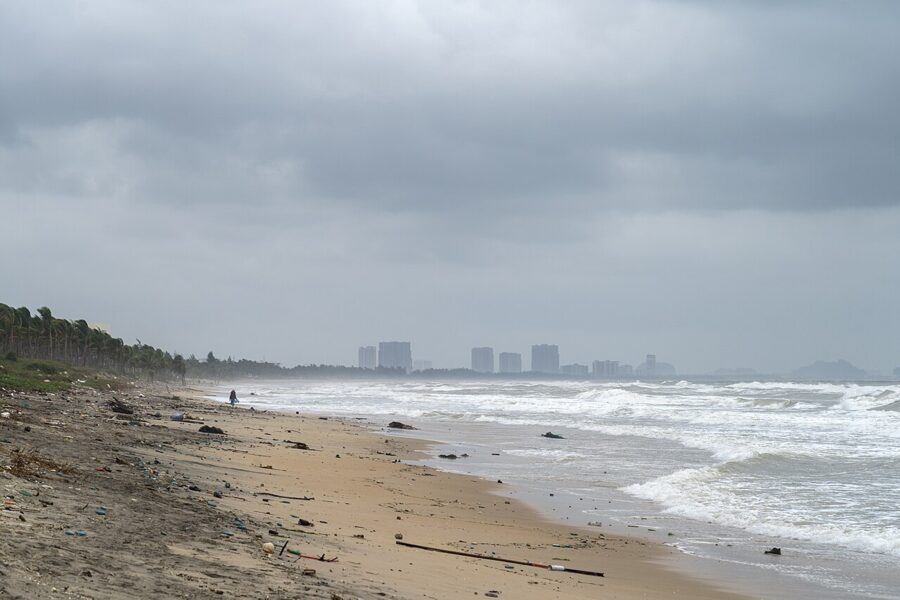

Cua Dai, at the river mouth, was the most eroded beach through the 2010s. A project of submerged breakwaters and sand replenishment costing more than 1,196 billion dong (about $46 million) was reported in November 2026 to have brought its beach back. Sand comes and goes with each storm season, so ask your hotel which stretch has sand and which has red flags that week.
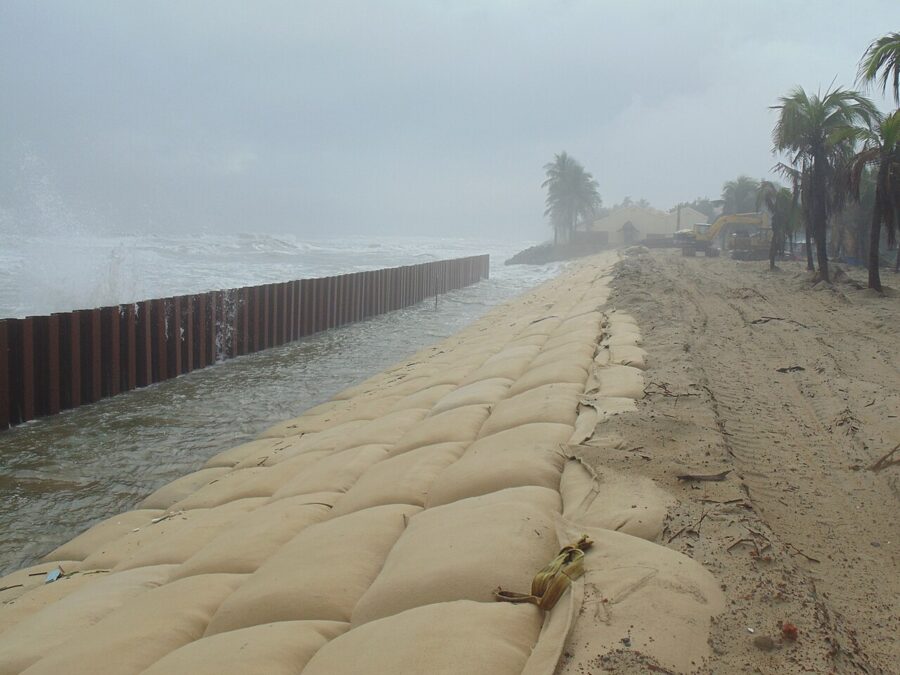

Both beaches are best between March and August, when the sea is calm. In the rainy months the waves are often too big for swimming.
The Cham Islands
The Cham Islands (Cù Lao Chàm), about 15 km off Cua Dai, form Tan Hiep commune and the core of a UNESCO biosphere reserve. Speedboats from the Cua Dai area take around 20 minutes, and the main island has a fishing village, a pagoda, a marine museum and coral for snorkelling.
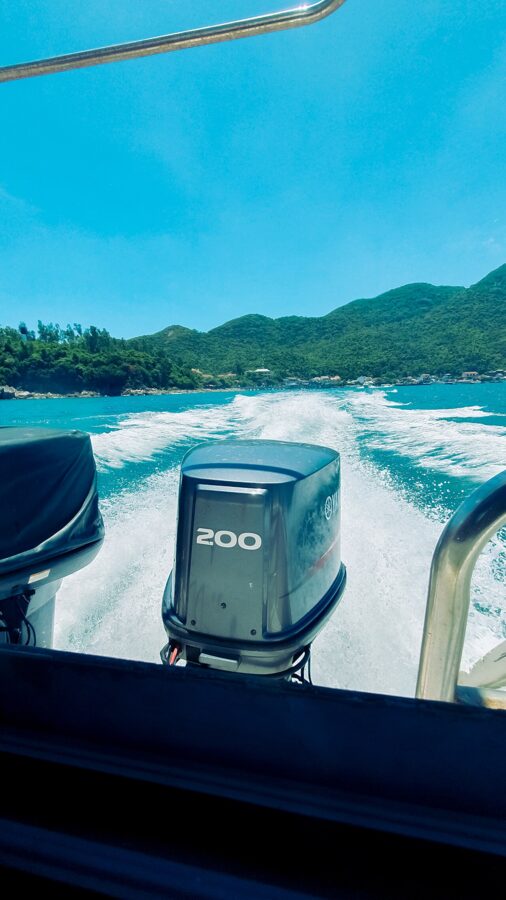

This is a summer trip. Small passenger boats are stopped whenever the port authority bans them for wind and waves, most often between September and February, and even a rough summer day can leave day-trippers waiting on the island. Book a trip you can move by a day.
My Son as a day trip
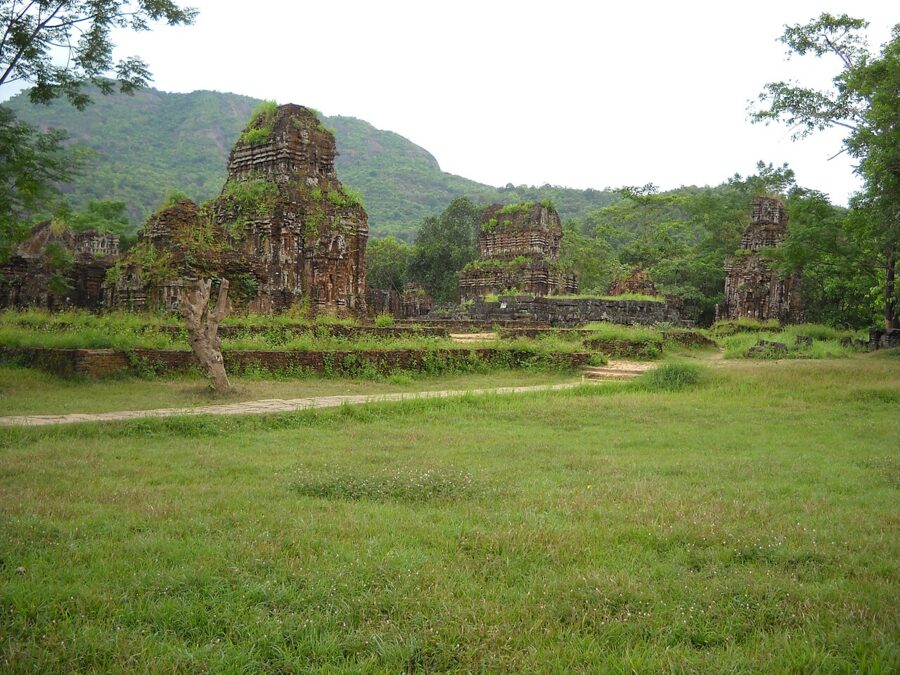

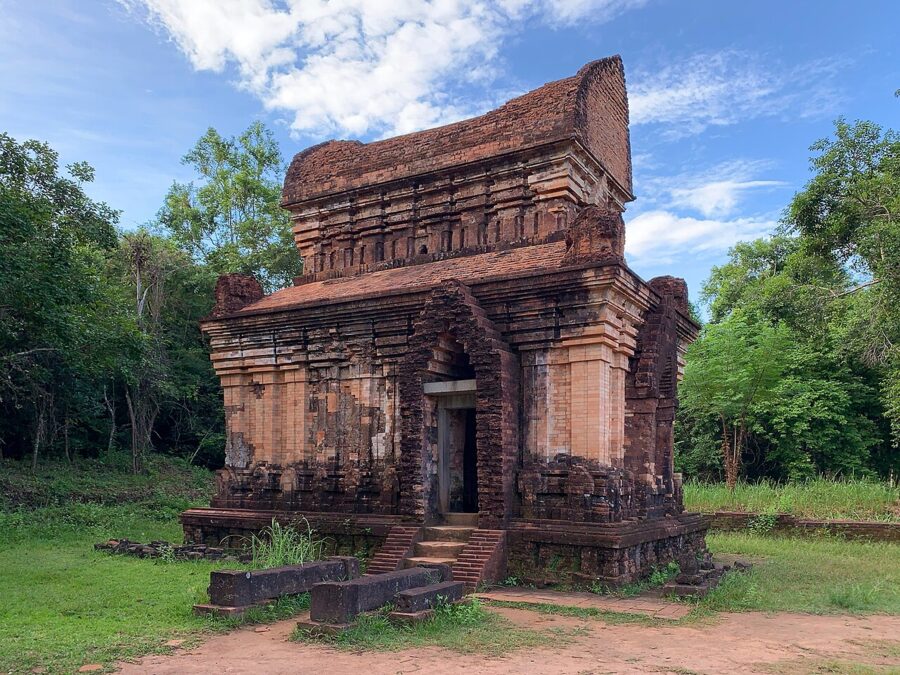
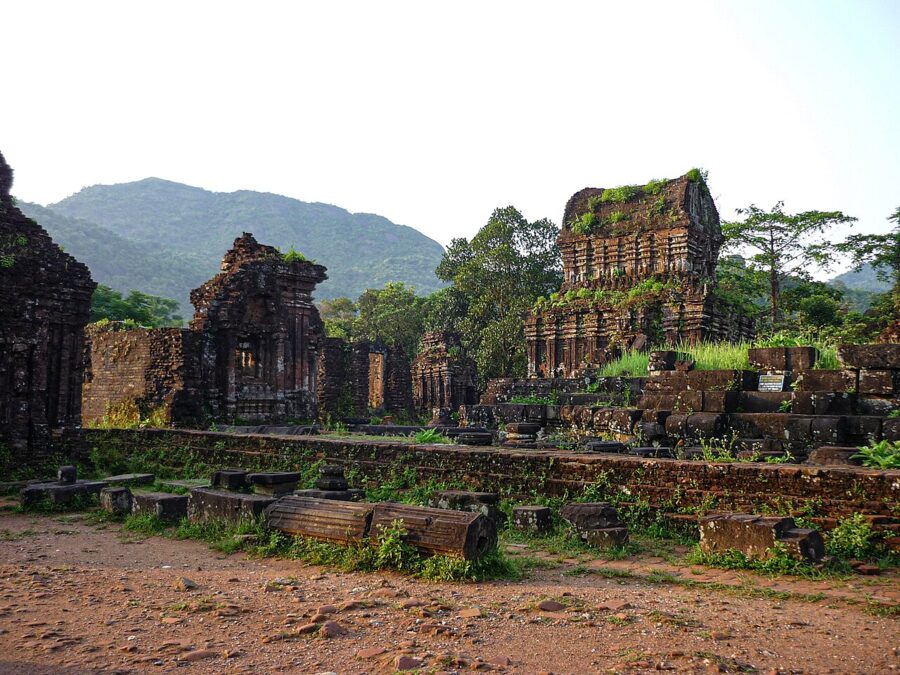
My Son Sanctuary (Thánh địa Mỹ Sơn) is a valley of brick temples in the hills west of Hoi An, built by the kingdom of Champa between the fourth and thirteenth centuries and dedicated mostly to Shiva. Like the Ancient Town, it has been a UNESCO World Heritage Site since 1999. American bombing in 1969 destroyed its tallest tower, and craters remain between the groups.
It is smaller and more ruined than Angkor, and anyone expecting Angkor will be disappointed. What it gives instead is a green, quiet valley and brick towers still standing after more than a thousand years. Two to three hours on site is enough.

Tickets, hours and the dance shows
The site opens daily at 06:00 and closes at 17:30 in summer and 17:00 in winter. As of November 2026 the official online booking site sells tickets at 148,000 dong (about $5.70) for foreign visitors and 99,000 dong (about $3.80) for Vietnamese citizens. The managers announced a plan in January 2026 for a single price of 250,000 dong (about $9.60) for everyone, which needs the city council’s approval, so check before you go.
Since March 2026 Cham dance performances run at 09:00 (at the foot of tower group G), 09:45, 10:30, 11:15 and 14:00 (in the performance house), 14:45 (group G) and 16:00. Cham folk singing is added on Mondays, Wednesdays and Fridays at 09:00 and 14:45, near the slope to group H.
Getting there, and whether to take a tour
My Son is about 40 km from Hoi An, an hour or a little more by car. A Grab car or hotel driver gets you there at opening time, which is what you want: by ten the heat and the tour buses arrive together. Da Nang’s bus operator lists a tourist route, 01DL, from the Hoi An area to My Son at 08:00 and 14:00 for 150,000 dong (about $5.80) one way; confirm the pickup point with DanangBus first.
This is the one place near Hoi An where a guide genuinely helps, because the signs on site explain little. A fair organised trip includes transport, the ticket and an English-speaking guide; some return by boat down the Thu Bon. Avoid anything that reaches the site after nine.

What to eat in Hoi An, and where
Hoi An eats differently from Da Nang, thirty kilometres away. A few dishes are claimed as the town’s own, and others are Quang Nam classics that are at their best here.
Cao lầu
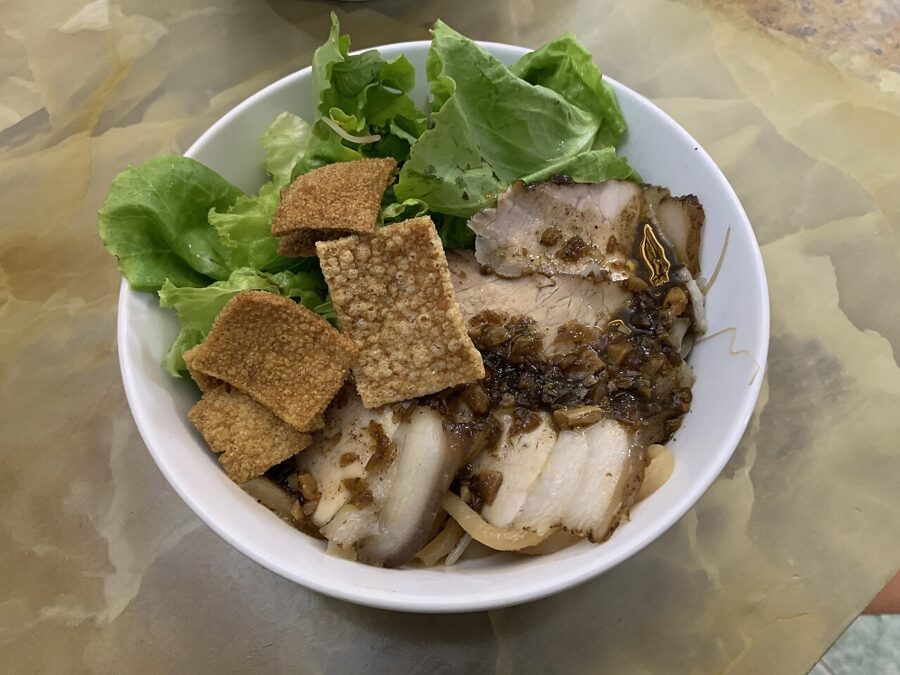

Cao lầu (pork and noodles in a little dark sauce) is the dish Hoi An is proudest of. The noodles are thick and chewy, traditionally made with water from the old Ba Le well and lye from wood ash, and only a handful of families make them. Each bowl gets pork, crisp squares of fried dough, bean sprouts and Tra Que herbs, with just enough broth to wet it; the food hall at the central market is a cheap place to try it.
Mì Quảng and cơm gà
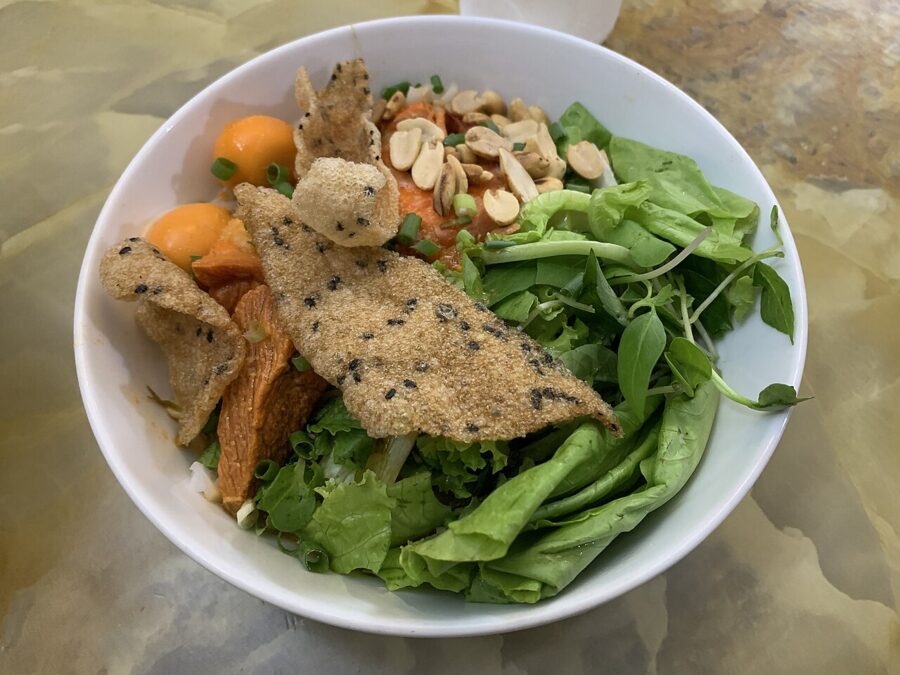
Mì Quảng (Quang-style noodles) is the dish of the old province: wide turmeric-yellow rice noodles, shrimp and pork or chicken, peanuts, herbs and a sesame rice cracker to break over it, again with only a little broth. Every market and many street stalls serve it from breakfast onwards.

Cơm gà (chicken rice) in Hoi An means rice cooked in chicken stock and turmeric, topped with shredded chicken, papaya, onion and herbs. Cơm Gà Bà Buội at 22 Phan Chau Trinh began as a market stall in the 1950s, is run by the founder’s children, and is still the reference; expect a queue at lunch.
White rose dumplings and bánh mì
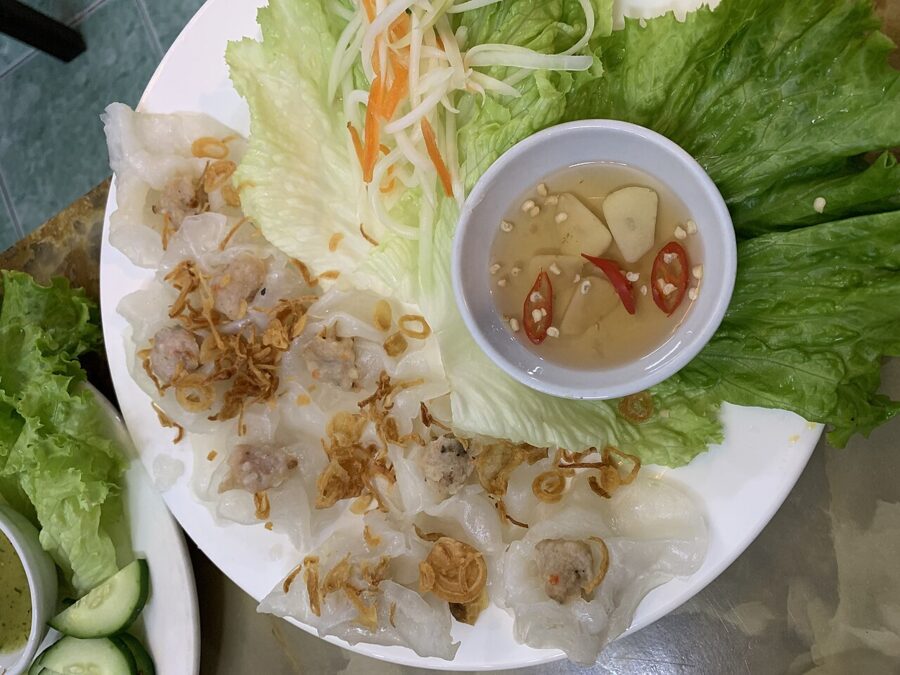
Bánh bao bánh vạc (white rose dumplings) are translucent rice-flour dumplings filled with shrimp and pork, steamed and scattered with fried shallots. Most of the white rose in Hoi An’s restaurants comes from one family workshop on Hai Ba Trung Street, which also serves them.

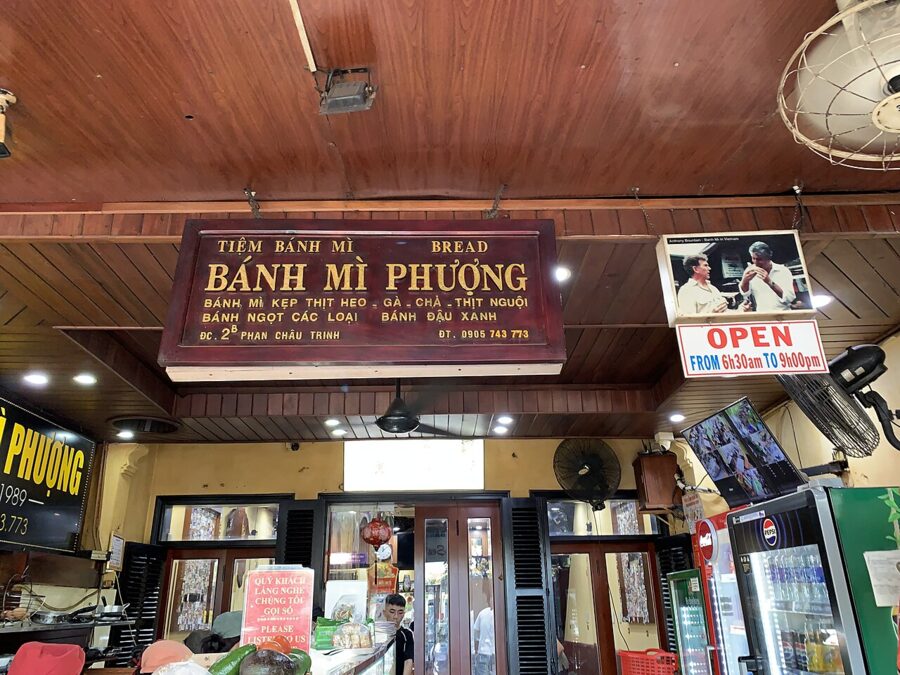
Bánh mì (a baguette sandwich) is a national dish, but Hoi An’s are famously good. Bánh Mì Phượng at 2B Phan Chau Trinh is the best known; a 2026 review put its prices at 20,000 to 35,000 dong (about $0.80 to $1.35) depending on the filling. Madam Khánh at 115 Tran Cao Van is the other long-running favourite. Go before ten or after four to miss the queues at Phượng.

The market and the street
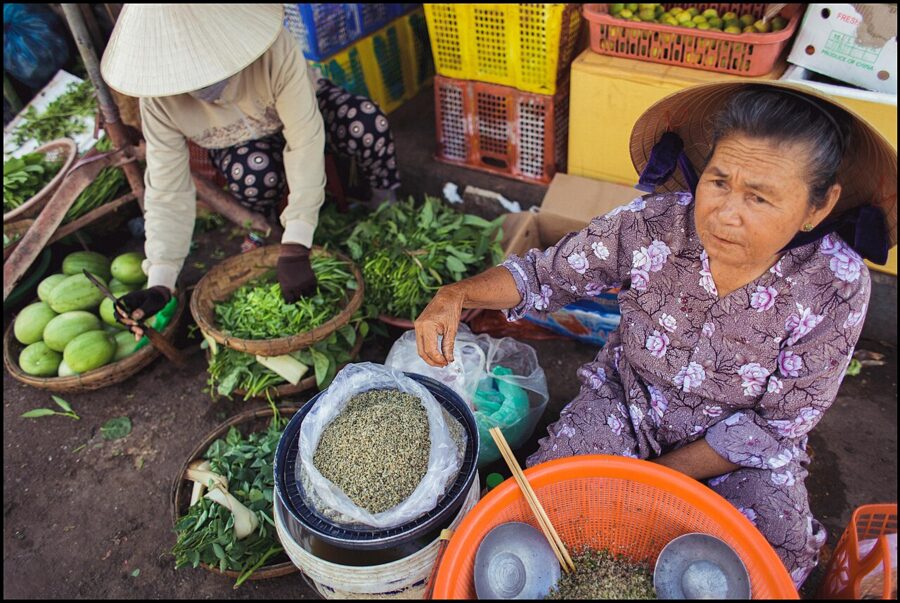
The central market at the eastern end of Tran Phu is busiest from about six to nine, with fish, herbs and fruit outside and a covered food hall serving cao lầu, mì Quảng and sweet soups (chè) at market prices. It is the cheapest good meal in the old town. Riverfront restaurants charge for the view; a street or two back, the same dishes cost less.

Getting to Hoi An
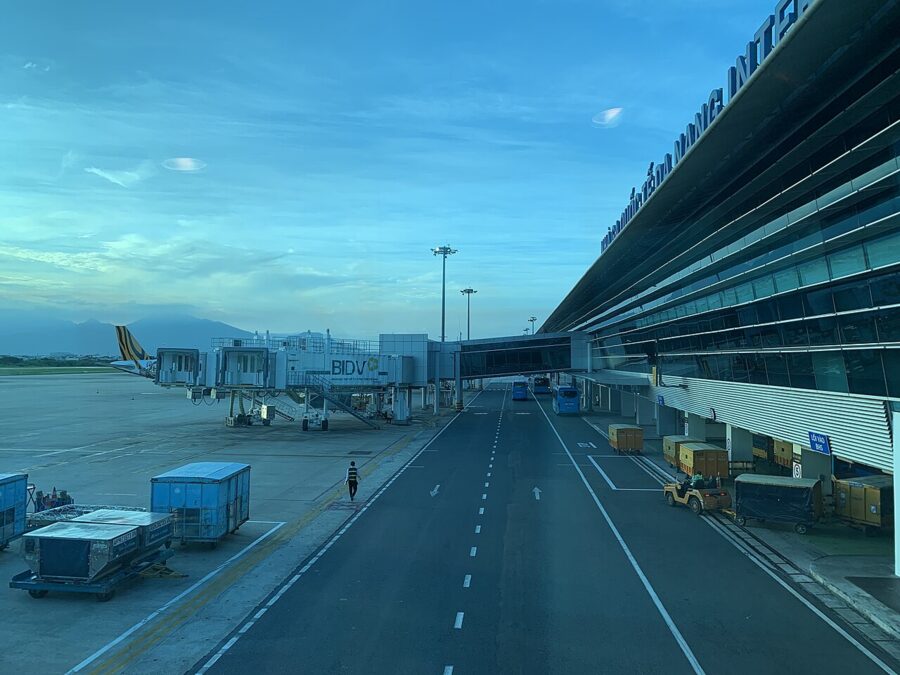
Hoi An has no airport and no railway station; everyone arrives through Da Nang. Its international airport is about 30 km up the coast, 45 minutes to an hour by road.
Vietnam Airlines and Vietjet fly to Da Nang many times a day from Hanoi and Ho Chi Minh City, a little over an hour in the air, and the airport also takes flights from Seoul, Bangkok and Singapore. From the airport:
- Grab or a taxi is the easiest. Book in the app at the terminal so the price is fixed before you set off.
- A hotel transfer is worth it for a late arrival; most hotels in Hoi An arrange one.
- Bus. As of August 2026 DanangBus lists route 01SB from the airport towards Hoi An and Cua Dai, and route 02 from Da Nang’s central bus station to Cua Dai, running about 04:45 to 18:00 with fares by distance up to 30,000 dong (about $1.15). Check times with DanangBus before planning around them.

By rail, the North–South line stops at Da Nang station; the stretch from Hue runs along the coast round the Hai Van Pass and is the best short train ride in the country. From Hue by road it is roughly three hours through the Hai Van tunnel.

Inside the old town you walk. For everything else use a bicycle, a Grab motorbike or car, or a cyclo, whose price you agree in full before you sit down.
Weather, the flood season and when to go
The centre of Vietnam follows neither the north nor the south. Hoi An is dry roughly between February and August, hottest in May to August, and wet in September to December; heaviest in October and November, which is also typhoon season on this coast.
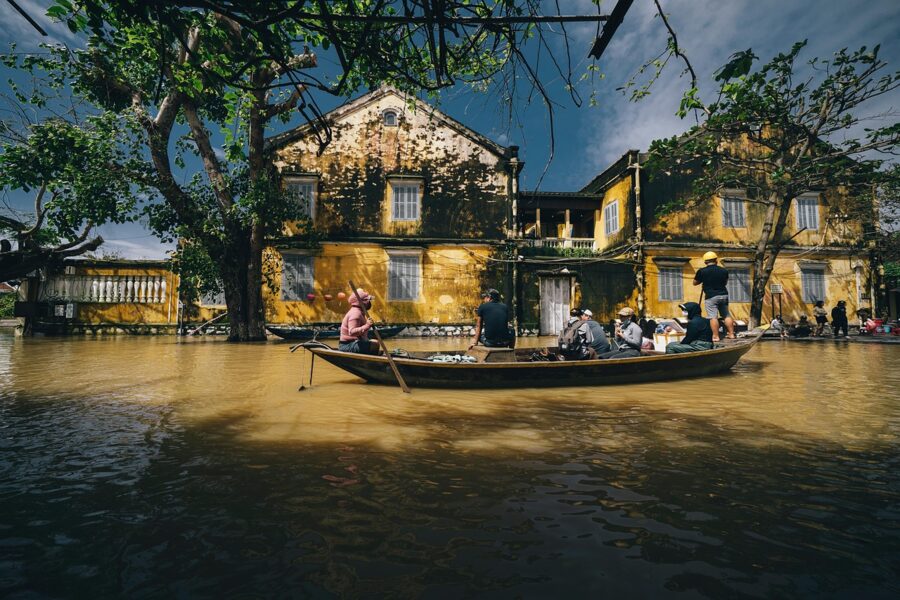
Floods in the old town are an almost yearly event, starting in the streets nearest the Hoai River. Between 26 October and 22 November 2025 three flood waves hit; the highest put nearly three metres of water along the riverbank, the worst since the record of 1964. Even in an ordinary year Bach Dang Street floods after heavy rain, as a stretch of it did in November 2026.
If you travel in October or November, keep two or three days spare, book a room upstairs or away from the river, and follow the Da Nang authorities’ warnings. The best months are February to April: dry, warm rather than hot, and the sea starting to calm. May to August is beach season and busy with domestic families; December and January are cool and grey but quiet.
How many days, and where to stay
Two nights covers the Ancient Town and one trip out. Three is better, and more if you are having clothes made or want the Cham Islands. On a ten-day route through Vietnam, two or three nights here is usual, often after Ha Long Bay in the north.
Stay on the edge of the Ancient Town and you can walk back at midnight and be in the streets at six, which is the reason to come. The An Hoi islet is close but noisier. Homestays in the rice fields at Cam Thanh or near Tra Que give quiet and bicycles, ten minutes’ ride from town, while An Bang is a beach trip: check how much beach it has before you book.
Leave the lanterns for your last night. By then you will have seen the town at six in the morning, and you will know which street to stand on.