
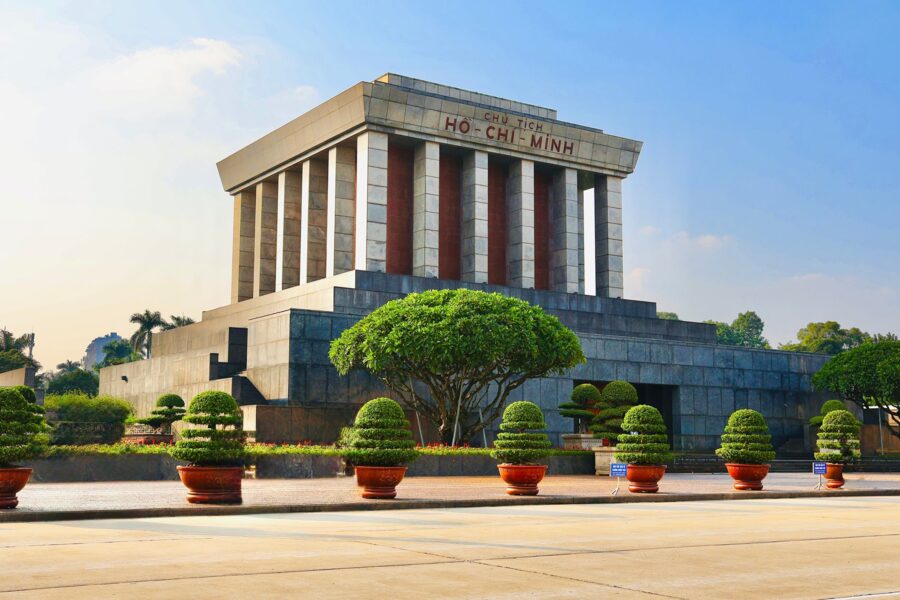
Ho Chi Minh’s mausoleum opens for about three hours on five mornings a week, and that one timetable decides the order of a day in Hanoi. Miss the queue and the most famous stop in the city is shut until the next viewing morning, which can be two days away.
The rest of a classic Hanoi city tour fits around that morning: temples before lunch, the prison through the heat, the lake when the light drops. In the right order, one day covers the essentials on foot with a couple of short rides.
Below is the route I would follow, with 2026 prices, the opening days that trip people up, and what a fair guided version costs.


Contents
- The route at a glance
- Before you set off
- 7:30: Ho Chi Minh Mausoleum and Ba Dinh Square
- 10:30: the Temple of Literature
- Where to eat along the way
- 13:30: Hoa Lo Prison
- 15:30: Hoan Kiem Lake and Ngoc Son Temple
- 16:30: the Old Quarter on foot
- Evening: water puppets or the walking streets
- On a Monday or Friday, or with a second morning
- Getting around
- With a guide: what an organised city tour includes and what it should cost
- Where the day ends
The route at a glance
The order is built backwards from closing times. The mausoleum closes before noon and the big ticketed sites at 5pm, so the hottest hours go indoors and the evening goes to the lake and the Old Quarter.
| Time | Stop | Ticket (as of November 2026) | Note |
|---|---|---|---|
| 7:30-9:30 | Ho Chi Minh Mausoleum, Ba Dinh Square | Free | Closed Monday and Friday; mornings only |
| 9:30-10:15 | One Pillar Pagoda, Presidential Palace grounds, Ho Chi Minh Museum | Pagoda free; palace grounds and museum ticketed separately | Museum also closed Monday and Friday |
| 10:30-12:00 | Temple of Literature | 70,000 dong (about $2.70) | Daily 8:00-17:00 |
| 12:00-13:15 | Lunch: bún chả | Pay as you eat | Short ride south-east |
| 13:30-15:00 | Hoa Lo Prison | 50,000 dong (about $1.90) | Daily 8:00-17:00 |
| 15:30-16:30 | Hoan Kiem Lake and Ngoc Son Temple | Temple ticketed | Lake free |
| 16:30-18:30 | Old Quarter on foot, Dong Xuan Market | Free; heritage house 20,000 dong (under $1) | Market winds down at dusk on weekdays |
| Evening | Water puppets, or the weekend walking streets | Puppets 100,000-200,000 dong (about $3.80-7.70) | Walking streets Friday 7pm to Sunday midnight |
Entry for the whole day, puppets included, comes to roughly 300,000 to 400,000 dong (about $11.50 to $15) per adult. Food and rides are extra, and in Hanoi they are the cheap part.
Before you set off
Pick the right day
Monday and Friday are the days to avoid for this route. The mausoleum holds no viewings on either, and the Ho Chi Minh Museum next door closes too. On a Friday, swap the first stop for the Imperial Citadel and see the mausoleum from the square; the Citadel itself closes on Mondays.
The mausoleum also closes for maintenance for about two months each year. It is usually a stretch of the summer, but the dates move: in 2026 the building was shut from 4 September to 2 November and reopened on 3 November. The closure is announced in the national press a few weeks ahead.
If Hanoi opens a longer Vietnam itinerary for ten days, give the city day a Tuesday, Wednesday, Thursday or weekend and move excursions to the other days. Saturday adds the walking streets.
Dress for the mausoleum, not the weather
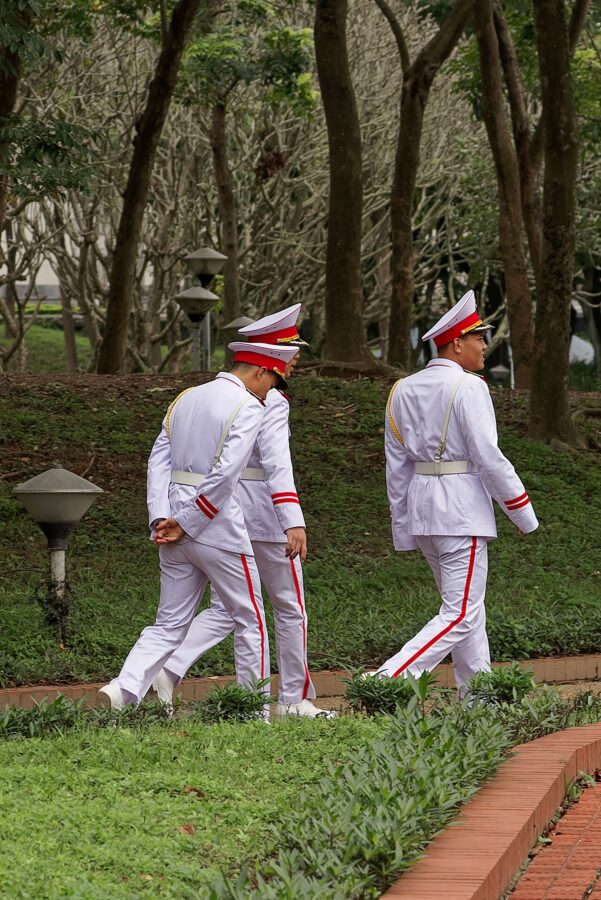
Shoulders and knees covered, no hats, no sunglasses inside. That means trousers or a skirt to the knee and a top with sleeves, even in July, and the guards turn people away rather than lend clothes. The same outfit gets you into the Tran Quoc and One Pillar pagodas without a second thought.

The months that make it harder
Hanoi has a real winter and a hard summer. From May to September the days are hot and humid with heavy downpours, and walking between sites is draining by early afternoon. From December to February it is cool, often grey and drizzly, and a jacket is enough.
October, November, March and April are the easiest months for a long day on foot. The week around Tết, the Lunar New Year, is the one to avoid for sightseeing: opening hours change, many family restaurants close for days, and the city empties as people go home.
7:30: Ho Chi Minh Mausoleum and Ba Dinh Square
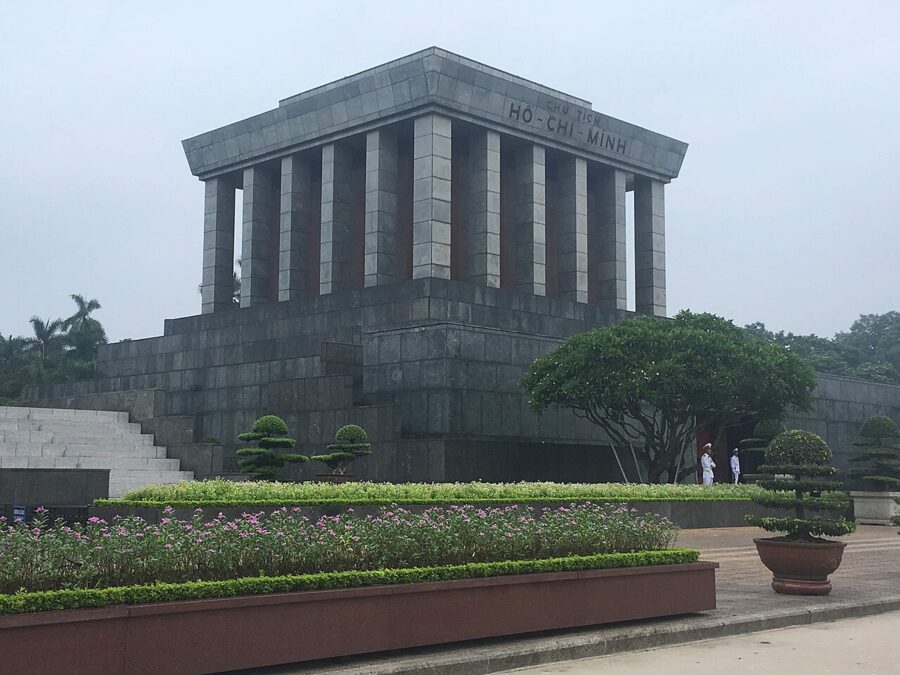

The Ho Chi Minh Mausoleum (Lăng Chủ tịch Hồ Chí Minh) is the most visited site in the city and the strictest. You queue outside, pass a security check, leave bags and cameras at the deposit counter, and then walk past the body in a cool, dim hall in less than a minute. For many Vietnamese visitors, often school groups and veterans from the provinces, it is a pilgrimage, and the guards treat it as one.
Opening days and hours
Viewings run on Tuesday, Wednesday, Thursday, Saturday and Sunday mornings, with Monday and Friday closed all year. The hours follow two seasons:
| Season | Tue, Wed, Thu | Sat, Sun and public holidays |
|---|---|---|
| 1 April to 31 October | 7:30-10:30 | 7:30-11:00 |
| 1 November to 31 March | 8:00-11:00 | 8:00-11:30 |
Entry is free for everyone, and there is no advance booking for individuals. On busy mornings the guards stop the line before closing time, so arrive at opening. Weekends and national holidays bring the longest queues; a weekday in the cool season is the shortest wait you will get.
Conduct inside
No photos or video inside, phones switched off, hands out of pockets, no talking, no eating. Photography is fine outside, on the square and in the gardens.
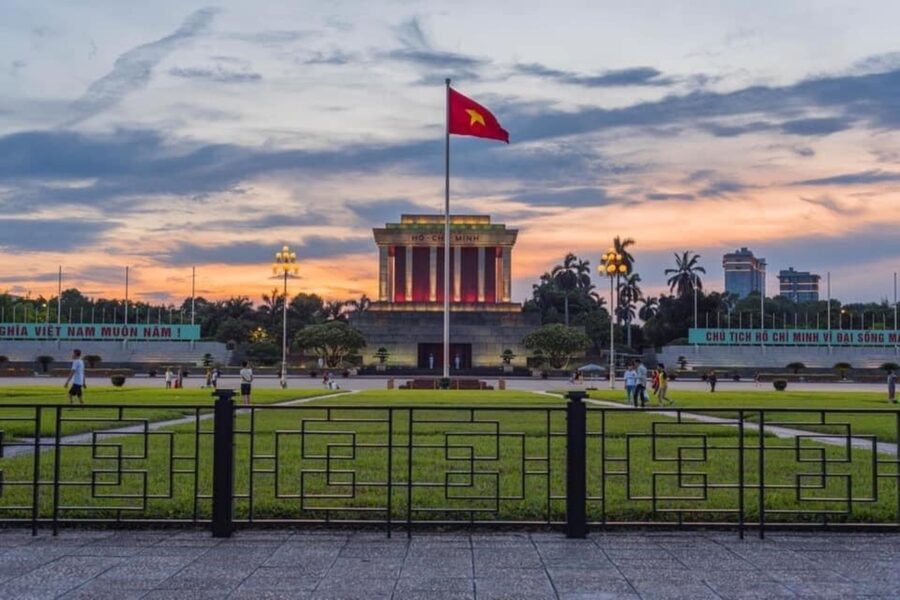
The Presidential Palace grounds and the stilt house
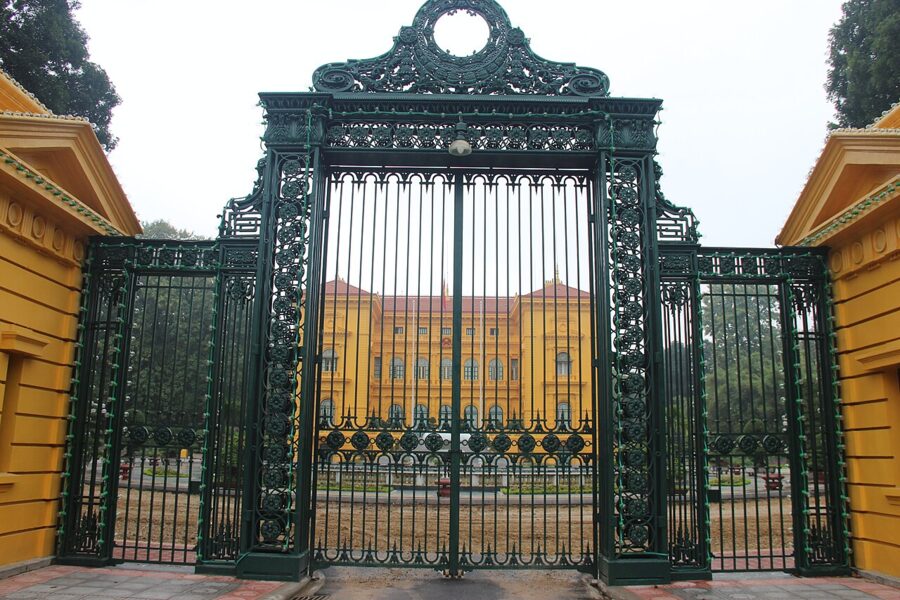
Behind the mausoleum, the exit path leads into the grounds of the Presidential Palace (Phủ Chủ tịch). The yellow palace was built between 1900 and 1906 for the French governor-general of Indochina. Ho Chi Minh refused to live in it, and you only see it from the gardens; it is still used for state receptions.
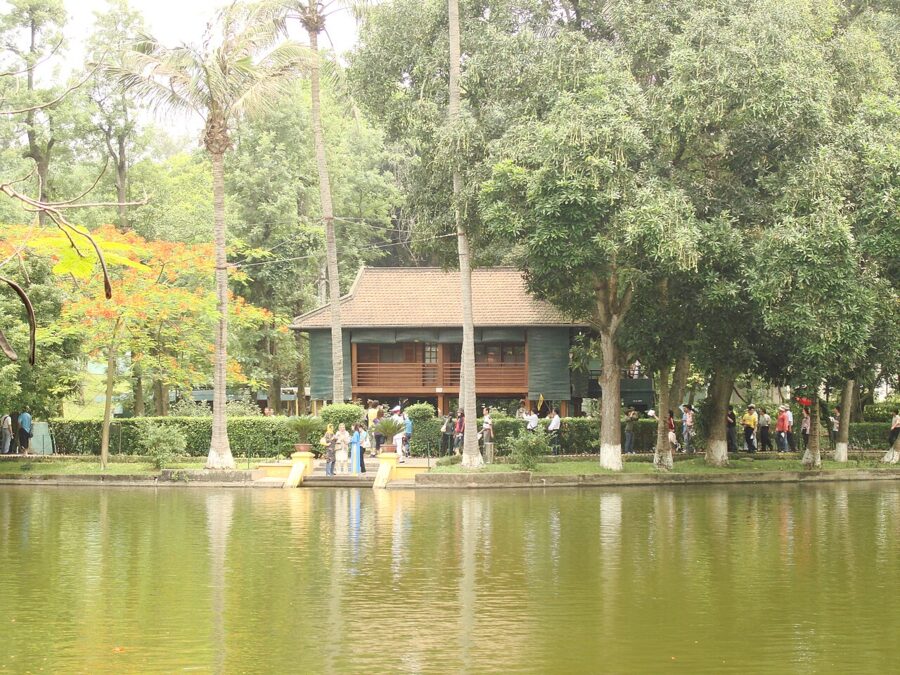
The part people remember is the house on stilts by the carp pond, where Ho Chi Minh lived and worked from 1958 until his death in 1969. It is small, open on its sides, with a study downstairs and two rooms above; his car collection and an earlier house sit along the same path. The grounds have their own ticket and shorter hours, so check both at the gate.

One Pillar Pagoda and the Ho Chi Minh Museum
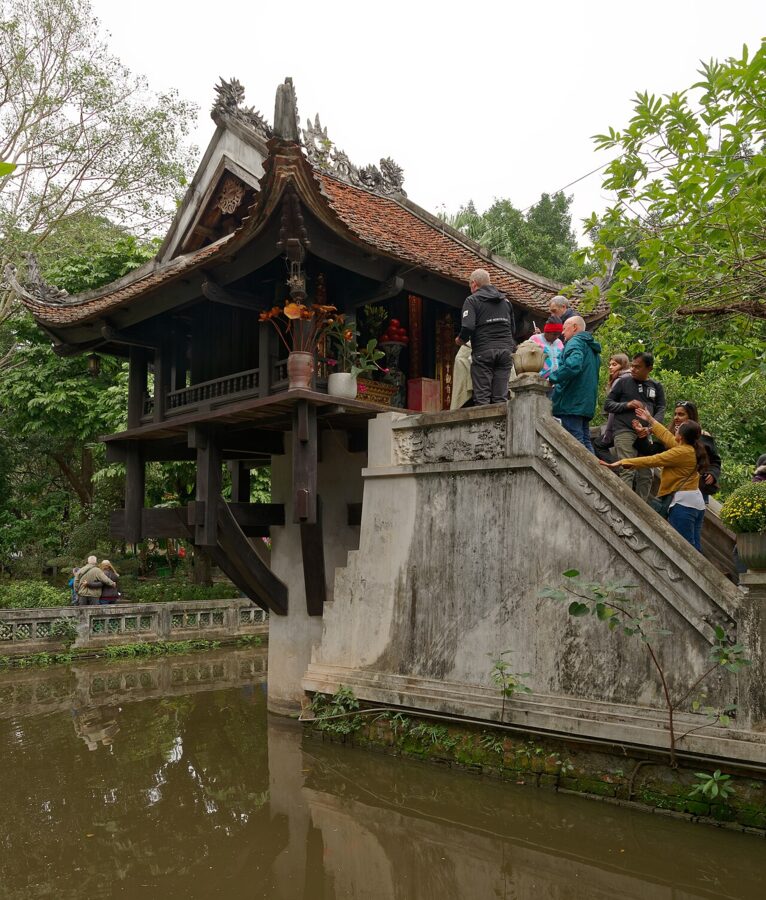
A few minutes’ walk south is the One Pillar Pagoda (Chùa Một Cột), a small wooden shrine standing on a single stone column in a square lotus pond. The original was built in 1049 under King Lý Thái Tông, who is said to have dreamt of the goddess of mercy seated on a lotus. French forces destroyed it in 1954 as they left the city, and the present pagoda was rebuilt the following year.

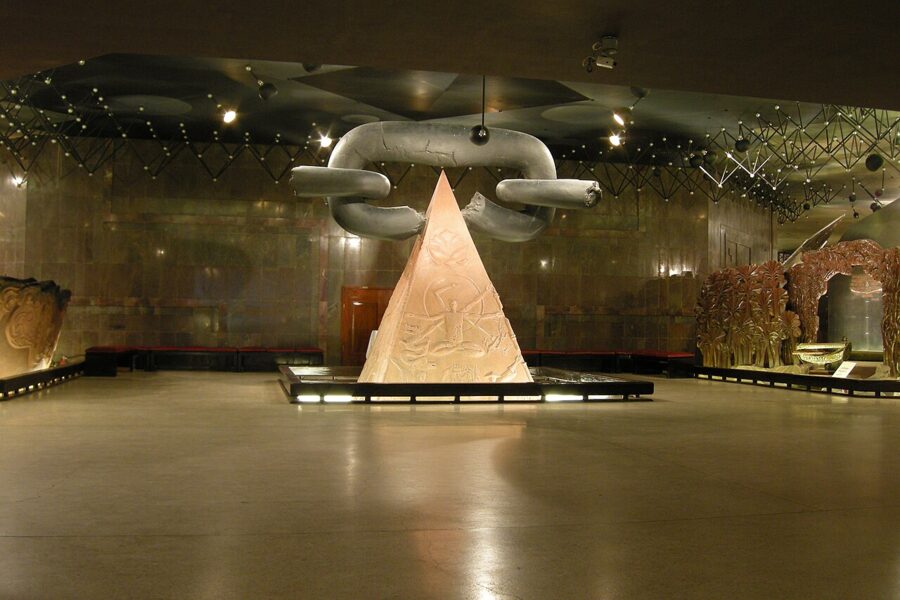
Right behind it, the Ho Chi Minh Museum opens Tuesday, Wednesday, Thursday, Saturday and Sunday, 8:00-12:00 and 14:00-16:30, and closes on Mondays and Fridays. It mixes documents and personal objects with abstract installations: worth an hour if the man interests you, skippable if not.

10:30: the Temple of Literature
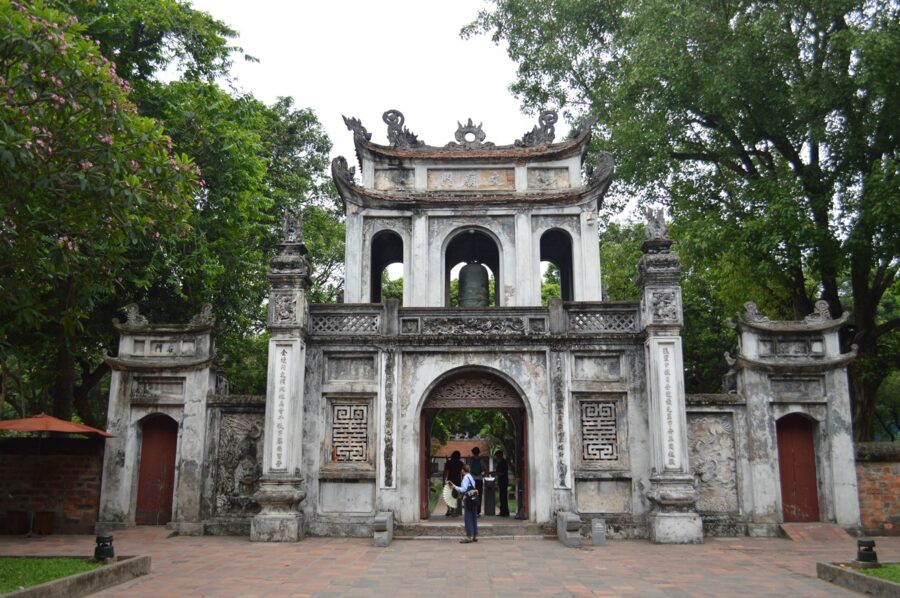
From the One Pillar Pagoda it is about 1.5 km to the Temple of Literature (Văn Miếu – Quốc Tử Giám): twenty minutes on foot or a five-minute ride. Founded in 1070 to honour Confucius, it became the home of the Imperial Academy, the Quốc Tử Giám, in 1076, which makes 2026 the academy’s 950th year. For centuries this was where the country trained and tested its scholars and officials.
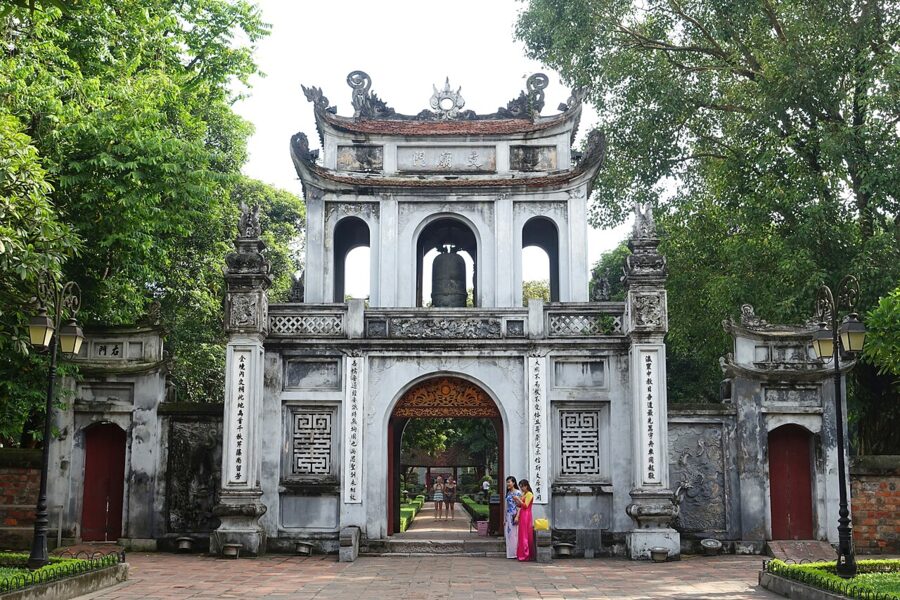
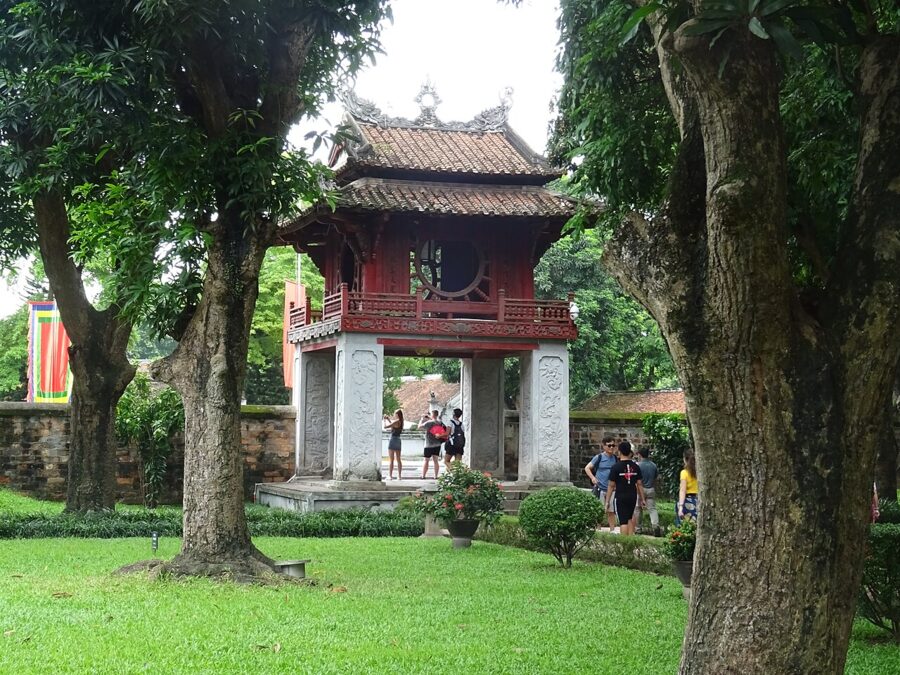
The site is a long walled rectangle of five courtyards, and the pleasure is walking it in order. Past the main gate and two courtyards of old trees and lawns, you reach Khuê Văn Các, the Constellation of Literature pavilion, a two-storey gateway with round windows.

Beyond it, either side of a square pond called the Well of Heavenly Clarity, stand the steles. There are 82 of them, each set on the back of a stone tortoise, carved with the names and home villages of the men who passed the royal doctoral exams between 1442 and 1779. UNESCO added them to its Memory of the World register, and they are now fenced so that nobody rubs the tortoise heads for exam luck.
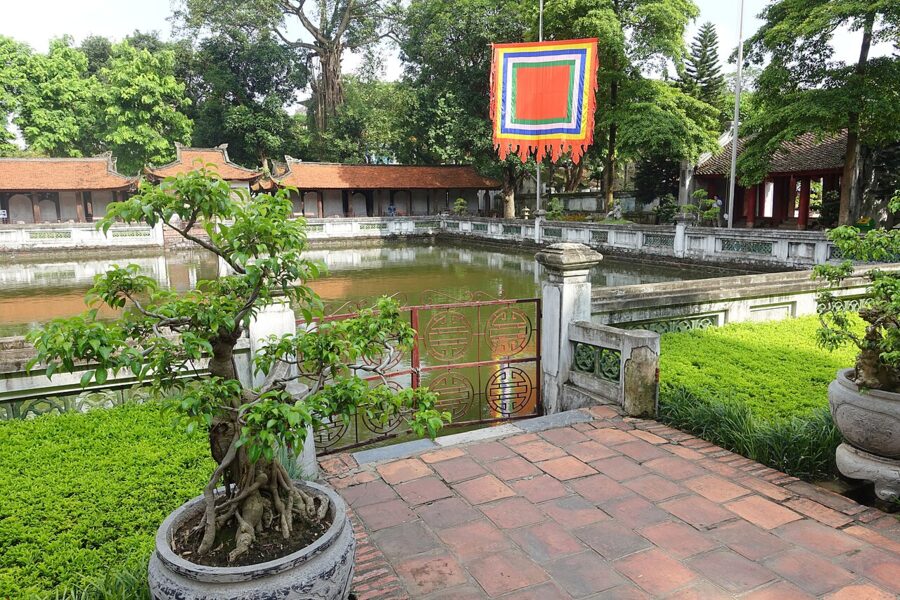
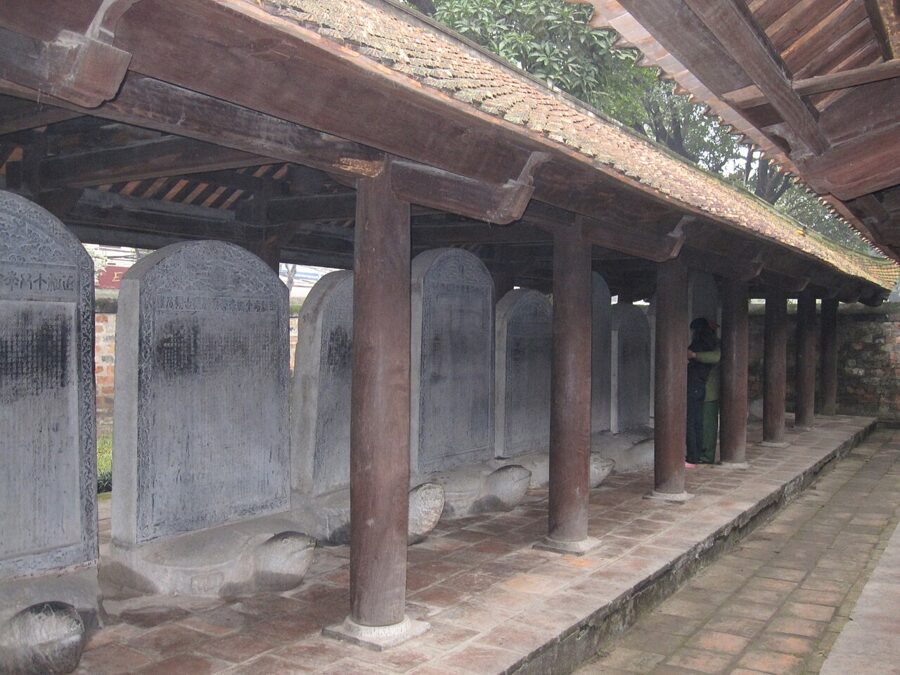

The last courtyards hold the shrine to Confucius and his disciples, and the rebuilt hall of the academy, with a drum and bell tower upstairs. Give the whole site an hour to ninety minutes.
Tickets and hours
Open daily, 8:00-17:00. A standard ticket is 70,000 dong (about $2.70); children under 16 enter free, and the half-price 35,000 dong (about $1.30) ticket is for Vietnamese students and residents aged 60 and over with ID. On Wednesday, Saturday and Sunday evenings, from 18:30 to 22:00, the temple runs a lit night tour with its own ticket, booked through the temple’s site, where the current price is listed.
Where to eat along the way
A place that does one dish, with plastic stools and office workers queuing at noon, is the place to sit down.
Lunch: bún chả
Lunch on this route is bún chả (grilled pork with rice noodles): patties and slices of pork grilled over charcoal, served in a bowl of warm, sweet-sour fish-sauce broth with cold rice noodles and a plate of herbs on the side. It is a lunchtime dish, and many of the best bun cha places sell out or close by mid-afternoon.
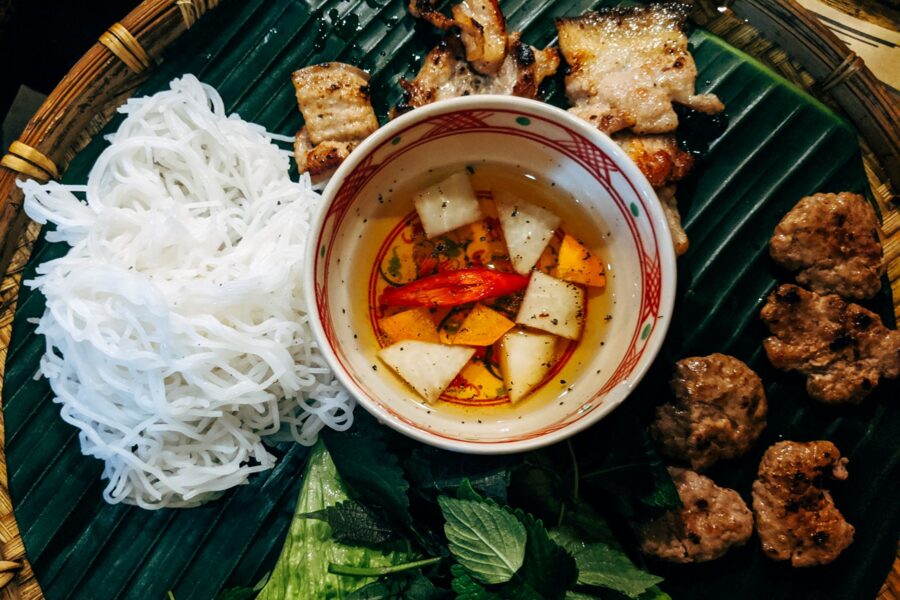
The most famous address is Bún chả Hương Liên at 24 Lê Văn Hưu, south of the lake, where Barack Obama and Anthony Bourdain ate together in May 2016 for Bourdain’s television series. It was still serving in December 2025, the table they used is kept behind glass, and the set they ordered is on the menu. The food is fine rather than the city’s best; go for the story, and go outside the lunch peak.
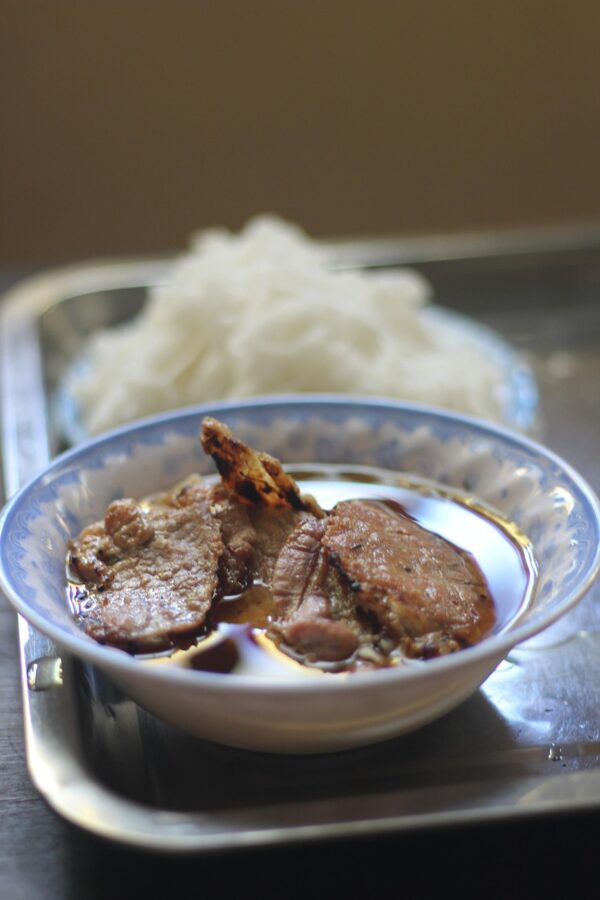
Phở, bánh mì and egg coffee
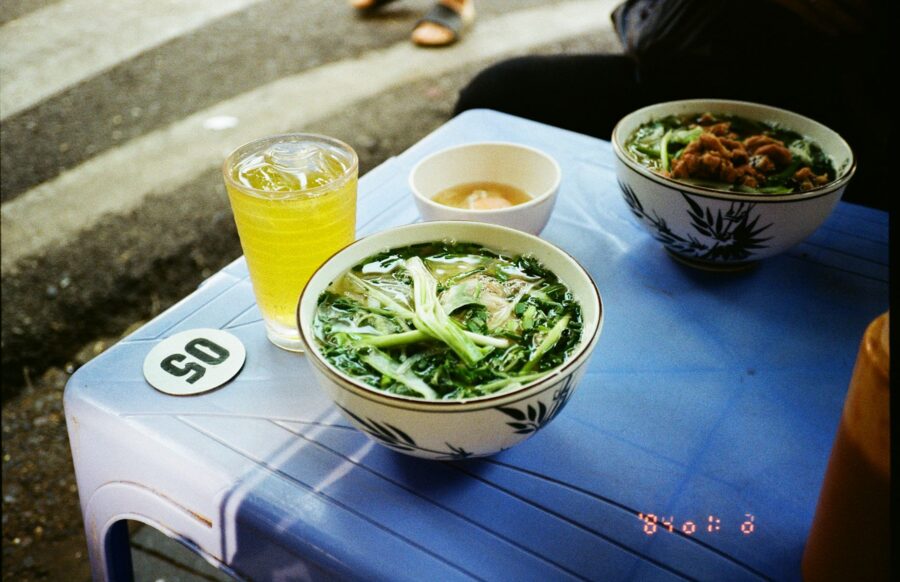
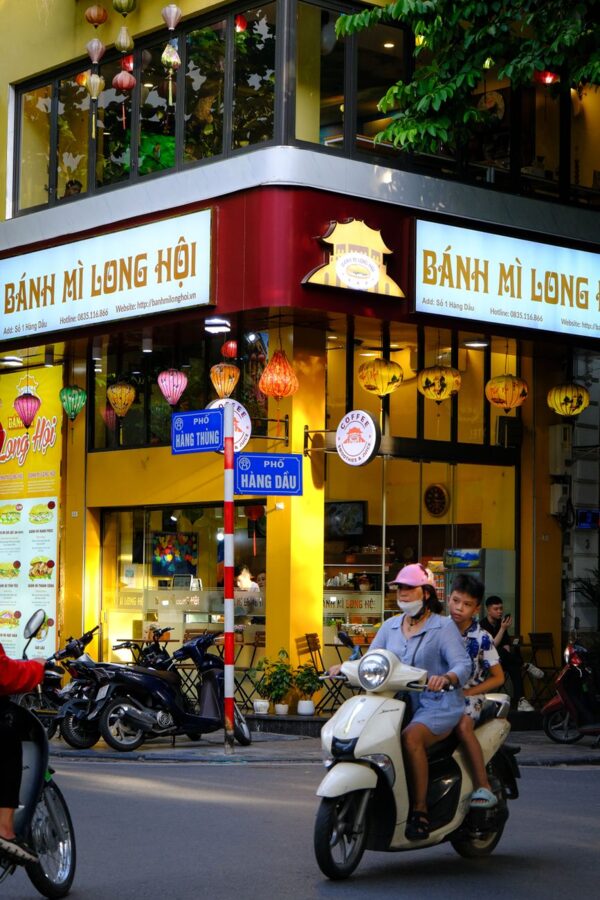
Phở bò (beef noodle soup) is a breakfast dish in Hanoi, so eat pho before the mausoleum; the northern version is clear, light and less sweet than the southern one. A bánh mì (a baguette filled with pâté, pork or egg) from a street cart eats well in a queue.
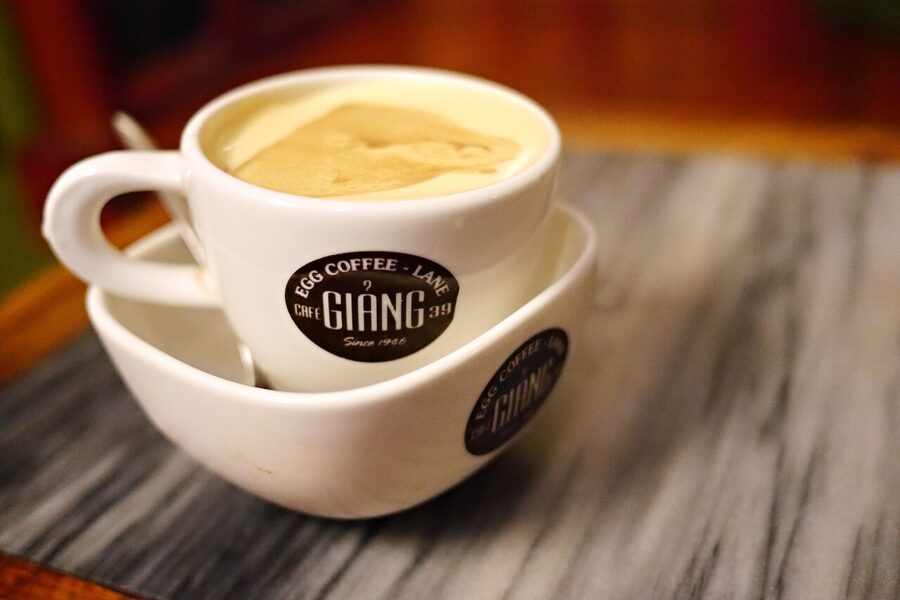
In the afternoon, try cà phê trứng (egg coffee): strong coffee under a thick, sweet foam of egg yolk whipped with condensed milk. It was invented in Hanoi in the 1940s, when fresh milk was scarce, and the cafés that serve it are mostly upstairs rooms in the Old Quarter and around the lake.

13:30: Hoa Lo Prison
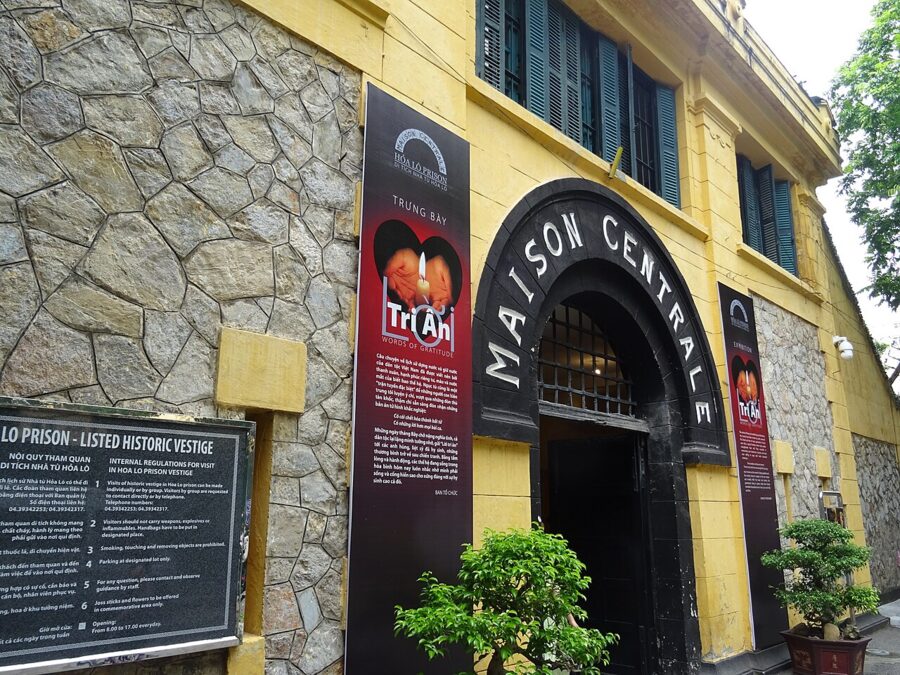
After lunch, the coolest stop of the day is indoors. Hoa Lo Prison (Nhà tù Hỏa Lò) was built by the French colonial administration in 1896 as the Maison Centrale, and for half a century it held Vietnamese political prisoners in chains, many of whom later led the country. After 1954 it became a Vietnamese prison, and during the American war it held captured airmen, among them the future senator John McCain; the Americans nicknamed it the Hanoi Hilton.

The museum is small and well laid out: cells with shackled figures, the guillotine the French used, the drain some prisoners escaped through, and the rooms about the American prisoners. The displays tell the colonial period in detail and the American section in a few rooms that present the airmen’s captivity as comfortable, which their own accounts dispute.
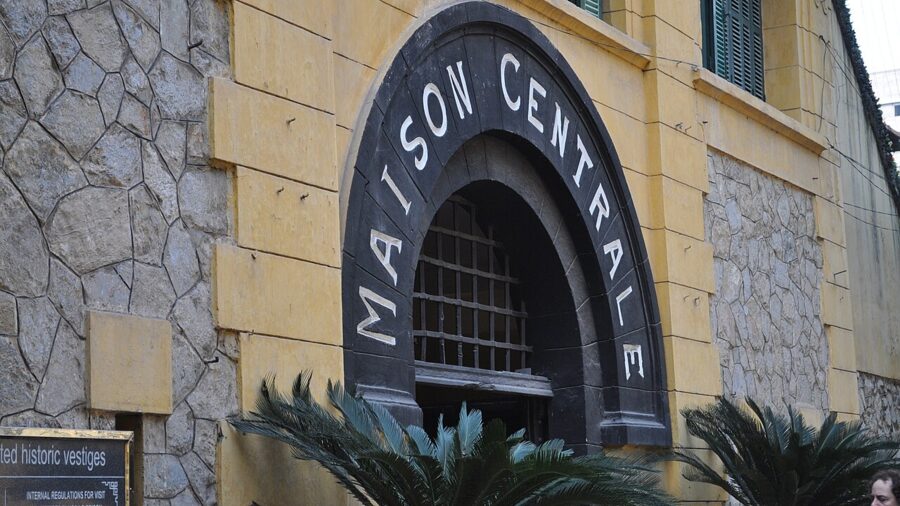

Open daily, 8:00-17:00. Entry is 50,000 dong (about $1.90). The prison also runs evening tours with actors and a separate, higher-priced ticket, which often sell out well ahead; book those through the prison directly and confirm the date before paying anyone else. If the war is the reason you came to Vietnam, the Ho Chi Minh City museums tell the southern side of the same years.
15:30: Hoan Kiem Lake and Ngoc Son Temple
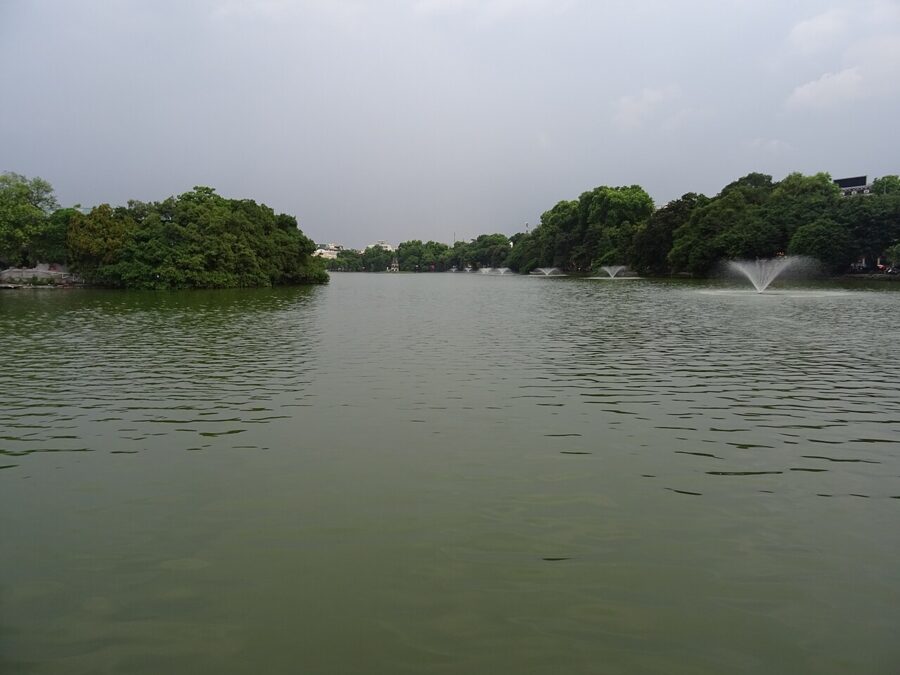
From Hoa Lo it is a ten-minute walk north-east to Hoan Kiem Lake (Hồ Hoàn Kiếm), the Lake of the Returned Sword. The legend gives it the name: in the fifteenth century the hero Lê Lợi was handed a sword by a golden turtle, drove out the Ming army, and returned the sword to the turtle here when the war was won.

Ngoc Son Temple
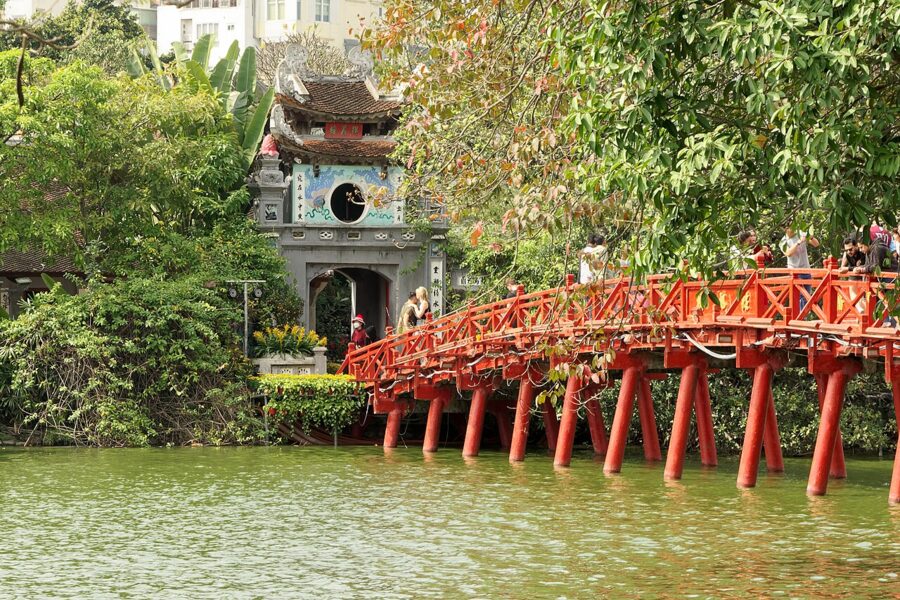
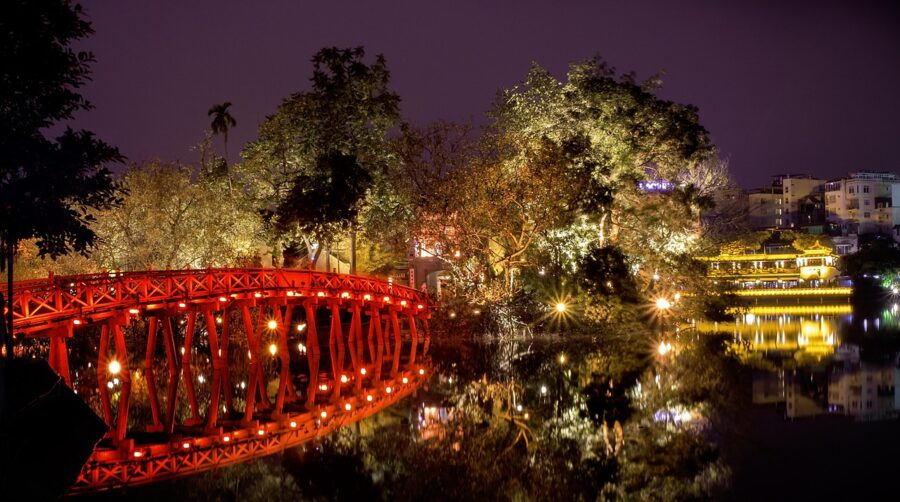
On a small island at the northern end, reached by the red The Huc Bridge (Cầu Thê Húc), stands Ngoc Son Temple (Đền Ngọc Sơn), the Temple of the Jade Mountain. It honours a scholar god of literature and the general Trần Hưng Đạo, who defeated the Mongols in the thirteenth century. In a side hall lies a preserved giant soft-shell turtle taken from the lake in 1968, the creature behind the legend; the last turtle living in the lake died in 2016.
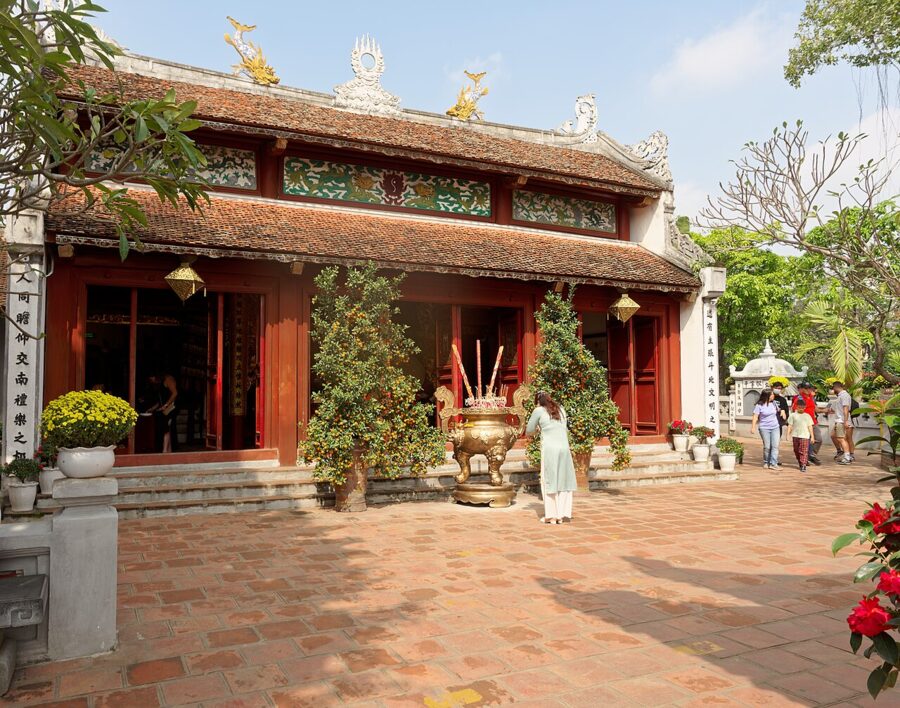

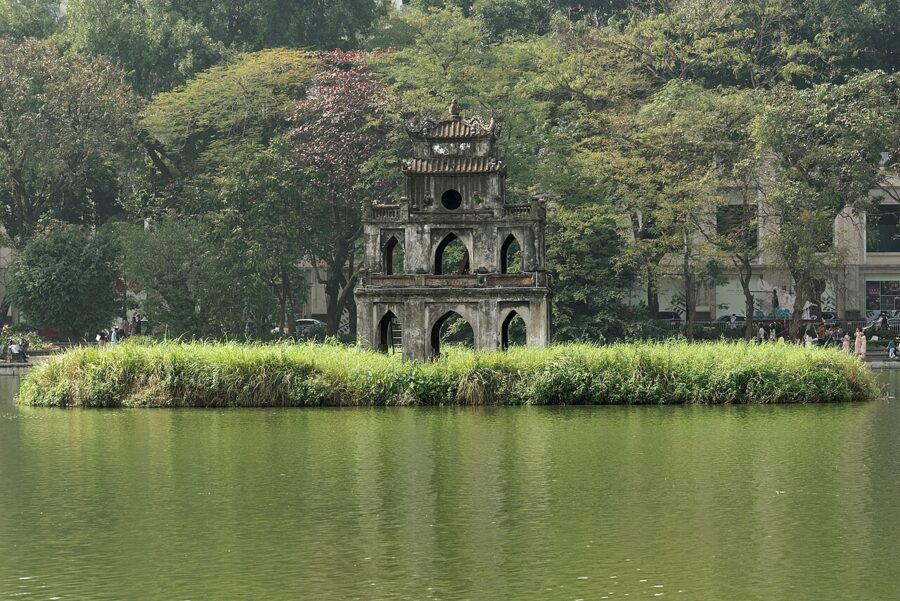
Entry is ticketed at the bridge, with children under 15 free, and the temple keeps hours from early morning to early evening. The Turtle Tower (Tháp Rùa) on its own islet in the middle of the lake has no access; you see it from the shore, and it looks best from the west bank around sunset.

16:30: the Old Quarter on foot
The Old Quarter (Phố cổ) begins at the north end of the lake. It is often called the thirty-six streets, after the guilds that once had a street each, and the names still say what was sold: Hàng Bạc for silver, Hàng Mã for paper offerings, Hàng Buồm for sails, Hàng Gai for hemp. Several still sell something close; Hàng Mã fills with lanterns and paper goods before every festival.
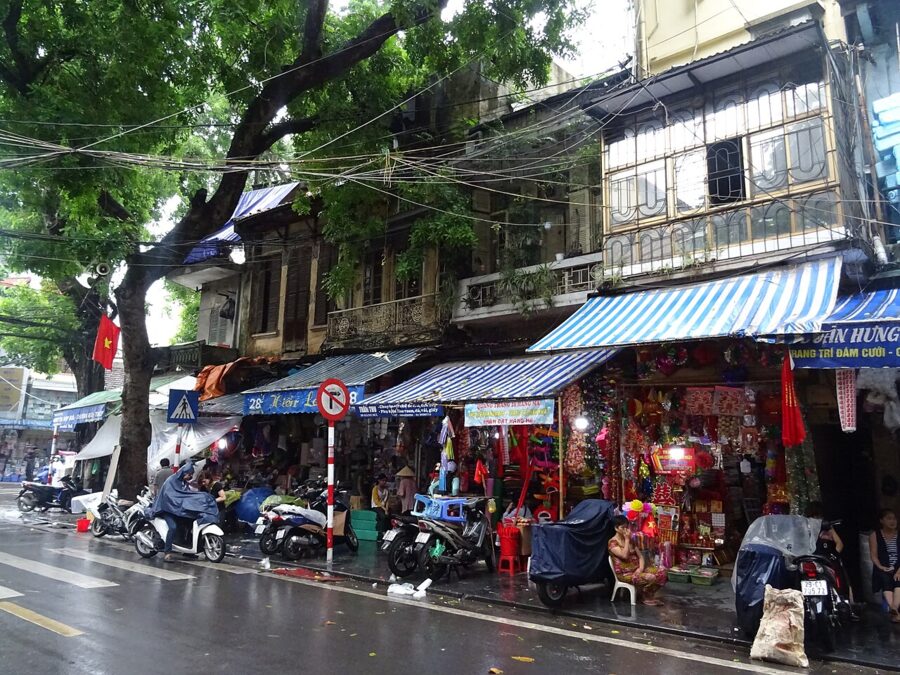

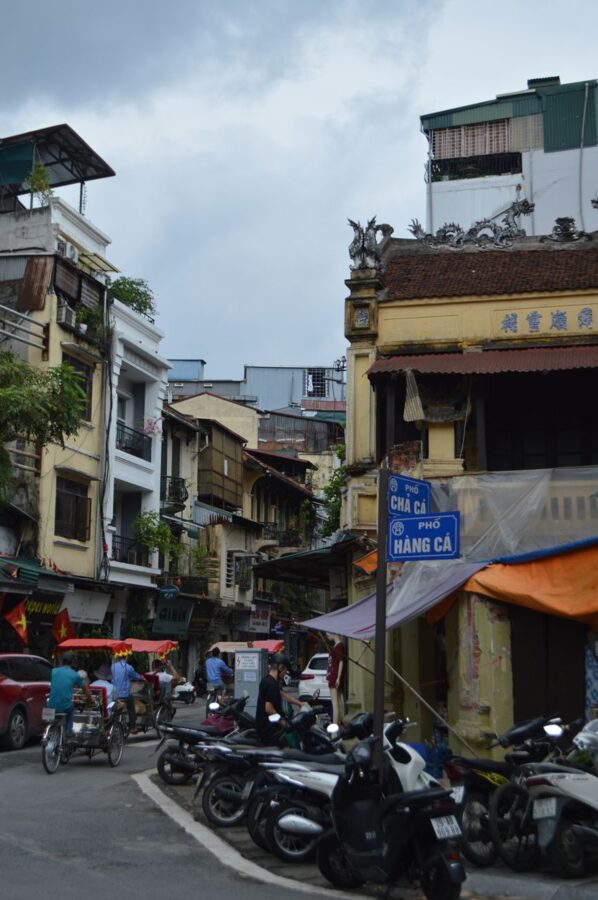
There is no set route, and wandering is the point. A loose line that works: up Hàng Đào and Hàng Ngang to Dong Xuan Market, back through Hàng Chiếu and Mã Mây, and down to the lake again. That is about an hour without stops, two with them.
87 Mã Mây
Step into the restored merchant’s house at 87 Mã Mây to see what is behind the shopfronts. It is a typical tube house, narrow and very deep, with rooms opening onto a small courtyard for light and air. Entry has cost 20,000 dong (under $1) since the city’s fee change in January 2025.
Dong Xuan Market
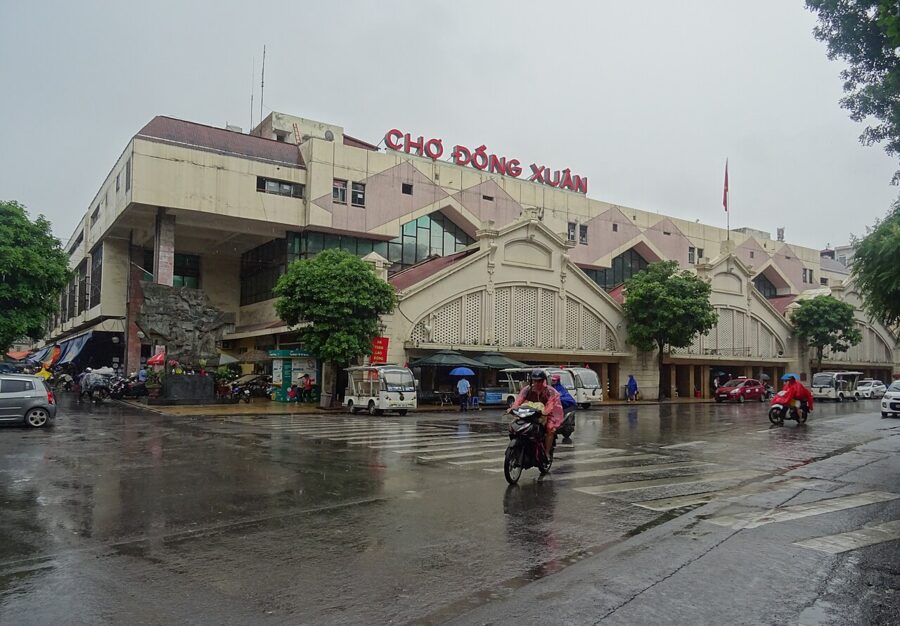
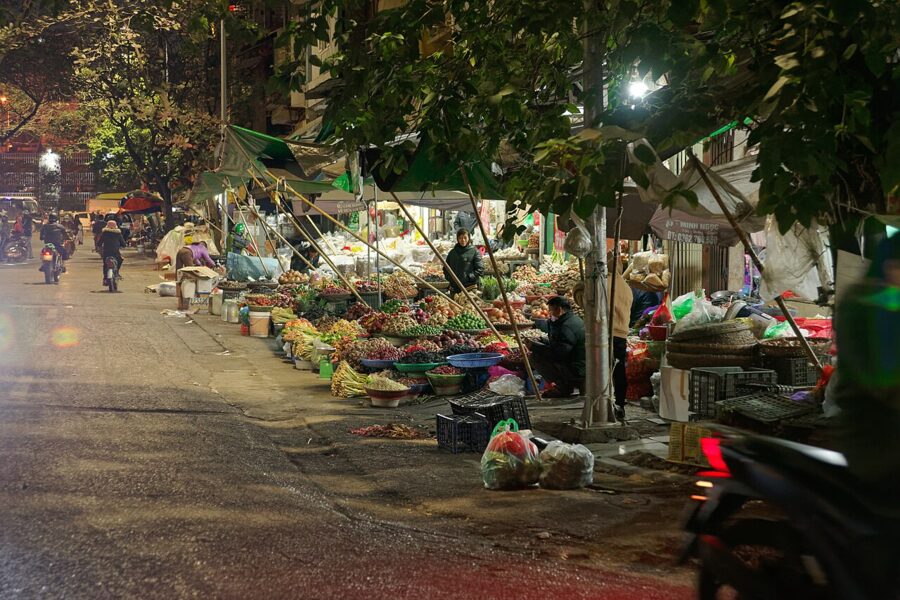
Dong Xuan Market (Chợ Đồng Xuân) is the big covered wholesale market at the northern edge of the quarter, first built by the French in 1889 and rebuilt after a fire in 1994. It sells cloth, household goods and dried food by the sack; walk the ground floor and the food stalls around it.


Long Bien Bridge, and the street to skip
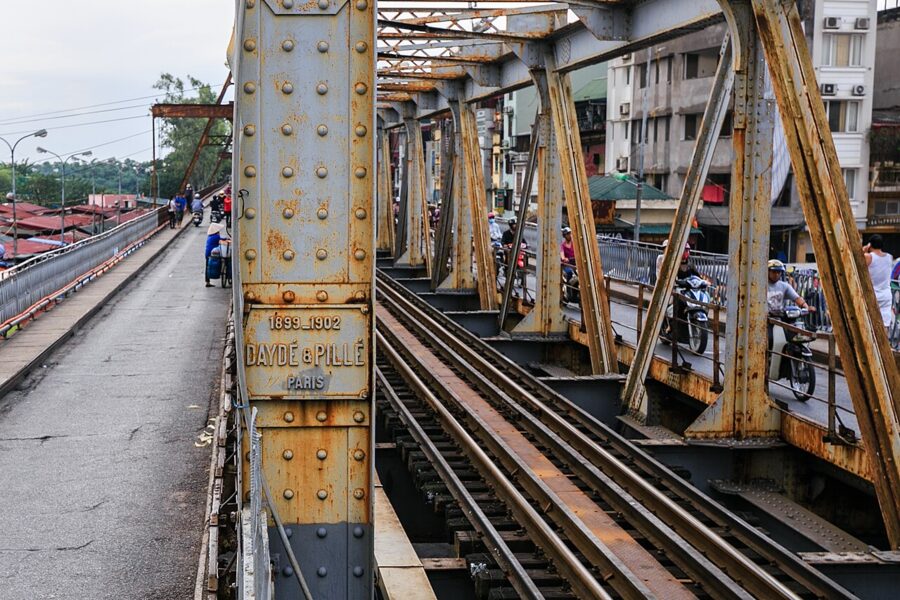
If you still have legs at sunset, walk ten minutes east from the market to Long Bien Bridge (Cầu Long Biên), the steel rail bridge the French finished across the Red River in 1902. Motorbikes and pedestrians share narrow side lanes beside the single track, and the view back over the river at dusk is the best free one in the city.
The narrow alley where cafés sit on the railway line, south-west of the quarter, is a different matter. The city has told tour operators not to take visitors there, and police clear the cafés every so often. I would skip it.
Evening: water puppets or the walking streets
The water puppet theatre
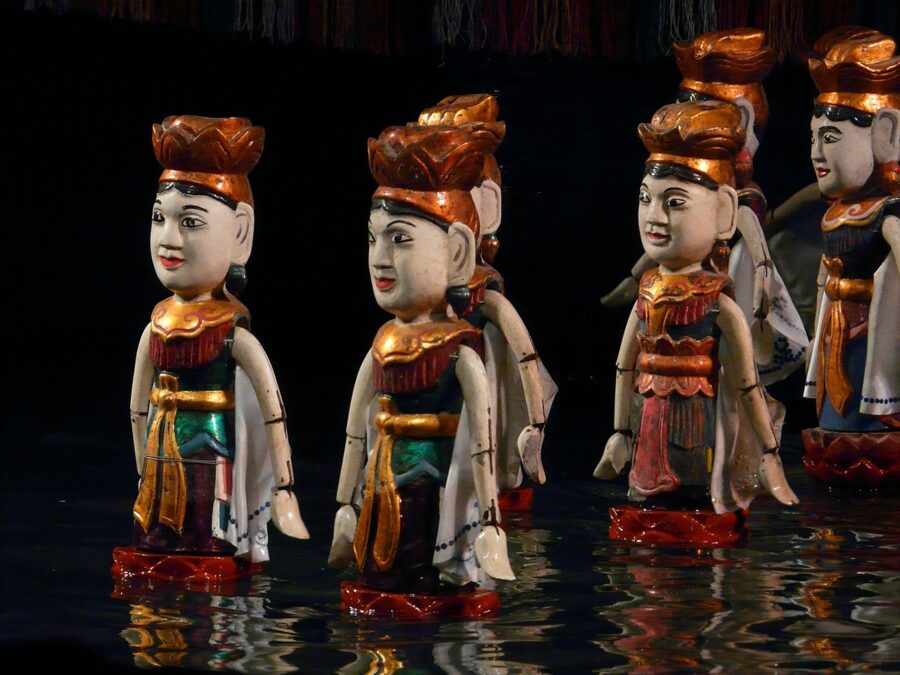
Water puppetry (múa rối nước) grew up in the villages of the Red River Delta, where the stage was a flooded paddy or a temple pond. The puppeteers stand waist-deep behind a bamboo screen and work lacquered wooden figures on long poles under the water, while musicians play live beside the stage: buffalo, fishermen, dragons, a fox stealing ducks, the turtle and the sword.
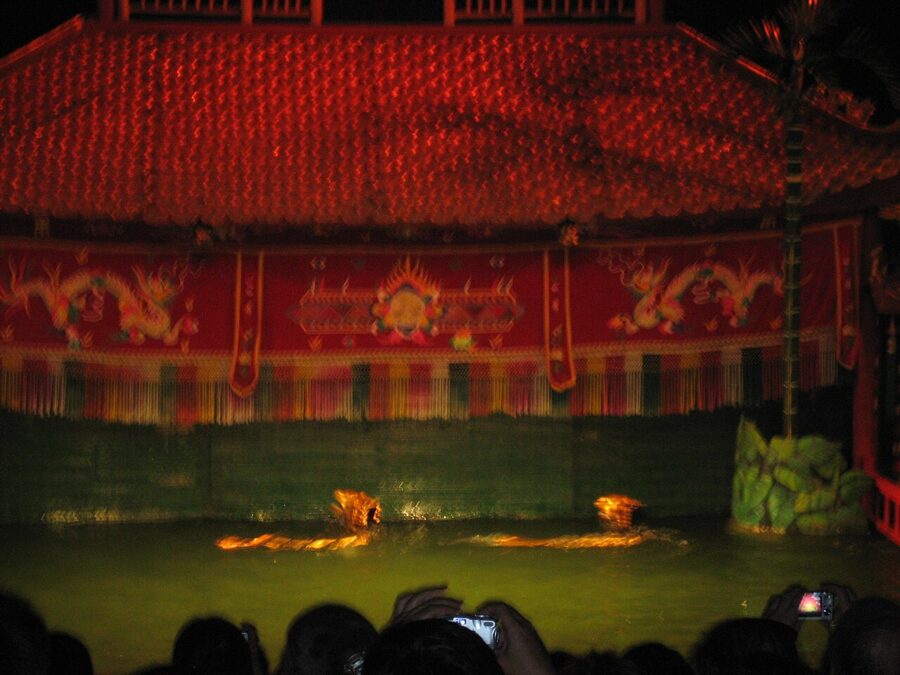

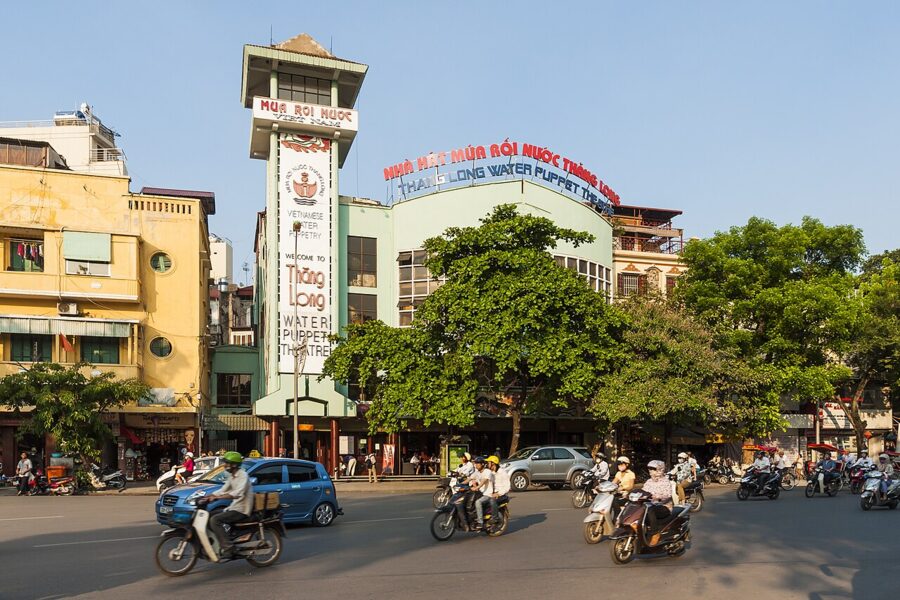
The Thang Long Water Puppet Theatre stands at 57B Đinh Tiên Hoàng, on the north-east corner of the lake, and plays every day of the year. A show lasts about 50 minutes. As of September 2026, tickets were 100,000 dong (about $3.80) at the back, 150,000 (about $5.70) in the middle and 200,000 (about $7.70) in the front rows, with several shows each afternoon and evening and extra morning shows on Sundays; the evening shows sell out first in the cool season, so buy at the box office earlier in the day.

The walking streets
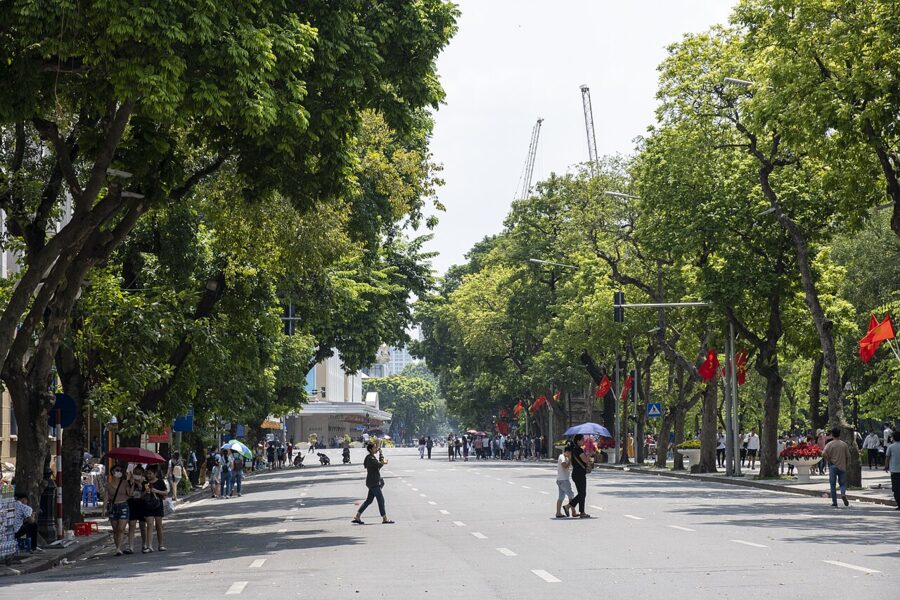
From 7pm on Friday until midnight on Sunday, the roads around Hoan Kiem Lake and a network of Old Quarter streets close to cars and motorbikes. Families take over the tarmac with skipping ropes, street performers and folk games. The schedule pauses for big events, as it did in March 2026 for the national elections, so check before you count on it.

If you are heading to Ha Long Bay early the next morning, the walking streets are a better last evening than a late show: they are free, and you can leave whenever you like.
On a Monday or Friday, or with a second morning
The Imperial Citadel of Thang Long
On a Friday, when the mausoleum is closed, the Imperial Citadel of Thang Long (Hoàng thành Thăng Long) makes the best first stop instead. It opens Tuesday to Sunday, 8:00-17:00, and closes on Mondays, a ten-minute walk from Ba Dinh Square, and a UNESCO World Heritage Site since 2010. A ticket has cost 100,000 dong (about $3.80) since 1 January 2025, half price for Vietnamese students and over-60s, and free for under-16s.
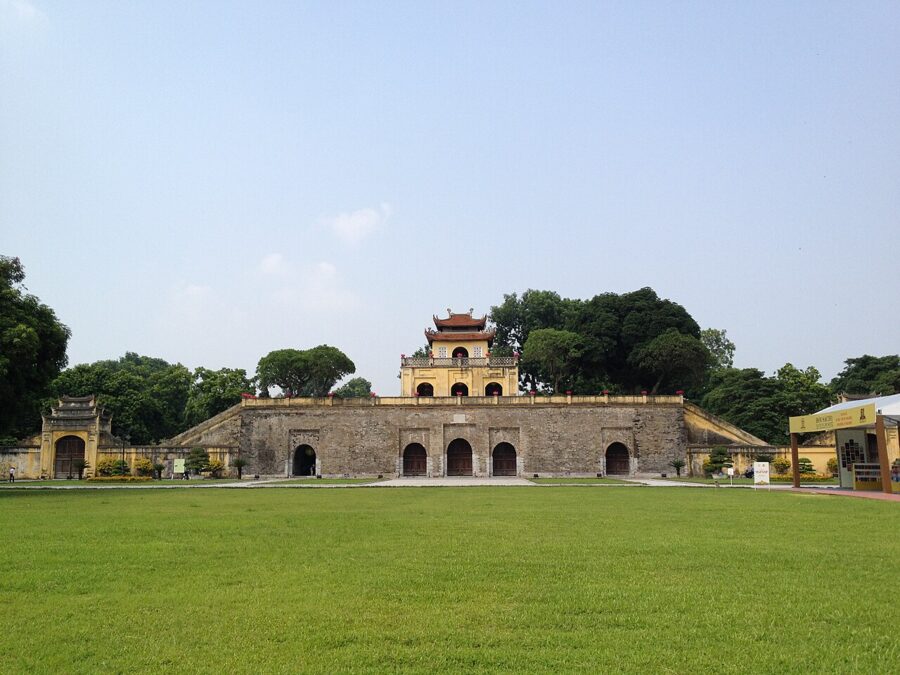

What you see is a millennium of layers. The gate and the steps of the vanished Kính Thiên Palace are imperial; the colonial barracks and the bunker where the general staff ran the American war are twentieth century; the excavated foundations across Hoàng Diệu street go back to the Ly dynasty and earlier. Give it ninety minutes.
West Lake: Tran Quoc Pagoda and Quan Thanh Temple
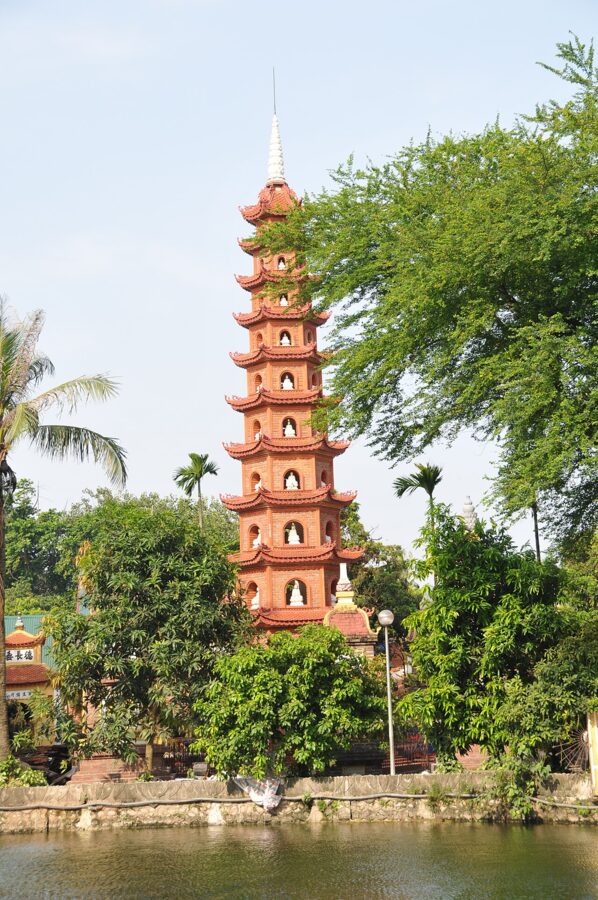
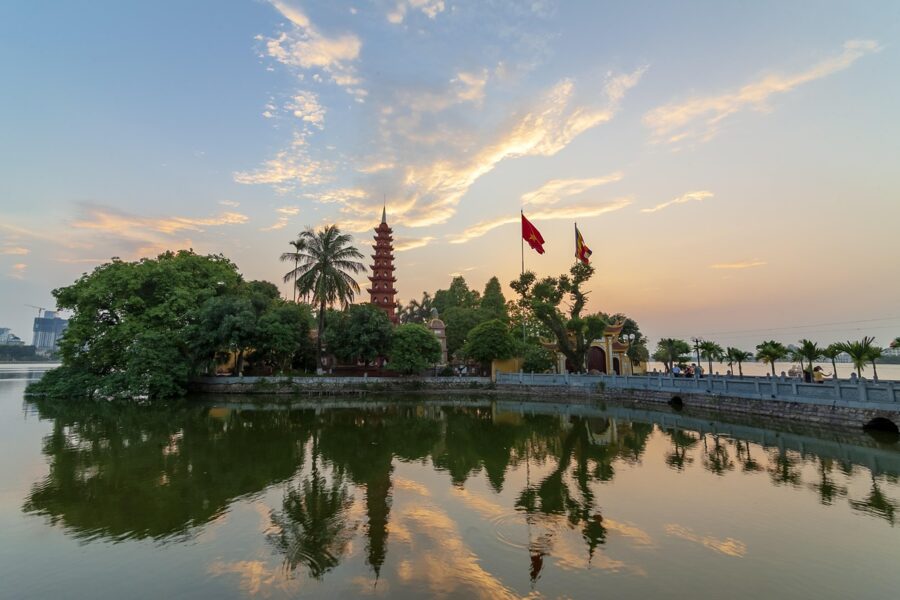
Tran Quoc Pagoda (Chùa Trấn Quốc) sits on a small peninsula in West Lake (Hồ Tây), about 2 km north of the mausoleum. It traces its origin to the sixth century, which makes it one of the oldest Buddhist foundations in the country, and moved to its present site in 1615. It is a working pagoda with free entry; dress as you would for the mausoleum, and go in the morning or late afternoon.

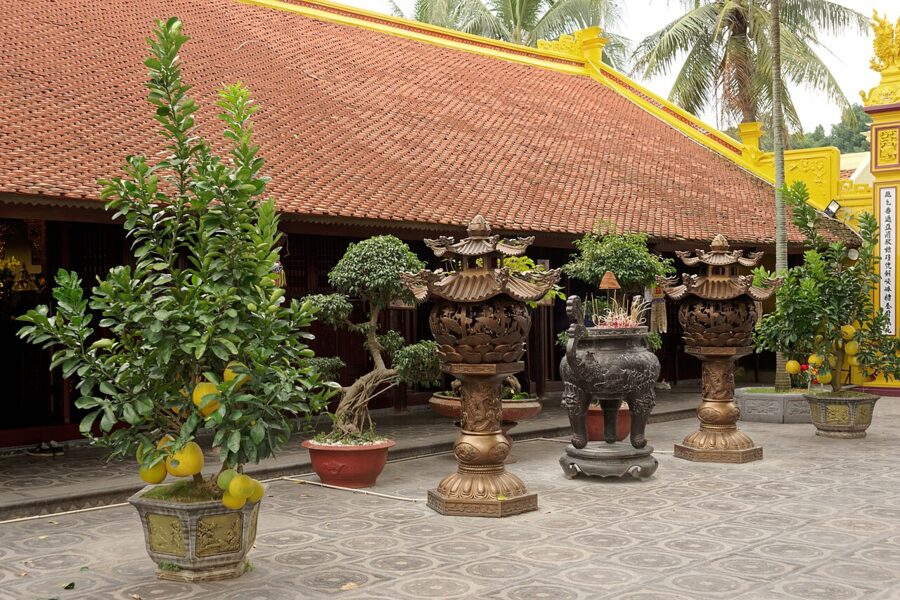

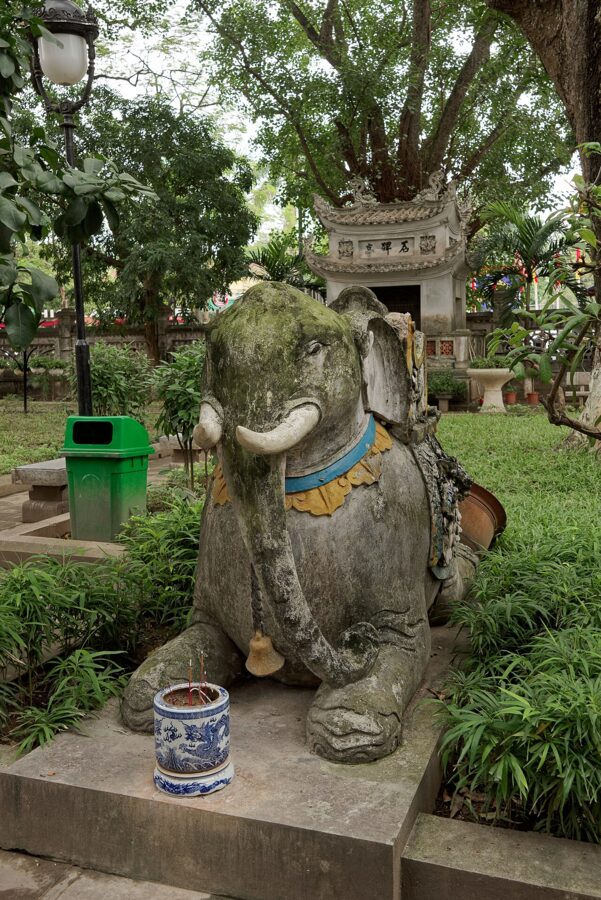
A short walk south along Thanh Niên road, Quan Thanh Temple (Đền Quán Thánh) guards the city’s northern approach. It is a Taoist temple dedicated to Huyền Thiên Trấn Vũ, the guardian of the north, whose bronze statue inside, cast in 1677, is nearly four metres tall. Entry is 10,000 dong (under $1).

Museums, and one free day
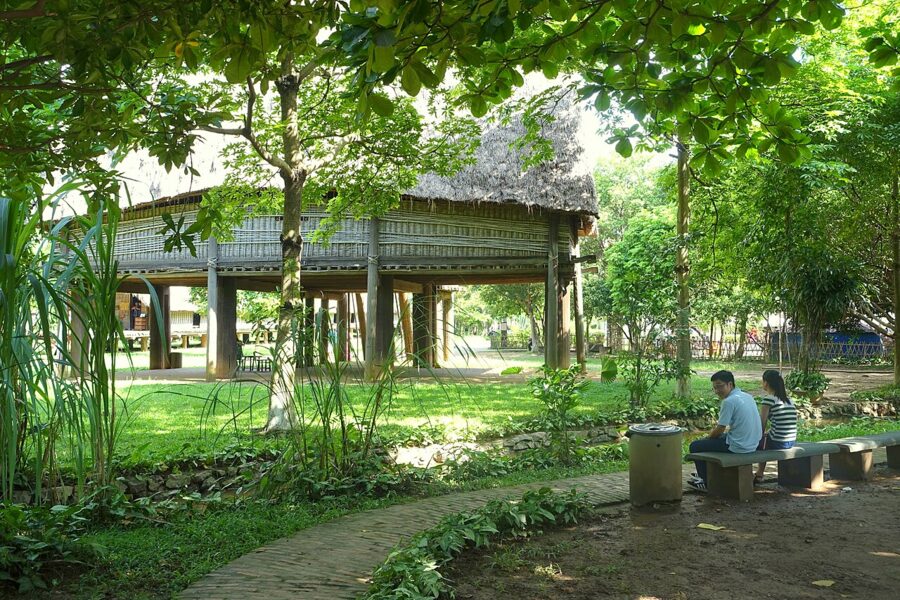
The Vietnam Museum of Ethnology, in Cầu Giấy west of the centre, is the best museum in the city for understanding the country’s 54 recognised ethnic groups, with full-size houses rebuilt in its garden. It closes on Mondays. From 2026, 24 November, Vietnam Culture Day, is a free-entry day at the national museums, including the Ethnology, Fine Arts, Women’s, National History and Military History museums in Hanoi.
Getting around
The route is about 6 km in total and mostly walkable. Take a ride from the Temple of Literature to lunch and Hoa Lo, about 2.5 km of busy roads.
Ride-hailing and taxis
Grab, Be and Xanh SM all operate in Hanoi, with cars and motorbike taxis booked in the app at a fixed price. A motorbike taxi between stops takes about ten minutes. Xanh SM’s green electric taxis can also be flagged on the street.
Cyclos
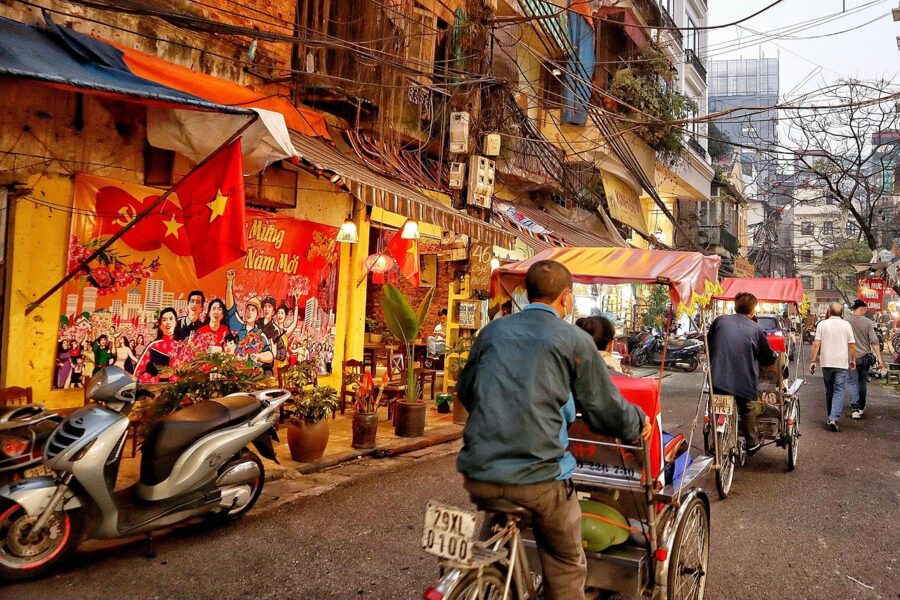
The cyclo, a bicycle rickshaw with the passenger seat in front, is now a ride rather than transport: a loop of the lake and the Old Quarter takes about forty minutes.
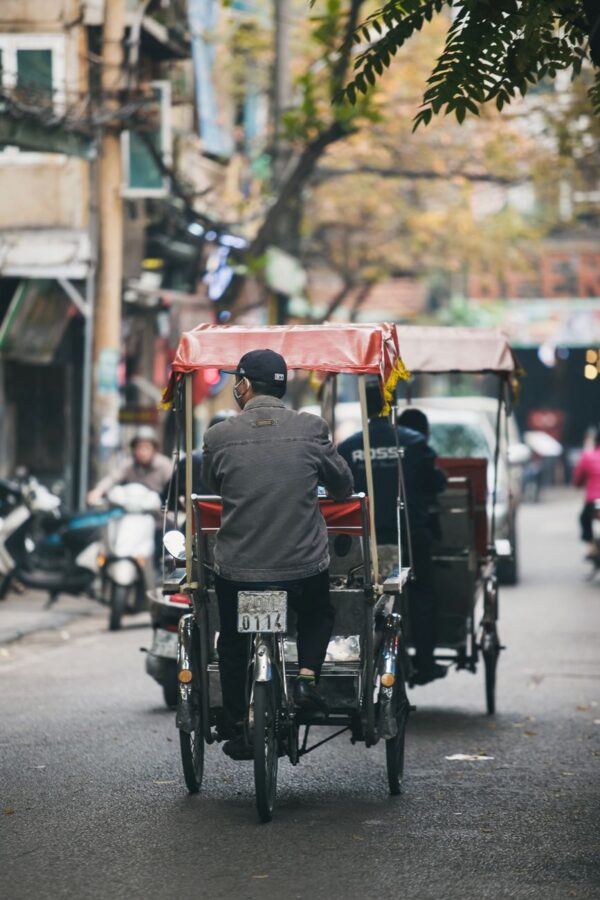
It is also where most overcharging happens. Settle one price for the ride, not per person or per hour, and pay at the end; if a driver approaches you, walk on and pick one from a line.
Electric cars and the open-top bus
Open-sided electric cars run loops of the Old Quarter and the lake from Dong Xuan Market, a good answer for anyone who cannot walk far in the heat. The fare is per car, so ask it before you sit down.
Two open-top hop-on hop-off bus lines circle the main sights. On the Hanoi City Tour buses, a four-hour ticket was 300,000 dong (about $11.50) and a 24-hour ticket 450,000 dong (about $17) in late 2025. They are a slow way to cover this route, but useful if walking is hard.


With a guide: what an organised city tour includes and what it should cost
A guided day follows nearly the same route, sometimes swapping Hoa Lo for the Ethnology museum and adding a cyclo ride or the water puppets at the end. The difference is that someone else handles the queue, the tickets and the transport.
What a fair price looks like
As of late 2026, a shared small-group day with hotel pick-up in the Old Quarter, an English-speaking guide, transport, entrance fees and a set lunch is commonly priced at around $25 to $45 per person. Private tours with their own car and guide start around $80 per person and climb past $150. A fair shared tour sits in the middle of that range and says exactly what is included.
Check the inclusions rather than the headline price. Entrance fees for the whole route come to a little over 200,000 dong (about $7.70) per person, and lunch to a few dollars, so a cheap tour is not saving you much if it leaves those out. Ask whether the cyclo or the puppets are included, and what happens on a Monday or Friday when the mausoleum is shut.
When a guide is worth it
A guide earns the fee if Vietnamese history is the reason you came, because the Temple of Literature and Hoa Lo carry far more meaning when someone explains the steles and the cells. It also helps with children, in summer heat, or on a short stopover. For a second day, or for the walking streets and the food, you do not need one.
Where the day ends
The route finishes at the lake, which is where Hanoi spends its evenings. Unlike the lantern-lit old town of Hoi An, the Old Quarter is not preserved for visitors; it is a working neighbourhood, and the shops shut when their owners want dinner.
Sit on the low stools at a corner café on the west bank, order an iced tea, and watch the Turtle Tower go dark. Tomorrow the queue at Ba Dinh forms again before eight.